MSRP: $374.95

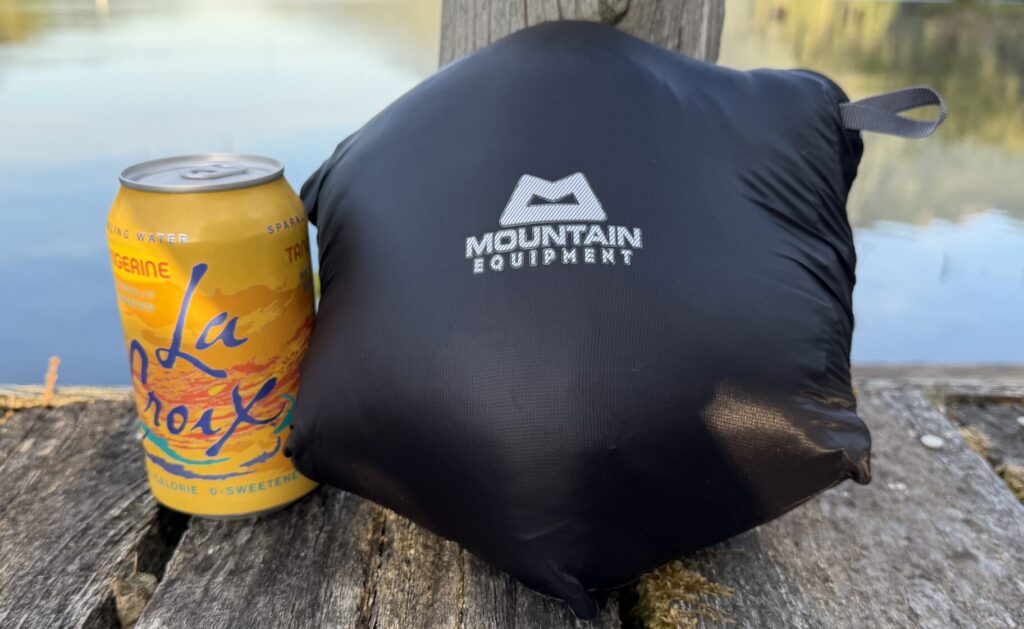
The Mountain Equipment Xenith Hooded Jacket is a featherweight down jacket that is hardly noticeable in the pack, making it a perfect companion to bring along on any adventure. Small and stowable, it packs down to the size of a small water bottle. This makes it a perfect “just-in-case” layer to toss in, even if the weather looks fine.
Down jackets are an important piece of equipment in anyone’s wardrobe, so what makes this one different? Mountain Equipment stuffs 100 grams of hydrophobic goose down to supply the insulation in the Xenith Hooded Jacket, giving this jacket an edge over non-treated down, which is more likely to lose its insulating properties when wet.
The interior and exterior of the jacket are made from a proprietary Helium 10D polyamide fabric coated with a DWR (durable water repellent) finish. I found it to reliably shed light precipitation, though anything more than a drizzle would wet through this minimalist fabric. Fitted cuffs and an adjustable hem seal out drafts, and a helmet compatible hood increase weather protection.
So, how did it perform in the real world? I tested the Xenith Hooded Jacket over the course of a month, from ski guiding in the Arctic archipelago of Svalbard to day hikes in the Pacific Northwest and the Sierra Nevada. One of the first things I noticed was how packable this jacket is, even when compared to other jackets in my closet that have the same down fill weight and same total weight. This likely comes from the gossamer Helium 10D material. I weighed the Xenith on my personal scale and confirmed the advertised 11.3 oz weight for a size large. Sizing felt a little small—I typically wear a medium in most US brands, but I appreciated the large size I tested to go over base layers.
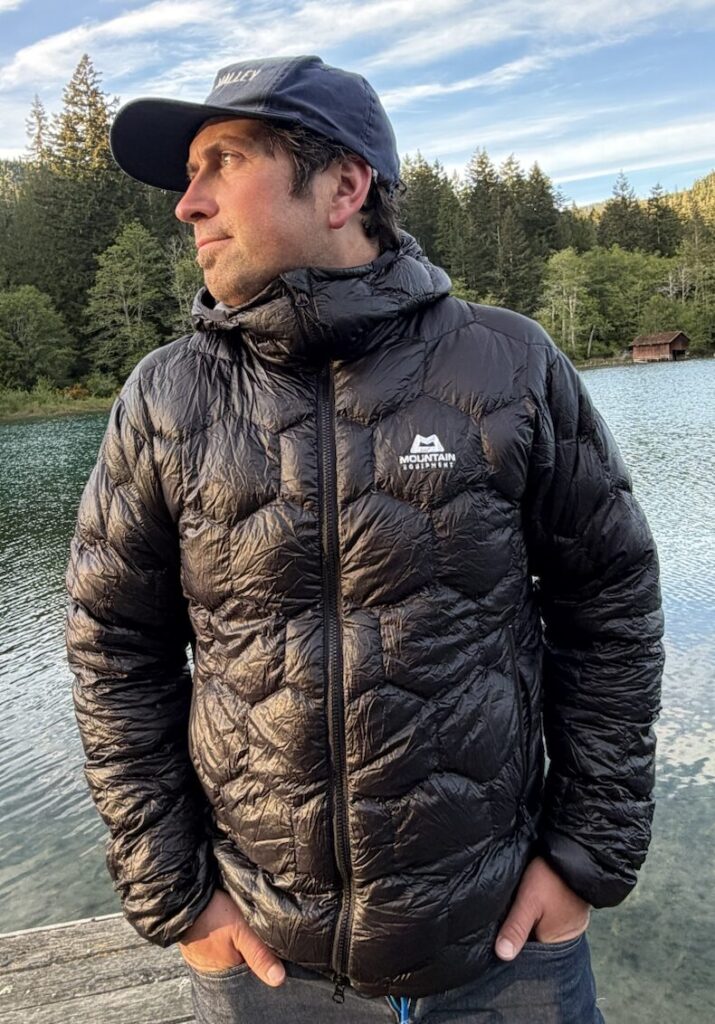
I found the 100 grams of insulation to be adequate in the slightly sub-freezing (25F/-4C) temperatures encountered in Svalbard. The Helium 10D outer shell blocks some of the wind, but adding an extra Gore-Tex layer over the top really helped to keep me warm when the Arctic breeze kicked up. A nice addition to the lightweight Xenith jacket is the zipper baffle that keeps cold air from entering along this vulnerable zone.
The Xenith Hooded Jacket comes with its own small stuff sack that has a clip-in loop, though it takes a bit of effort to get it into the hexagonal stuff sack. If I were at a hanging belay with cold fingers or wearing gloves, I would probably opt for my own stuff sack in order to avoid dropping it.
I found the hood to work well with a helmet or while wearing a brimmed hat, but with only a toque or beanie the hood fell over my eyes, and without an adjustment cord to customize the fit, there is not much to remedy this.
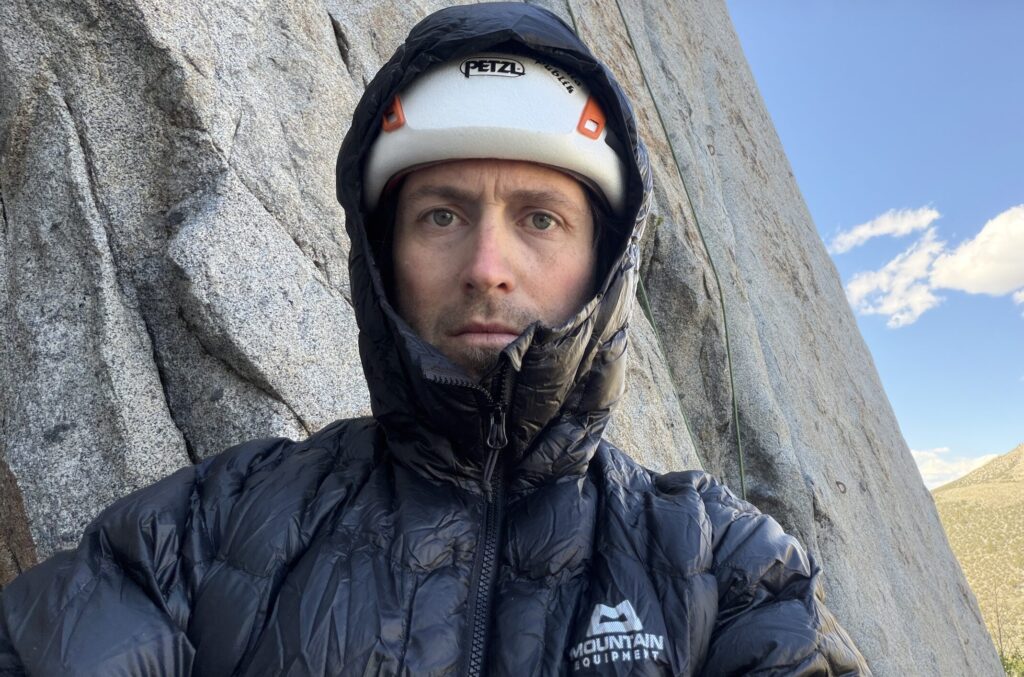
Lefties rejoice! For those unaccustomed to UK-based apparel, you may have to learn how to drive the zipper on the lefthand side. Once you get the hang of it, you’ll be pleased to see the double zipper that allows you to expose a belay loop on a climbing harness without pulling your jacket up.
Overall, this is a quality lightweight down jacket that can work as a standalone piece in milder weather, or as part of a multi-jacket insulation system in colder temps.
Pros: lightweight, packable, versatile, baffled zipper, weather-treated goose down
Cons: lacks hood adjustments, can be difficult to stow in the provided stuff sack when dexterity is compromised, left-handed zippers may not be your cup of tea
Ryan Huetter is a certified IFMGA Mountain Guide who lives in the Eastern Sierra Nevada mountains of California. His work and play take him around the globe guiding ski touring, rock climbing and alpine climbing adventures, though he always loves returning home to the Range of Light. www.cloudripperguides.com