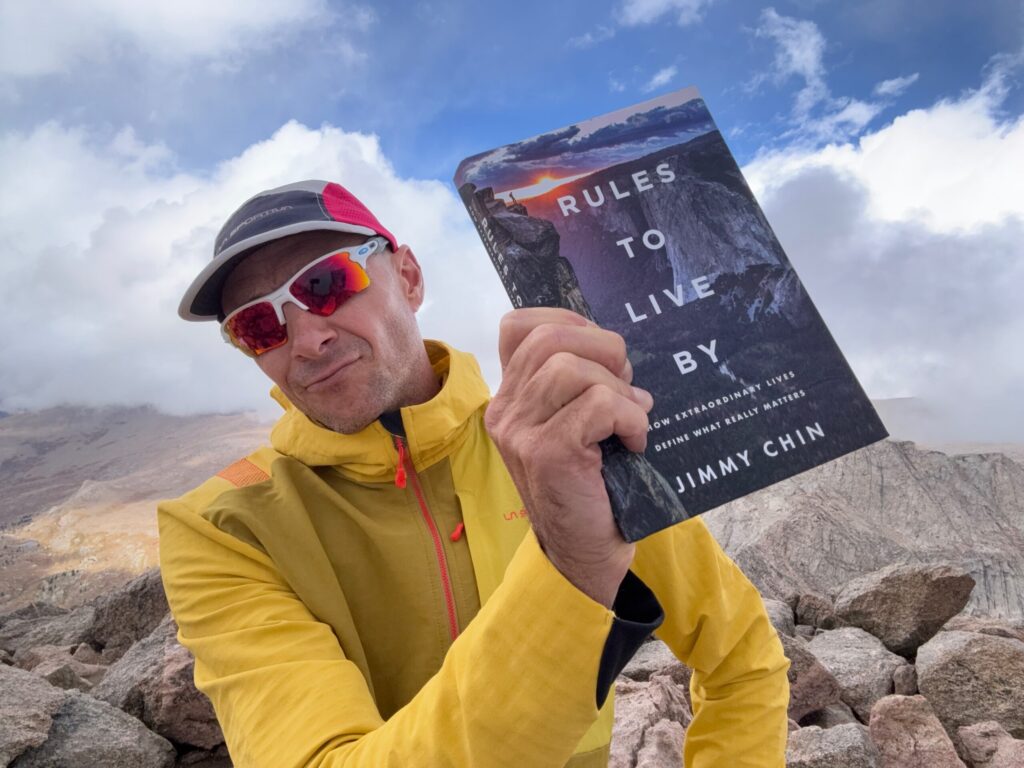
MSRP: $30
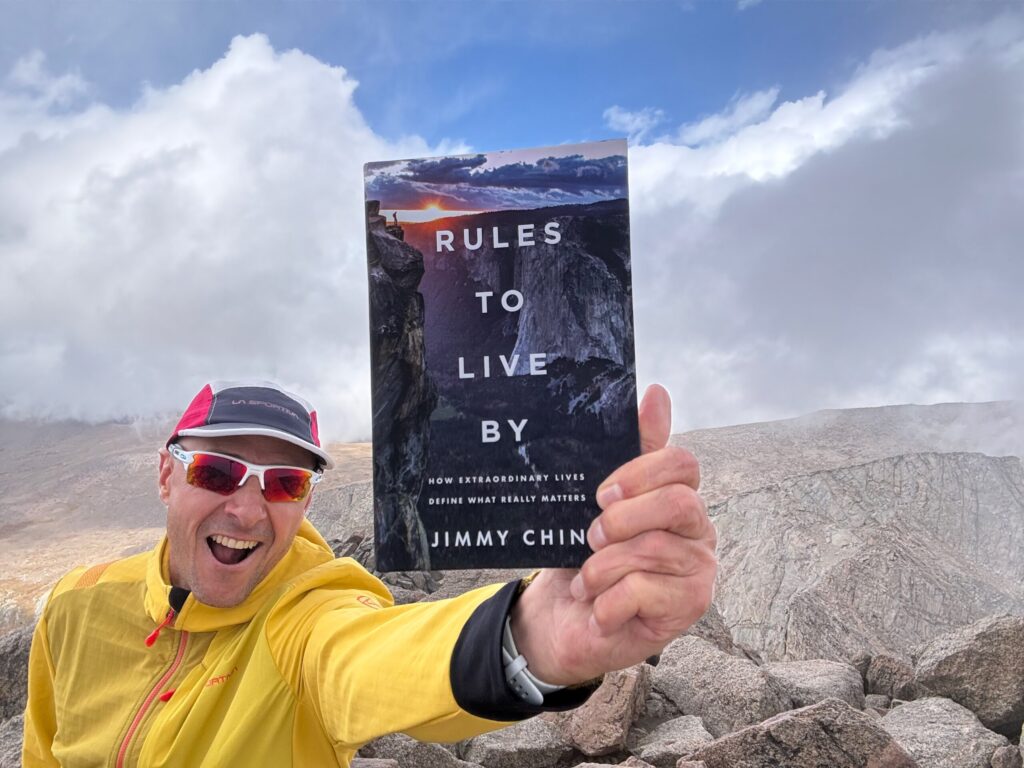
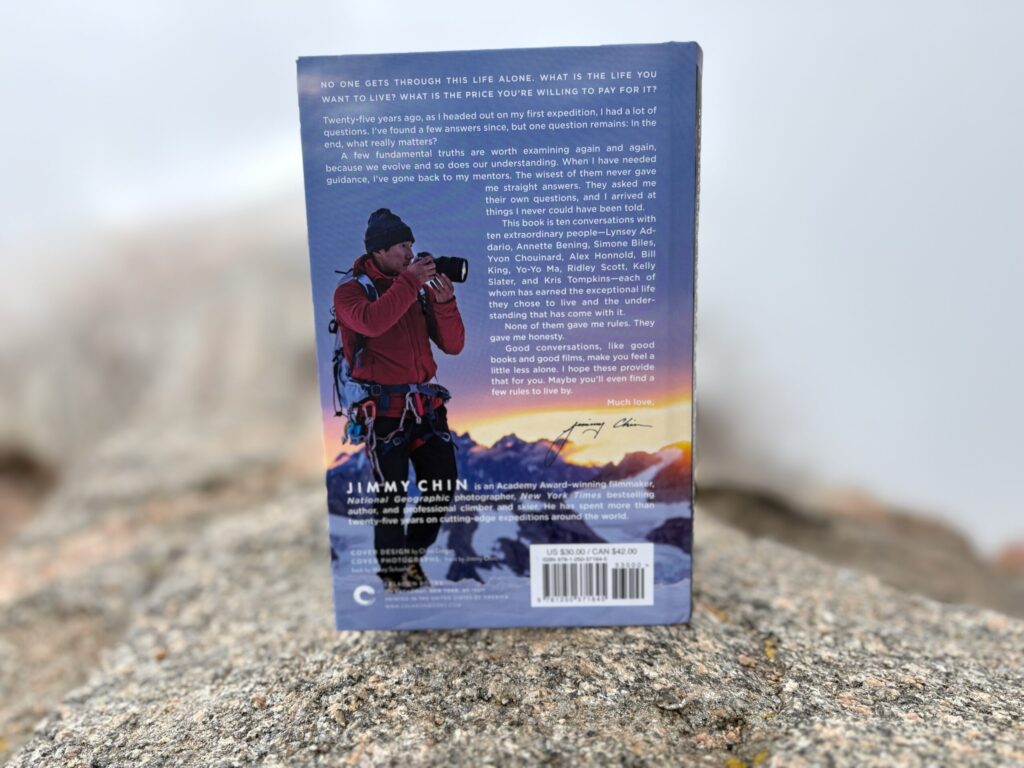
Reading another’s life and absorbing into it, especially a profoundly exceptional one, brings mixed feelings, doubts, light, and often a resolution to dig deep and live my best life. I felt envy and inspiration, had tears and laughs, rolled my eyes a few times, and I am left with some questions that will likely never be answered. I am grateful for new memories, and old ones revived. Aging brings sadness, the loss of agility, strength and options; and yet, it motivates to make the most of what’s left. Jimmy and I are only one year apart, he the elder born in ’73. I am going to refer to the author as Jimmy instead of Chin, because even though we never became friends, after reading Rules to Live By, I feel close, like an energetic doppelgänger.
Jimmy and I met once in Joshua Tree at a party in the winter-spring of 1997; I wonder if he remembers. I sensed a kindred spirit—an adventurer, a young long-haired man like myself invested in living the dream, prioritizing enlightened experience over the dullness of safety, comfort, and the known. An image retains my memory of that night; his auric brightness flashes forth from his genuine smile and kind, friendly eyes. Maybe I feel a bit closer to Jimmy than I should. I blame him for that. Thank you Jimmy, for letting us see you. Of course, there’s more—200 pages can only hold so much, and mostly you introduced us to others. I’ll await the full autobiography when you are 81 and me 80; it’s not too far off is it, my friend?
Early in a three-month trip to the European Alps and Turkey, I received the request to review Rules to Live By. Getting a hard copy shipped to Italy proved difficult, so I was left to read a copy on my phone, which turned out to be quite special because of the places I was enabled to read. There’s nothing like reading tear-jerking, belly-laughing inspirations with the backdrops of Italy’s Aosta valley and the Dolomites. Jimmy was with me during snack breaks, nap breaks, water breaks and work breaks.
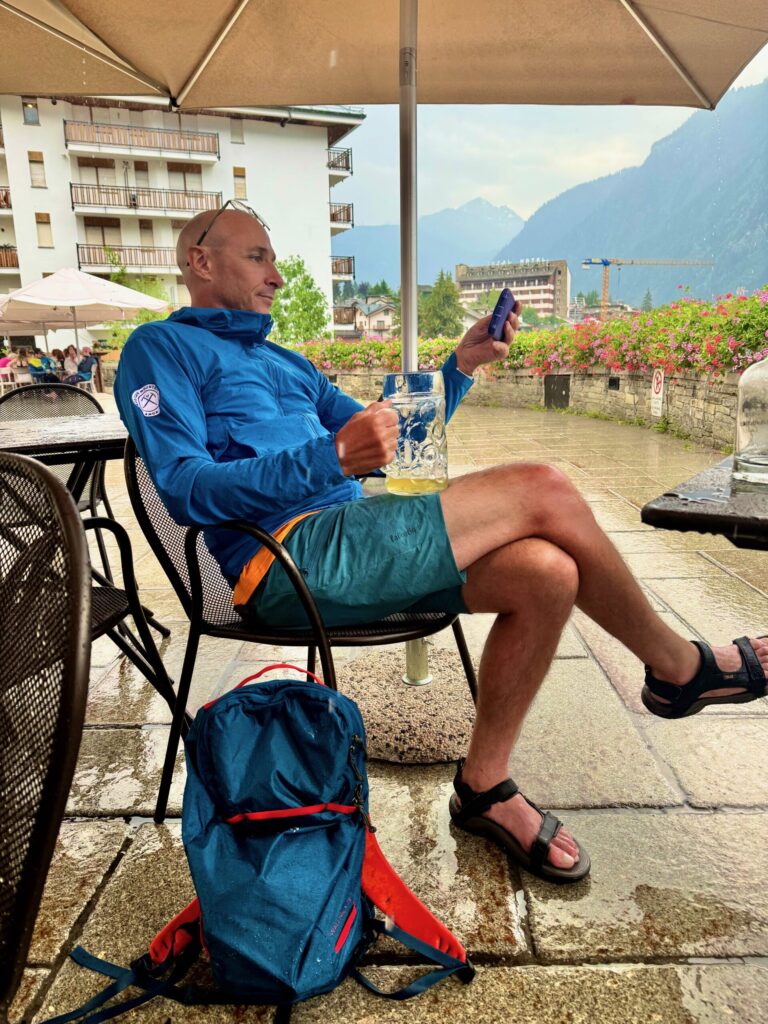
On a couple of days, I finished alpine excursions with a chapter and Weissbier, meats and cheeses in Courmayeur and Cortina d’Ampezzo. Bill King’s chapter specifically left an emotional impression on a bench in Cortina, tears running down my face as pedestrians walked by smoking their cigarettes and carrying shopping bags with La Sportiva, CMP, Salewa, and Dynafit labels. I read and wrote in Italy, Turkey, above the Atlantic and back in Colorado.
The Book
Jimmy has met many extraordinary humans on his journey who have had equally extraordinary impacts on his life. In Rules to Live By, we get to know them a little, understand their influence on Jimmy, and gain a little, or potentially a lot, of inspiration and wisdom. Yvon Chouinard—the climber, entrepreneur and environmentalist. Yo-Yo Ma—the cellist. Linsey Addario—the frontline war photographer. Alex Honnold—the soloist. Simone Biles—the gymnast. Bill King—the SEAL Team Six lead. Annette Bening—the actress. Kelly Slater—the surfer. Ridley Scott—the director. And Kristine Tompkins—the keeper of precious lands.

The chapters of Rules to Live By present Jimmy’s interviews, experiences, adventures, and lessons learned with each of them. Jimmy’s willingness to seek out and accept mentorship should be an example to us all. If only we all had such opportunities in our pools of human connections.
Sprinkled within the chapters are mentions and discussions of films, music and some other entertainments, all of which relate in some way to Jimmy’s progression in life and the people he has met. My suggestion: take your time with this book and enjoy the voyage. Listen to the music of Yo-Yo Ma, especially Haydn’s Cello Concerto in C Major. Watch these films: Mountain of Storms with Yvon Chouinard and Doug Tompkins (Kristine’s passed husband), and the newer reliving 180 Degrees South. Jimmy and Elizabeth Chai Vasarhelyi’s Meru and Free Solo, of course. And their Nyad, starring Annette Bening, a two-fer of inspiration—Annette’s confident wisdom (expressed in the book) and her absolutely well-played role of the true-life character Diana Nyad, the endurance swimmer who achieved the unachievable. Love+War about Lynsey Addario. Jiro Dreams of Sushi. And Ridley Scott’s Alien and Bladerunner.
Rules to Live By thrusts a few primary themes: life is short so go for it, anecdotes regarding the difficult balance between being a parent and following one’s risky and time-consuming passions, knowing when to back off and actually being able to, and finding one’s beat of their own drum and forever dancing to that beat no matter what. Jimmy’s transparency in sharing his own life struggles, complimented with the dramatic and paralleled experiences of his friends, drew me into hours of resonance, as I can relate to them all.
We alpinists are a subculture of humans who are difficult for others to understand—why we do what we do, why we put our lives at such risk, and why we, many of us, spend much less time making money and accumulating stuff, and much more time experiencing the mountains and the natural world with close friends (and family if you’re lucky) through adventure and travel. Knowing when to back down, and when to go. Calculated risks. Being unapologetic in one’s life choices, because they are not choices—something deeper is driving us to pursue something that doesn’t make sense, and that is life itself. Relating his own life to Bill King’s, Jimmy shares:
Something about that first climb of mine struck a chord inside me that never stopped humming. A chord with all the right notes, capturing me in a way nothing else ever has. It gave me something I didn’t know I needed. When that happens to you, there’s not much you can do about it. In my case, I didn’t know how not to pursue it. That’s why, after college, when I told my parents I was driving to Yosemite to live in my car and climb, it didn’t even feel like a choice.
Become a Navy SEAL—who would think of such a thing? Come on Bill! But when the calling calls, spirit-death and depression are the only alternatives. Linsey Addario, the frontline photographer for the New York Times and National Geographic, and the star in Jimmy and Elizabeth Chai Vasarhelyi’s Oscar winning documentary Love+War chimes in:
The thing about dangerous work is that it forces you to constantly reassess what you’re capable of and if you’re in an acceptable situation. I think what people miss is that, when the stakes are life and death, you actually examine your choices much more closely than most people ever do with any decision at all. When the stakes become really high, you live a more examined life. You come to understand the intention behind why you’re doing what you’re doing. I think about it deeply every single day. Every time I walk out the door, I’m making a very clear decision. And when that decision is that I don’t want to do this again—that it’s not worth it—I will stop. Because anything you risk your life for, you have to feel it 100 percent or you cannot do it.
As I write this section of the review, I sit at Dospresso, one of hundreds of coffee houses here in Antalya, Turkey. It’s raining, so there are less people, which means less cigarette smoke. Thank God! The afternoon call to prayer echoes through the buildings from the local mosques and blends with the house music pumping behind my head. I’m caffeinated. I’ve already gotten my gym workout for the day, so I’m relaxed and settling in to write. I look around and ask, “Am I living my best life, the one I want?” Thank you, Linsey and Bill and Jimmy, for this challenge. I’m not sure, honestly. Are you, the reader? Are we willing to take the risks that guard the potential for greatness?
After 25 years as a mountain guide and outdoor educator, I transitioned to mostly working as a psychotherapist, with a work week decorated with gear-testing and occasional guiding. Back in Boulder, my clients complain about their inability to get out on the weekends. Many moved here from somewhere else with the intention to be out in the mountains, get fit and stay fit, adventure, and live a life more interesting than the ones they had known and been shown. But here they are, not doing any of it. Kids, errands, the home-improvement and upkeep to-do list. For a while, I believed them and sympathized, even though something in my gut was telling me it wasn’t true. Then I got glimpses of the truth—a Dad came around the corner on a mountain bike with a toddler seated on the crossbar. Today, there were more families climbing Mt. Bierstadt than non-families.
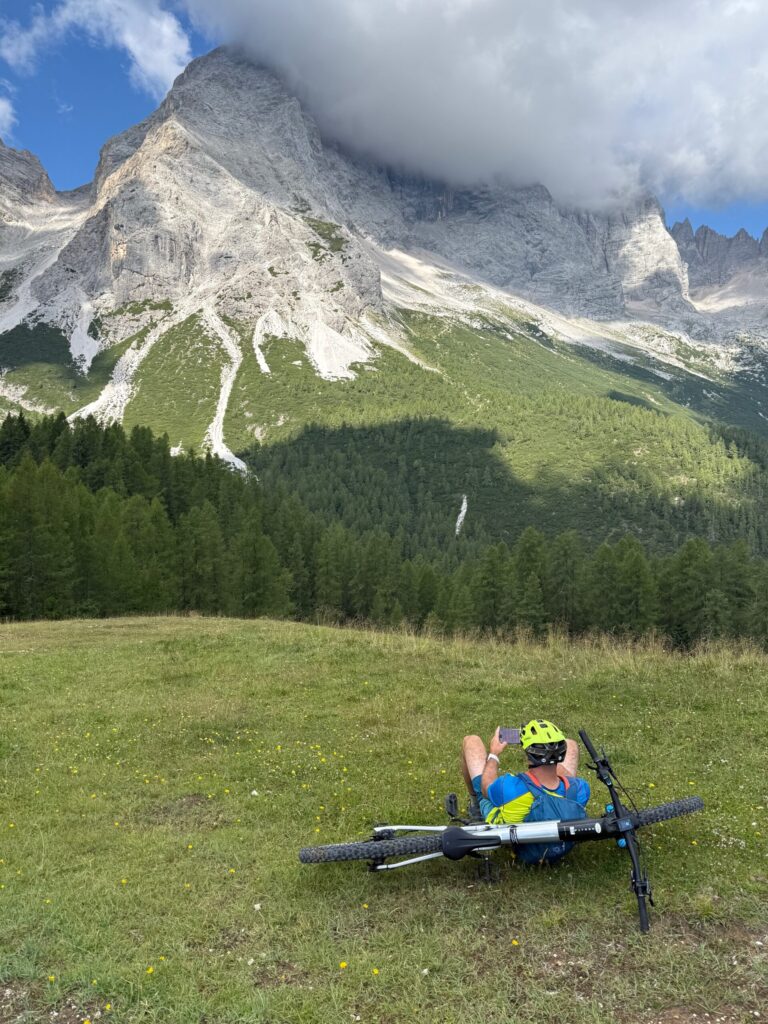
In the Dolomites this summer, I witnessed endless numbers of 30-something-year-old Italian, Austrian and French couples far from the trailhead with little ones in kiddy-packs and even leading the way. I want my clients to read Jimmy’s book and show them that I’m not lying to them when I suggest that it’s all about what you prioritize, with some added creativity, some potentially hard and convincing conversations with the family unit, some organizational skills, and a dream. Annette Bening offers this:
“What you’re trying to feed is this big pot of gold inside of you that’s messy and full and complicated, so that when you actually do it, you can even surprise yourself. This is a universal thing, not just in creativity, but in life. It’s the flow state. In the work that I do, maybe you feel that something is moving through you that you’re not in control of. It’s rare, but if you get a little taste of it, then you want to go back for more.”
Ticking the home-tasks can definitely create a flow-state, as can doing a math problem, reading a book, or weeding in the garden. How very Zen. And, what else? If you are reading Alpinist, or moved to a mountainous area from somewhere flat and boring (to you), then there’s probably something more that you are driven to do. What’s your dream? Alex Honnold says, “A dream that gets you out of bed and gets you training every day for years, that’s so valuable. What else is there in life? It’s hard to stay motivated. If you find some source of motivation that’s going to sustain you, cherish that.” Find it and cherish it!
Somewhere over the Atlantic, I am pecking away at my Macbook Pro on a United flight from Venice to Denver. Although the Alps are my favorite place on Earth, I have to say that I am pretty psyched to get back to Boulder and jump right back into my life of adventure, see my clients in-person after more than three months away (and only doing Zoom sessions), do some guiding days up in Rocky Mountain National Park, ride my bikes, and train hard for what will hopefully be another grand adventure in the Alps next year. Having Jimmy and his friends along with me this summer was an added pleasure I hadn’t planned on when I left Colorado. I definitely pushed a little harder as a result.
This being a review, I am supposed to offer some critiques. I honestly don’t want to. Truly. I picture Jimmy in my mind back in 1997, both of us sitting there on that dusty, worn-out couch not knowing what was to come in the future, but no doubt wanting something amazing. And no doubt we each went for it. And Jimmy really went for it. There’s no need to bring him down, to douse his light. What incredible gifts he has given—I just re-watched Free Solo again a few days ago. And now he and Elizabeth have a new one coming out about Jim Morrison skiing a link-up of the Hornbein and Japanese Couloirs on Everest.
But it’s my job, so here’s what I can say: I felt a lot of envy when reading Rules to Live By. Is that what Jimmy wanted—to be envied, to be admired? Is Jimmy a narcissist with a charming smile? Nah, that’s mine to own. Jimmy used to work for Outward Bound, and so did I. We were in the business of pushing people to live their best lives, because we actually cared. So I know what he’s up to.
Envy—it’s something I feel when I read the biographies and autobiographies of great people. I even cry sometimes. I have known and know many great people, but not this caliber of great people—the historically mentionable. I longed for that myself for many years, and even chased after it. It wasn’t in my cards. I have accepted that. Knowing that Jimmy and my paths crossed at one time in history and then to see what he has done, who he knows, and what he is still doing, arouses envy. So, if you are one of those people who gets depressed from seeing the cool shit that everyone else is doing on Facebook or Instagram, then you may want to pass on this read.
I don’t get depressed. I get psyched. That’s what I do with my envy in general, and what I am going to do with the residual envy from Rules. I am going to live the best fucking life that I can, with what I’ve got. Thanks for the push, Jimmy! And hats off to your buddies.
Mike Lewis is the editor and program manager of the Mountain Standards department at Alpinist. Mike is also an IFMGA/AMGA Mountain Guide, psychotherapist, and dedicated mountain athlete living in Boulder, Colorado. Find Mike on Instagram at @lunchboxjackson.