
MSRP: Hardtop Helmet ($64.95), Crack Glove ($34.95)
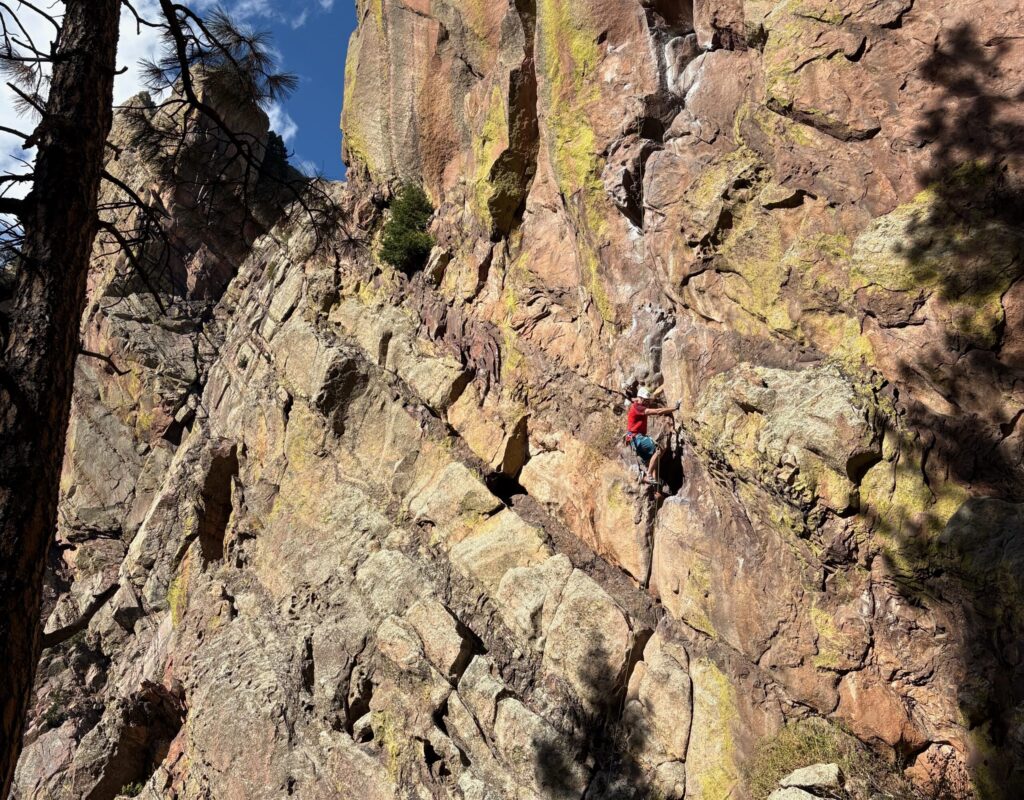
Metolius’s Hardtop Helmet and Crack Glove are truly worthy of consideration when comparing to other top competitors, not only due to the obvious price gaps, but equally due to their functional capabilities.
The Hardtop Helmet appears built to compete with other helmets in the ultralight category, though by weight comparison, I would not call it ultralight. With that said, when I hold it in my hand, it’s hard to believe that a climbing helmet could be any lighter. The Hardtop Helmet sized S/M weighs 250g (8.8 oz). Another top helmet with a similar build boasts 170g (6 oz). So why the Hardtop over this other helmet? How about 105 bucks? Is 2.8 ounces of weight differential worth that much to you? For many of you—Yes, Absolutely. And for many others—Oh Hell No!
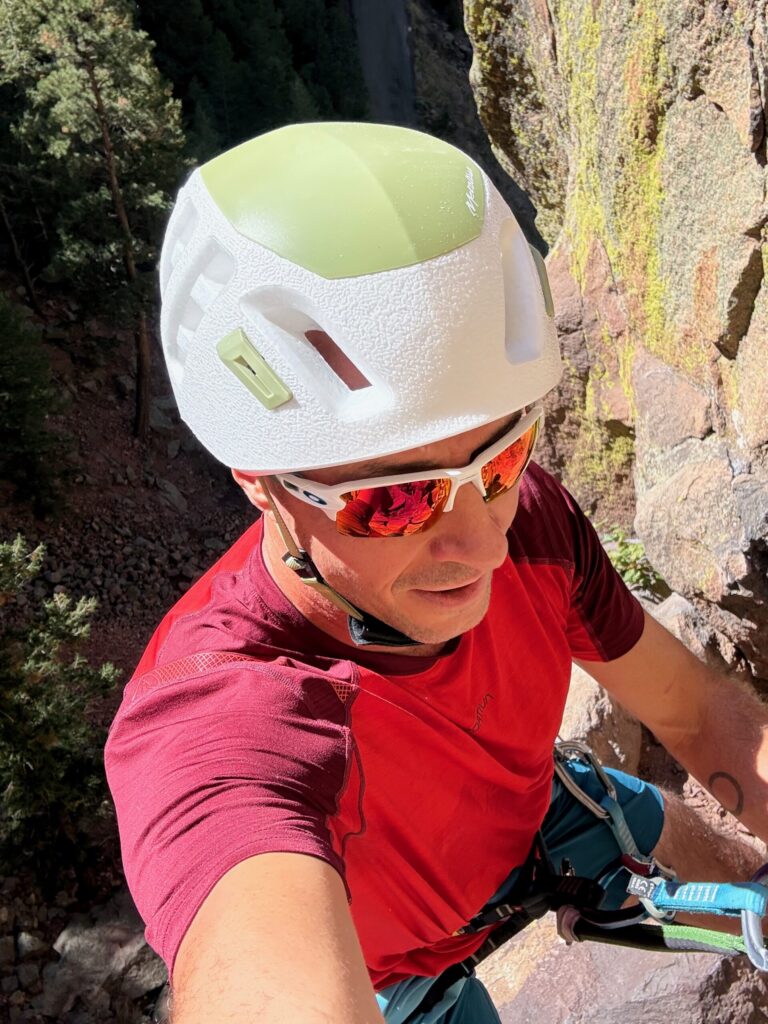
The Hardtop has a strong ABS hardshell crown for top-down impacts and an Expanded Polypropylene (EPP) closed-cell plastic foam core. The tightening mechanism at the cerebellum is a simple bit of thin webbing, which potentially increases durability and simplicity, but is much harder to manage than a plastic dial, especially when wearing winter gloves. Plastic dials are more likely to be damaged inside packs and when hauled around on the outside of a pack.
A headlamp can be attached with two clips on the front and a bungee cord on the back. Standard plastic buckles attach the adjustable chinstrap, and the chin-chaffing protector can be removed if looking for less bulk.
The Hardtop comes in two sizes—S/M and M/L—and is genderless. I have a small head and no hair (my head swims in most ball caps) and the S/M fits quite well, perfectly snug on the sides and slightly long from front to back; this is great for me when climbing in warm weather. I needed to size up to the M/L when wearing a beanie. If I was only going to have one helmet, I would have to go for the larger size. For those with ponytails, there is not a specific ponytail spot like on some women’s helmets, but a ponytail worn lower on the back of the head can poke out through the cerebellum strap.
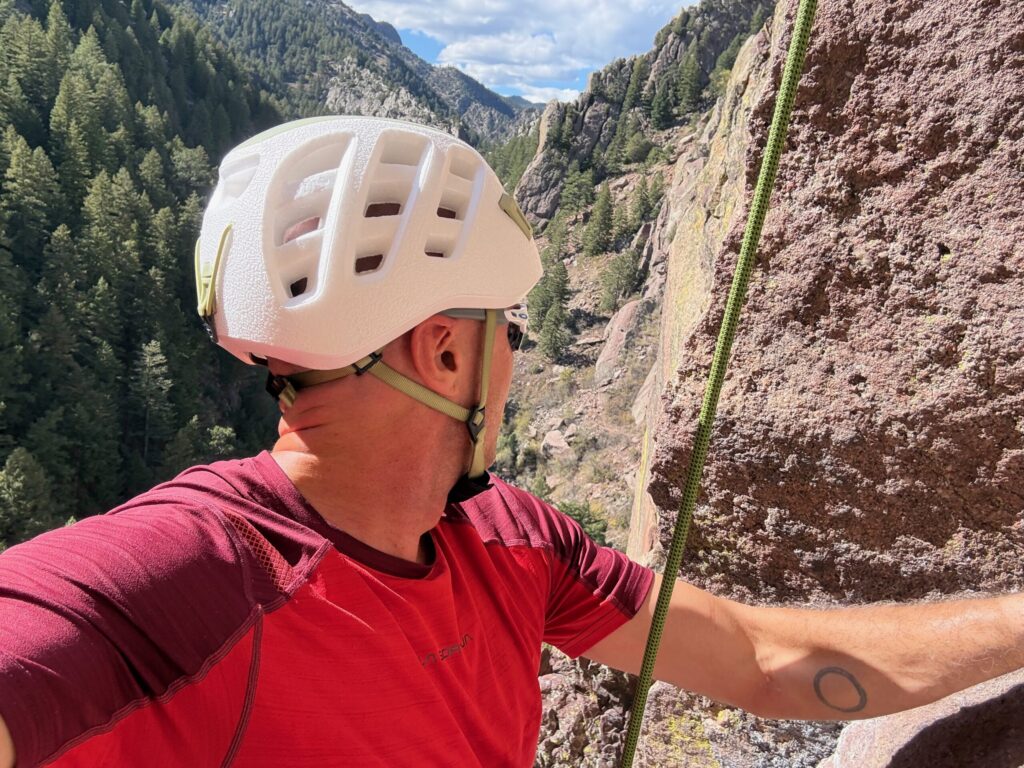
The helmet comes in two colors—black and green/white. The internal fitting pads can be removed and washed. Unfortunately, I can’t honestly speak to the durability difference of the Hardtop compared with other top brands, as it would take many months and a lot of days in the mountains with multiple helmets to really tell the difference. However, I can say that the exterior of the foam core has a glossy finish that sufficiently resists dings.
Pros: less expensive; simple; lightweight; durable exterior finish
Cons: slightly heavier than some comparable models
Metolius’s Crack Glove(s) are a great choice for easily removable hand protection when climbing cracks where handjamming will be plentiful or potentially injurious. To this day, no manufactured crack glove compares to the coverage and durability of good ol’ athletic tape heavily wrapped around the hand and down the wrist, which is pretty much mandatory in places like Indian Creek and on certain routes in Vedauwoo, Yosemite and Joshua Tree. Even so, depending on route choice and the variety of climbs or multipitch routes attempted, being able to easily add and remove a crack glove within seconds has become a modern climbing practicality worth the addition to one’s quiver. Imagine climbing a long multipitch route or a day of cragging with only one to three pitches of hard jamming and the rest being a mix of face climbing and thin or wide cracks.
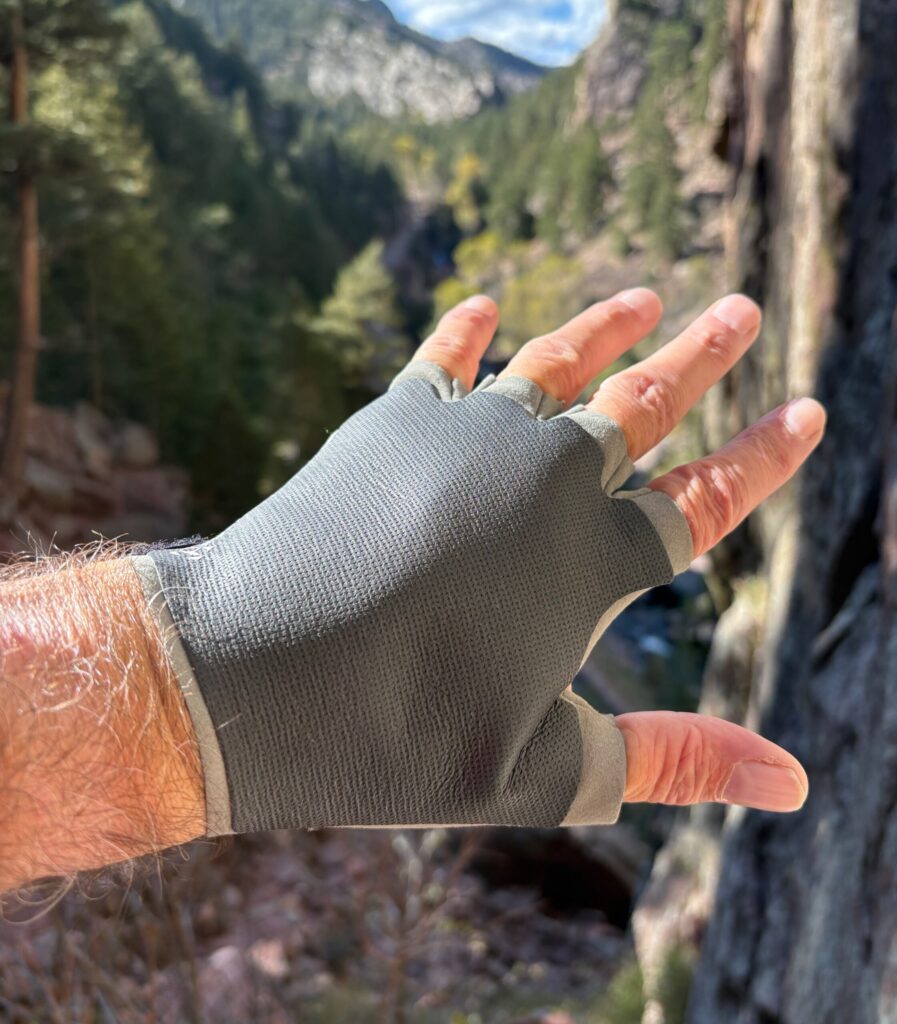
On these crack gloves, the black urethane cover is surprisingly sticky, yet thin and seemingly quite durable. The glove base is synthetic, durable and absorbs sweat. The Velcro wristband is one of the easier bands to thread and adjust that I have used. Fingers slide through the finger-slots without difficulty.
Metolius’s crack gloves are $5-20 less expensive than other top options, and they come in five sizes. I generally wear medium gloves across brands and activities, and Metolius’s medium fit relatively well, though a bit tight on one pinky. I have found with other brands that when doing fist jams with removable crack gloves, if the glove is too wide on the back of the hand, it can easily rip apart. With Metolius’s medium, this was not an issue, and believe me, I really tried to blow them out. I am not sure what would happen if I sized up to a large.
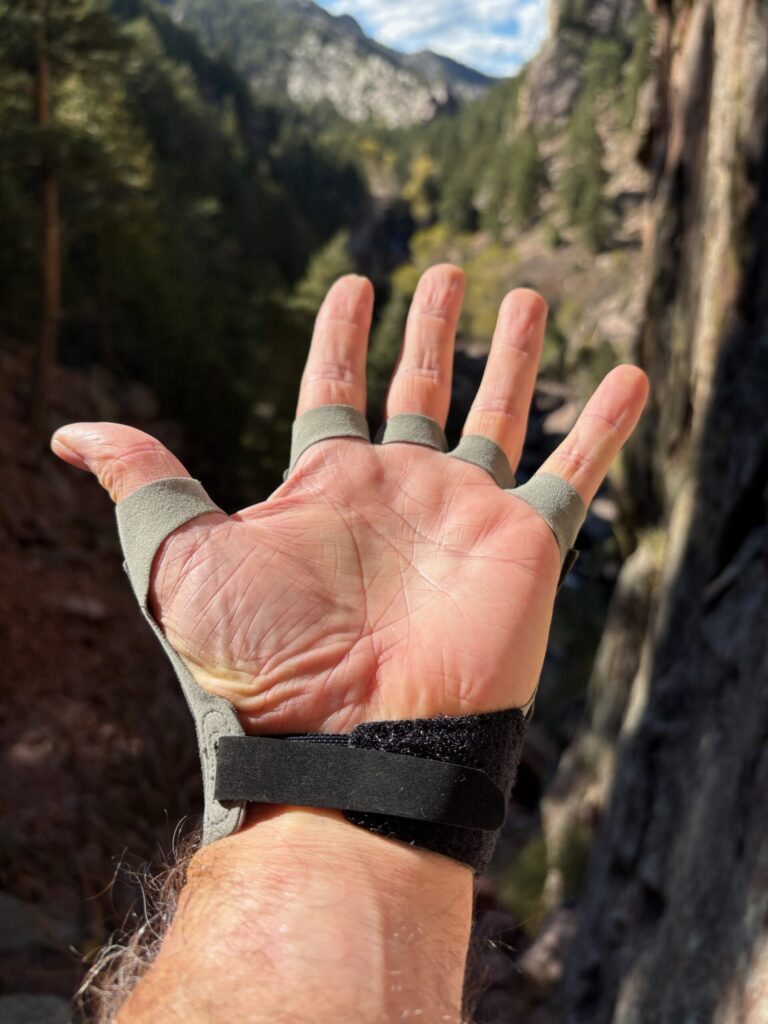
One reality of Metolius’s Crack Gloves is that they do not protect the forearm just past the wrist, which is true for other major brand’s crack gloves (one or two are available that attempt to solve this problem). On most crack climbs, this will not be a problem, especially if the crack width is variable and one is not stuffing their arms deeply into cracks for long pitches over the course of a day, or multiple days in a row. In Indian Creek, on classics such as Supercrack, the front and back of the forearms can get raw after hours and days of shoving arms into these sandpaper-like cracks—but then, most folks are going to use tape gloves anyway. Another issue to keep an eye on is that the black urethane exterior, which is glued to the synthetic glove, will likely separate little by little—mine did. Keeping some superglue in camp will provide a quick fix.
Pros: thin; grippy; light; easily removable; snug fit; five sizes
Cons: They don’t protect the forearms close to the wrists and the sticky pad may separate a bit.
Mike Lewis is the editor and program manager of the Mountain Standards department at Alpinist. Mike is also an IFMGA/AMGA Mountain Guide, psychotherapist, and dedicated mountain athlete living in Boulder, Colorado. Find Mike on Instagram at @lunchboxjackson.