MSRP $179
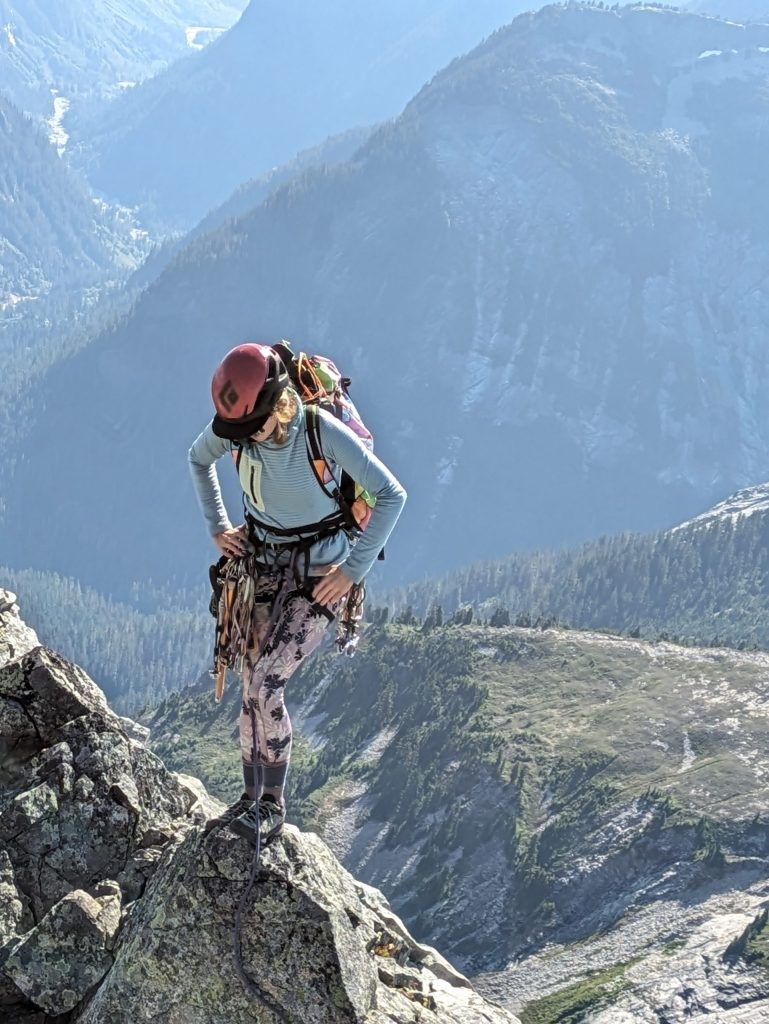
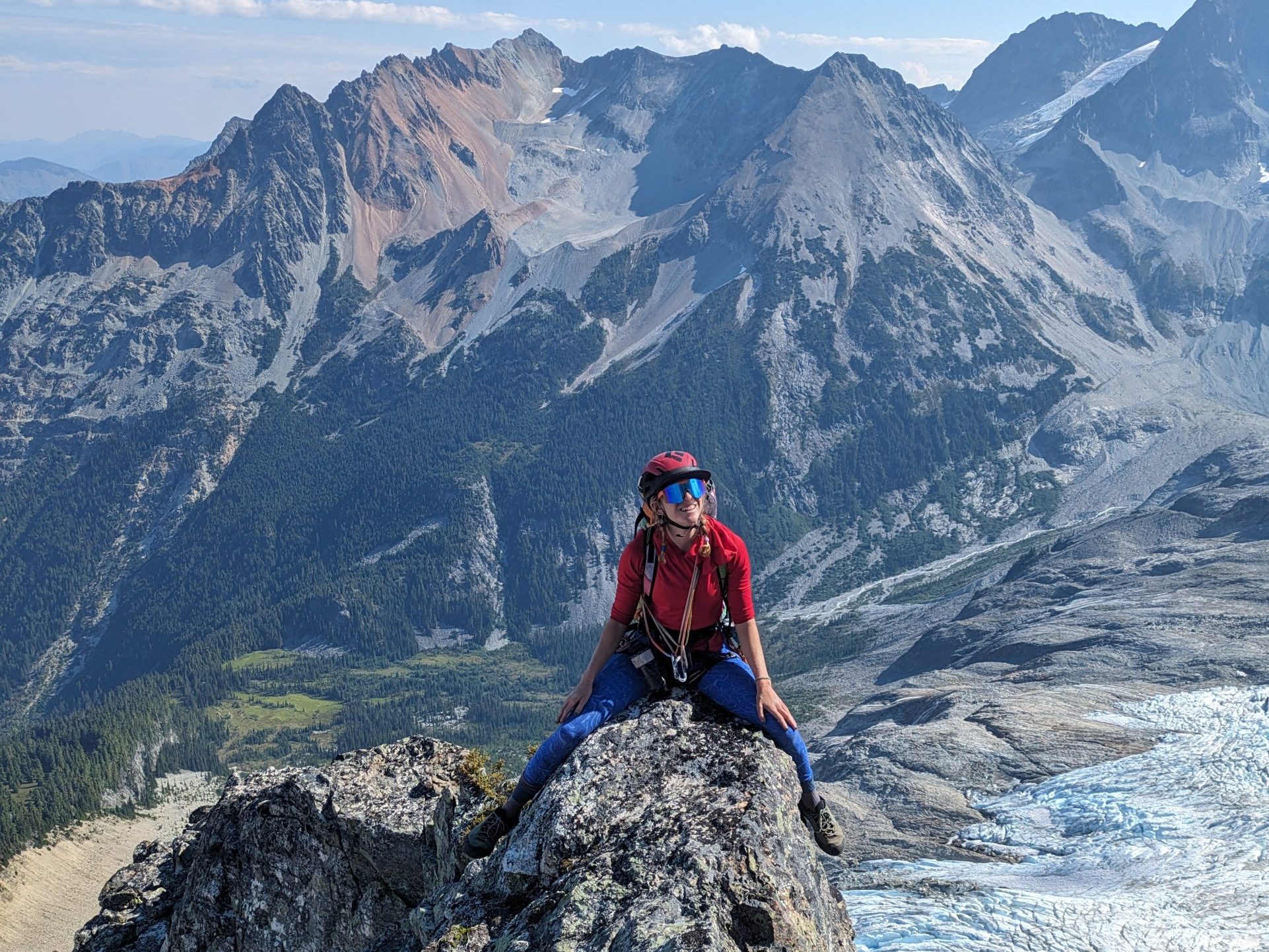
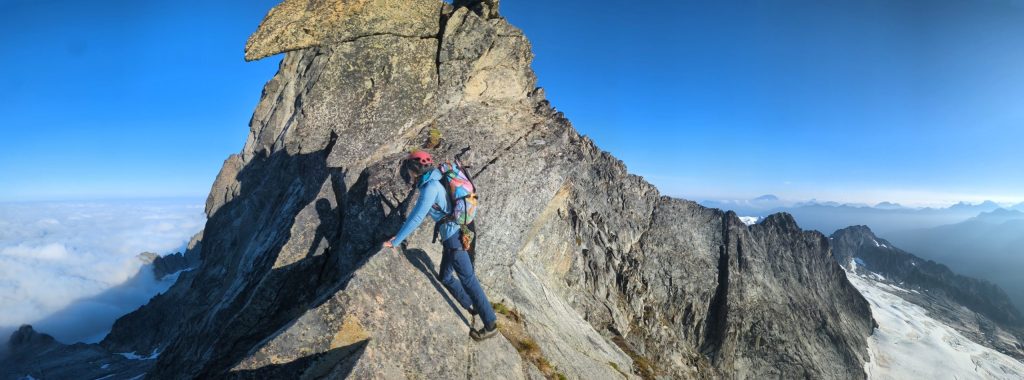
This summer I was feeling the draw of alpine climbing again and Scarpa’s Rapid XT approach shoes came into my life at just the right time. I wore them on over 85,000 feet of gain in the North Cascades during a two-month period, including climbing, scrambling, snow, talus, scree, bushwacking and trail. They provided a great mix of comfort and technicality through it all. I trusted them unroped on fourth- and low-fifth-class terrain in the alpine, and I even wore them on three first ascents. Despite the mileage and rugged terrain, they appear to have lots of life left, though they are a slightly darker color than when I first took them out of the box.
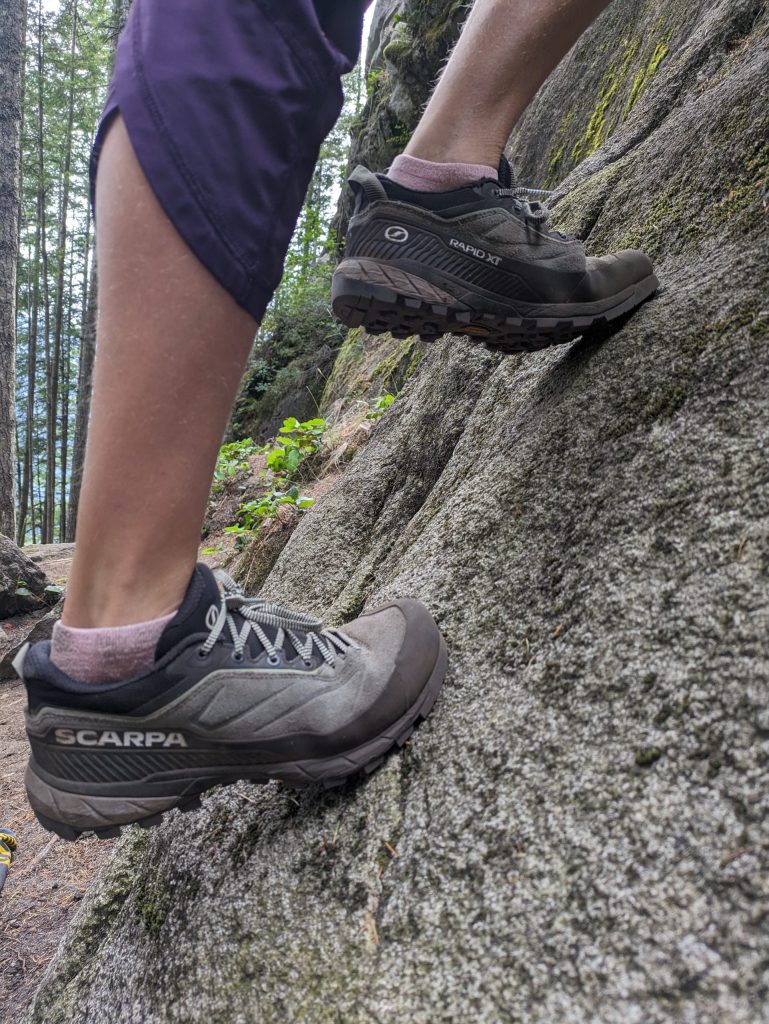
Most important to me, the Rapid XTs climbed well. I scrambled a lot of low-fifth-class rock, felt comfortable moving quickly in alpine terrain and climbed roped up to 5.8. My feet were constantly stoked to stay in comfy approach shoes and to not be stuffed into tight technical climbing shoes unnecessarily. I tend to like a stiff shoe while climbing, so it was great that Rapid XT edged well for an approach shoe. Despite the bigger lugs on the bottom, they proved to be sticky enough to walk down glacially polished slabs.
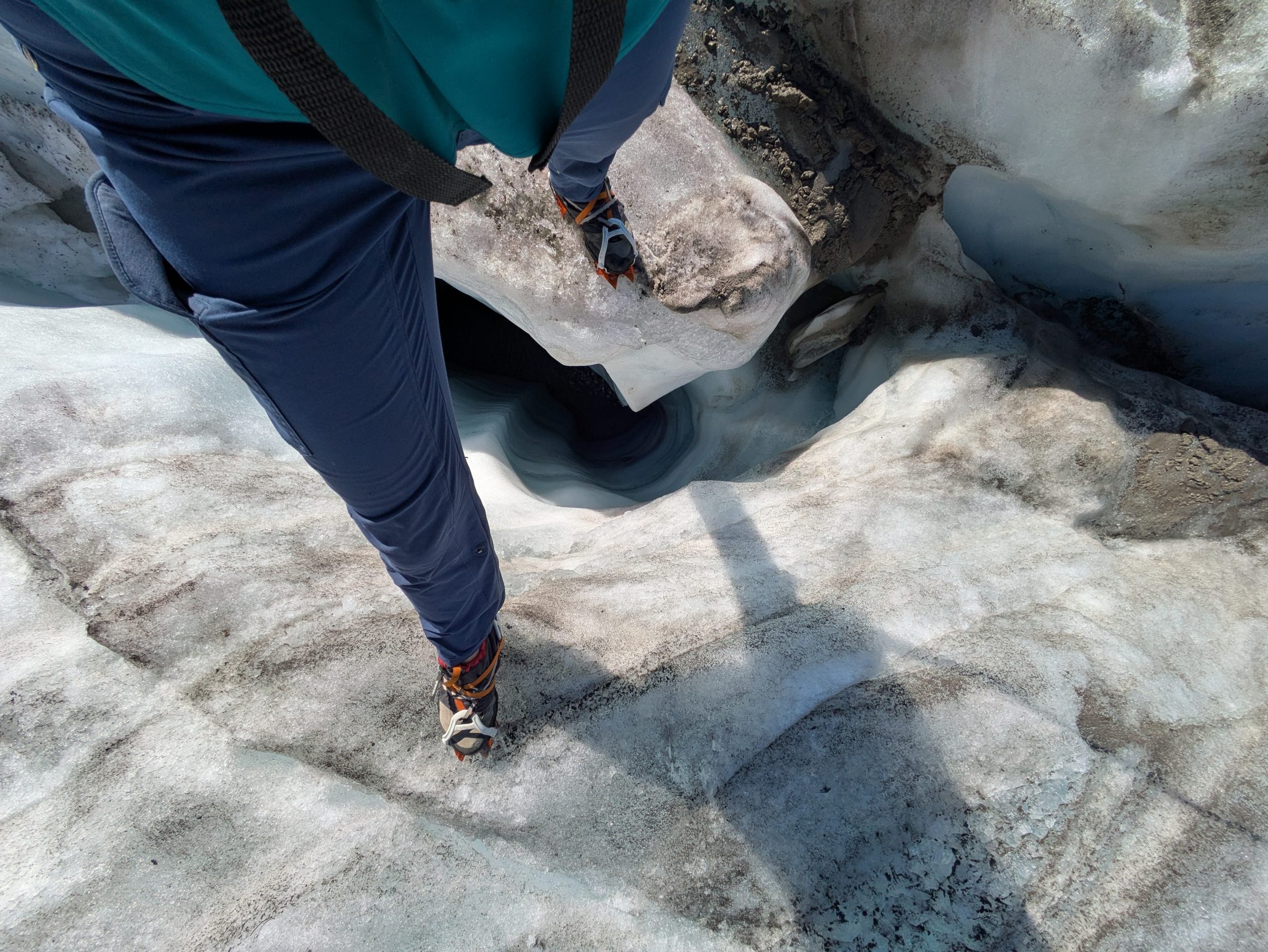
Speaking of larger lugs, a major upgrade for me over all other approach shoes for alpine terrain was that the Rapid XTs actually did well on snow. When I had to cross snowfields and didn’t want to stop to put on crampons, the shoes kept me from slipping and sliding everywhere, and I wasn’t worried about falling on my butt, or worse. The shoes were even stiff enough that I could attach universal crampons and still feel comfortable on steep snow and even 35-degree glacial ice.
Numerous times this summer, a climbing partner would opt for a more specialized shoe for the approach, and I was always glad I chose the Rapid XT. For example, on a trip into the Northern Pickets to do the first ascent of the southwest ridge of Mt. Whatcom, a trip that involved 32 miles and 13,500 feet of elevation gain, my partner chose to wear trail runners for more comfort on the approach. However, after the initial 1,000 feet of hard climbing in technical climbing shoes, the ridge relaxed and we moved into low-fifth-class simul-climbing. My feet were so happy to be able to switch from the tighter climbing shoes back into the Rapid XTs and still feel confident climbing over loose, exposed terrain. My partner had to stay in his climbing shoes the whole way. Ouch!
On a trip into the Redoubt-Spickard zone of the North Cascades, in anticipation of miles of talus and some glacial ice, my partners chose to wear mountain boots to gain more support on the talus and more security on the ice. I was once again impressed that, because of their slightly stiffer nature, the Rapid XTs were supportive and comfortable on the approach. I started to feel a little nervous, as I looked up at the blue ice on the glacier above, that we would have to climb to get to our camp that night. Luckily my doubts faded quickly as the Rapid XT shoes felt plenty secure on the ice with a pair of crampons strapped to them. I was once again glad to be wearing the Rapid XTs and not carrying the weight of mountain boots in my pack while climbing.
Regarding water resistance, the Rapid XT’s suede upper primarily provides durability and resistance to water, mud and snow, while still allowing for some breathability. A number of times over the course of testing these shoes, my foot went for the occasional unplanned dip in a river and snow would cumulate enough to dampen the leather upper. Throughout these moments, my foot remained nice and dry. With noticeable design variations, the Rapids also come in a synthetic low-top, a Gore-Tex synthetic low-top and a mid-high-top leather with Gore-Tex. High-tops would obviously provide even more moisture protection, but they add weight and take up more room in a pack. As well, Gore-Tex would provide waterproofness over water-resistance, but they tend to hold more sweat and can be less durable, depending on the primary material chosen by the manufacturer.
Compared to the range of approach shoes, the Rapid XTs are on the heavier side coming in at 330g (11.6 oz) per half pair for a size 38. For example, Scarpa’s Rapids (not the XTs), which are synthetic and more like a trail-runner hybrid, weigh in at 250g (8.8 oz). When moving off-trail on talus, gravel, snow, and ice, a stiffer, lugged sole is preferred—so the Rapid XTs were a perfect choice in these conditions. For longer approaches with more mellow terrain, weight matters and having a lighter approach shoe would be a better choice.
The main downside to the Rapid XTs was that the material next to my ankle wore through fairly quickly. It did not affect the function of the shoes, only the aesthetics. Despite this, I expect these shoes to last for many more miles. They also only come in what is referred to on Scarpa’s website as Conifer/Sunny Lime—I would describe the color as grey—great color for not looking noticeably dirty or if you are a person who prefers a less flashy expression, but it would be nice if there were some fun options.
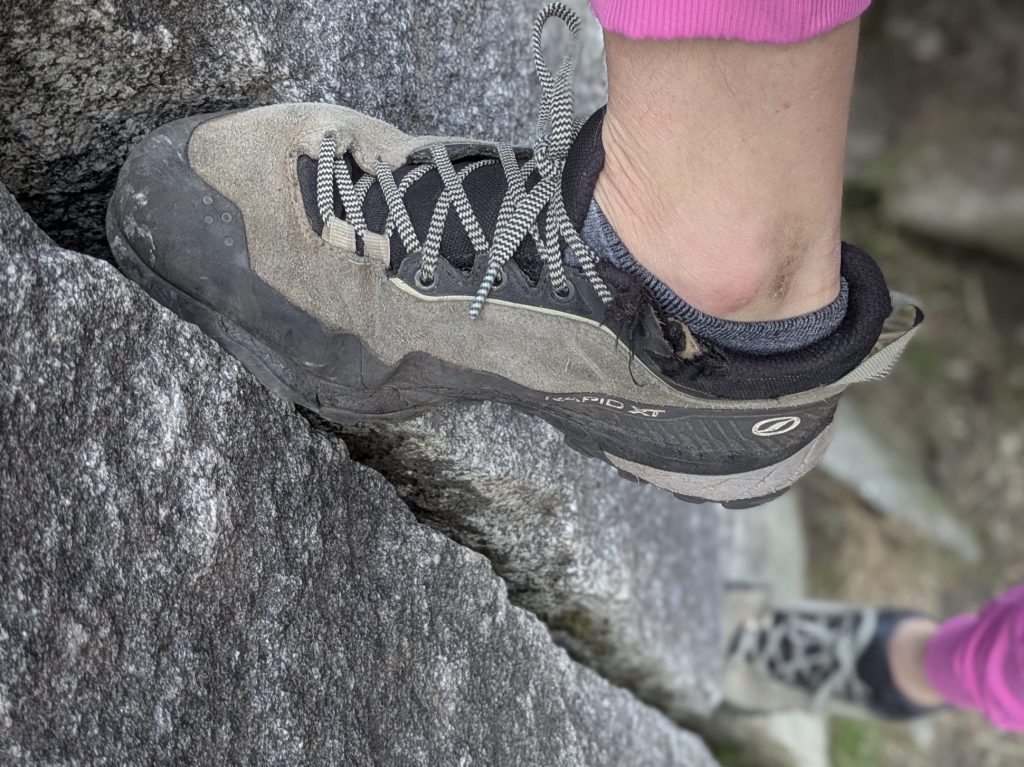
A note on sizing: I am typically a women’s size 7. However, I usually wear a women’s size 6.5 (Euro 37.5) in Scarpa approach shoes and found that to be true of the Rapid XT as well. Consider sizing a half-size down from your normal shoe size. I have a slightly narrow foot, and I had some room to spare width-wise, so these would probably fit those with a wider foot as well.
For me, the Scarpa Rapid XT quickly went from just another pair of approach shoes to the ones I will reach for first. With solid edging for moderate climbing, stability on snow and talus, compatibility with universal crampons and durability that surpasses many other options, they’re best suited for climbers and alpinists who need one shoe to handle everything from long approaches to technical scrambling.
Pros: Climbs well, comfortable on long approaches through varied terrain, lugged sole provides traction on snow and mud, stiff and supportive
Cons: Some cosmetic durability issues around inner ankle bone, limited color options
Lani Chapko is a certified AMGA Rock and Alpine Guide who calls the perfect granite and bright green moss of Index, Washington home. Enjoying running around in the alpine and getting humbled by Index in the summers, she chases sunnier rock in the fall and winters travelling to the Desert Southwest, Wadi Rum, El Potrero Chico and beyond for work and play. Lani has put up first ascents all over from chossy alpine climbs that are unlikely to be repeated, to classic multipitch sport climbs. She is constantly putting her gear to the test in wild environments. Lani owns her own guide service called, The Climbing School www.theclimbingguides.com. Follow along on her adventures: @goatsonropes.