

MSRP: $119.95
C.A.M.P.’s Corsa Alpine Ice Axe could be a specialized item that only comes out on rare occasions, or the opposite—it could be the do-it-all that gets tons of action—an alpinist’s best friend. At the time of this review, there are 10, yes 10, different types of ice axes to choose from on C.A.M.P.’s website, each made with an ideal scenario or scenarios in mind. So really, depending on the climber’s type of desired alpine objectives, both standard local go-tos and infrequent faraway quests, the worn-through tool for one could be the dust-collector for another. Let’s see if it’s the right one for you.
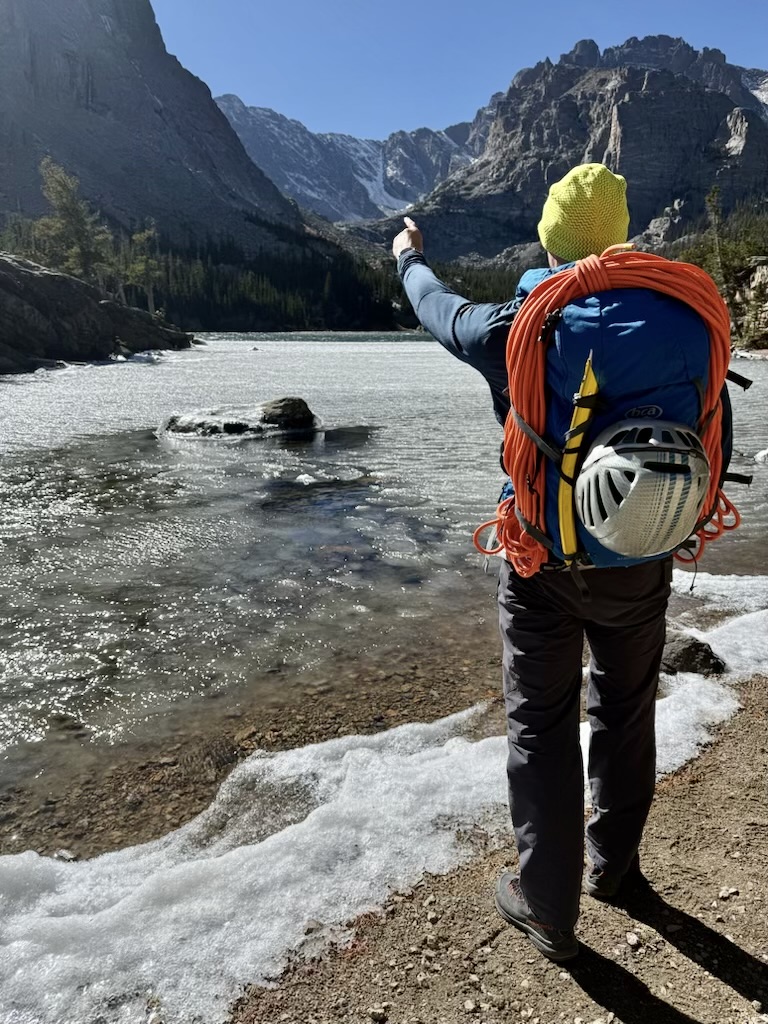
IFMGA guide Ben Markhart and I (Mike Lewis) tested a 45cm length of the Corsa Alpine in a variety of mountain environments (it comes in 45, 55, and 65cm lengths). Ben took the axe to the Alps near Chamonix, France and to Mt. Shuksan in the North Cascades of Washington; in both environments, most of the climbing was on rock with minimal sections of glacier travel and snow climbing. I took the axe into the Rockies of Colorado and climbed a handful of low grade alpine ice, moderate mixed, and steep snow routes. We both liked the axe in the realms it was meant to be used and were glad to have other tools for other types of terrain.
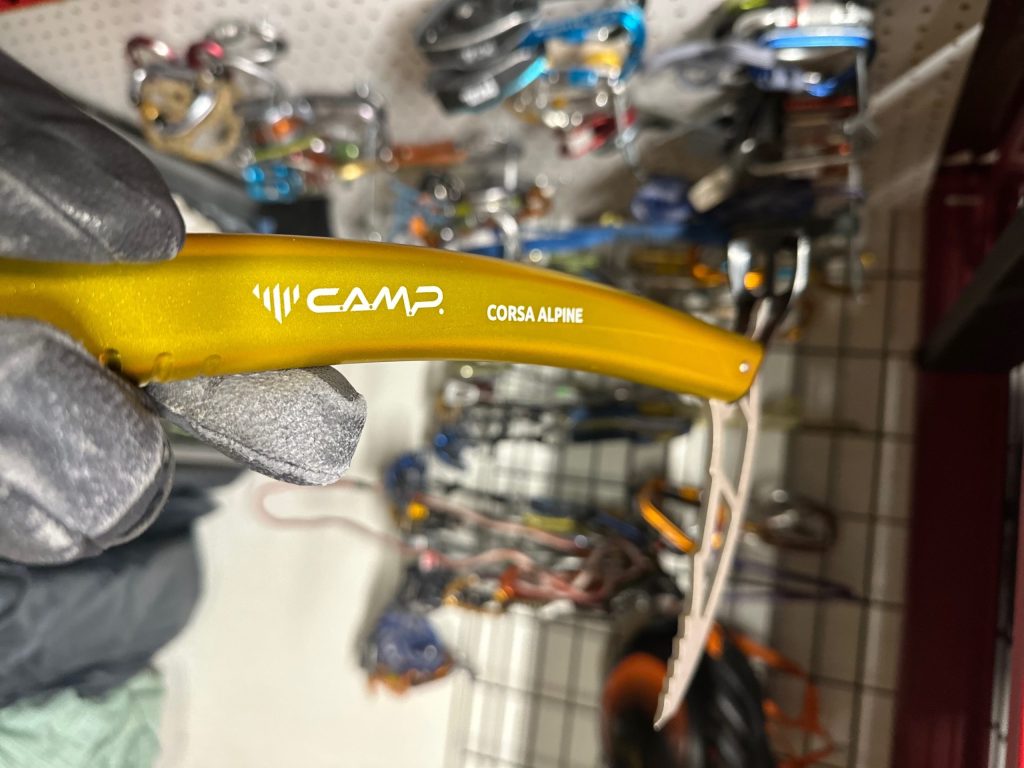
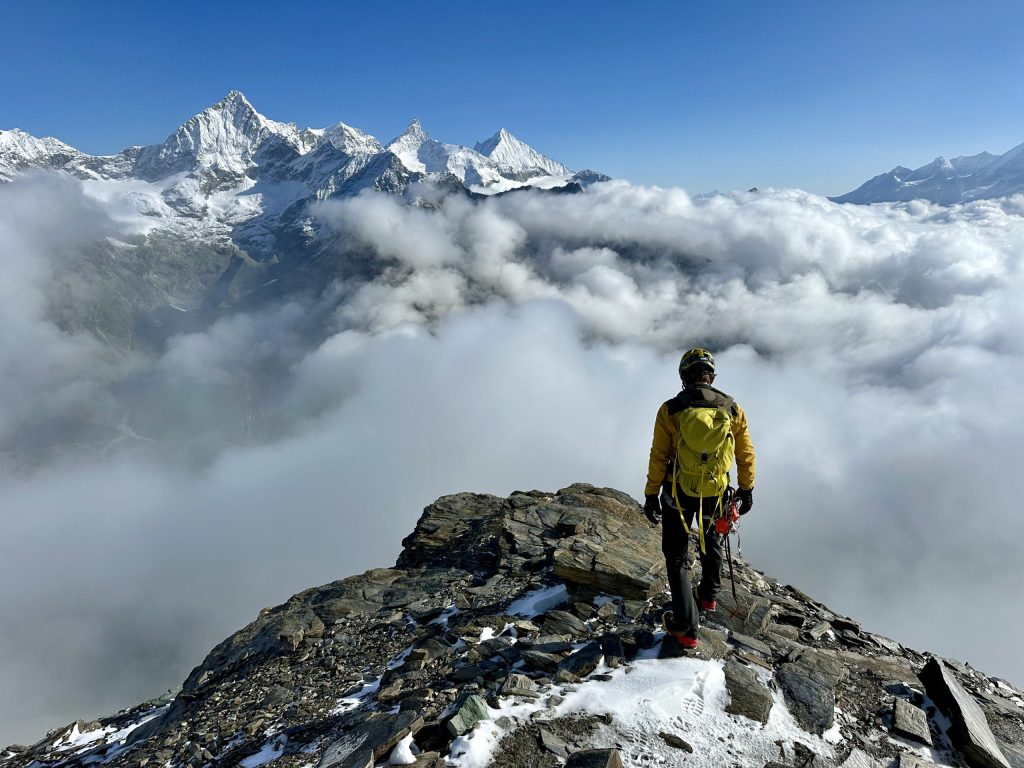
On the types of climbs that Ben used the axe, the axe was auxiliary and only came out when needed to cross a section of snow, or not at all. In these situations, a lightweight axe that takes up little space in a pack is key to keeping the pack load light and streamlined so the alpine rock climbing is minimally impacted. On the telepheriques of the European Alps, the massive gondolas that carry up to 200 people who are often packed in like sardines, one can spy the more advanced climbers because their ice tools are hidden away inside small climbing packs with the aim of being minimal and oriented toward the fast-and-light, as well as to avoiding snagging fellow travelers with sharp points in the sardined tram. Ben found the 45cm Corsa Alpine to pack perfectly into a standard medium-sized 22-ish liter alpine pack and function as it should on snow when needed.
In the Rockies, I was able to see where the Corsa Alpine shined, as well as where I would choose another type of tool. Having used an earlier version of this same axe and others like it in the past and present, I can speak to its use in other environments as well.
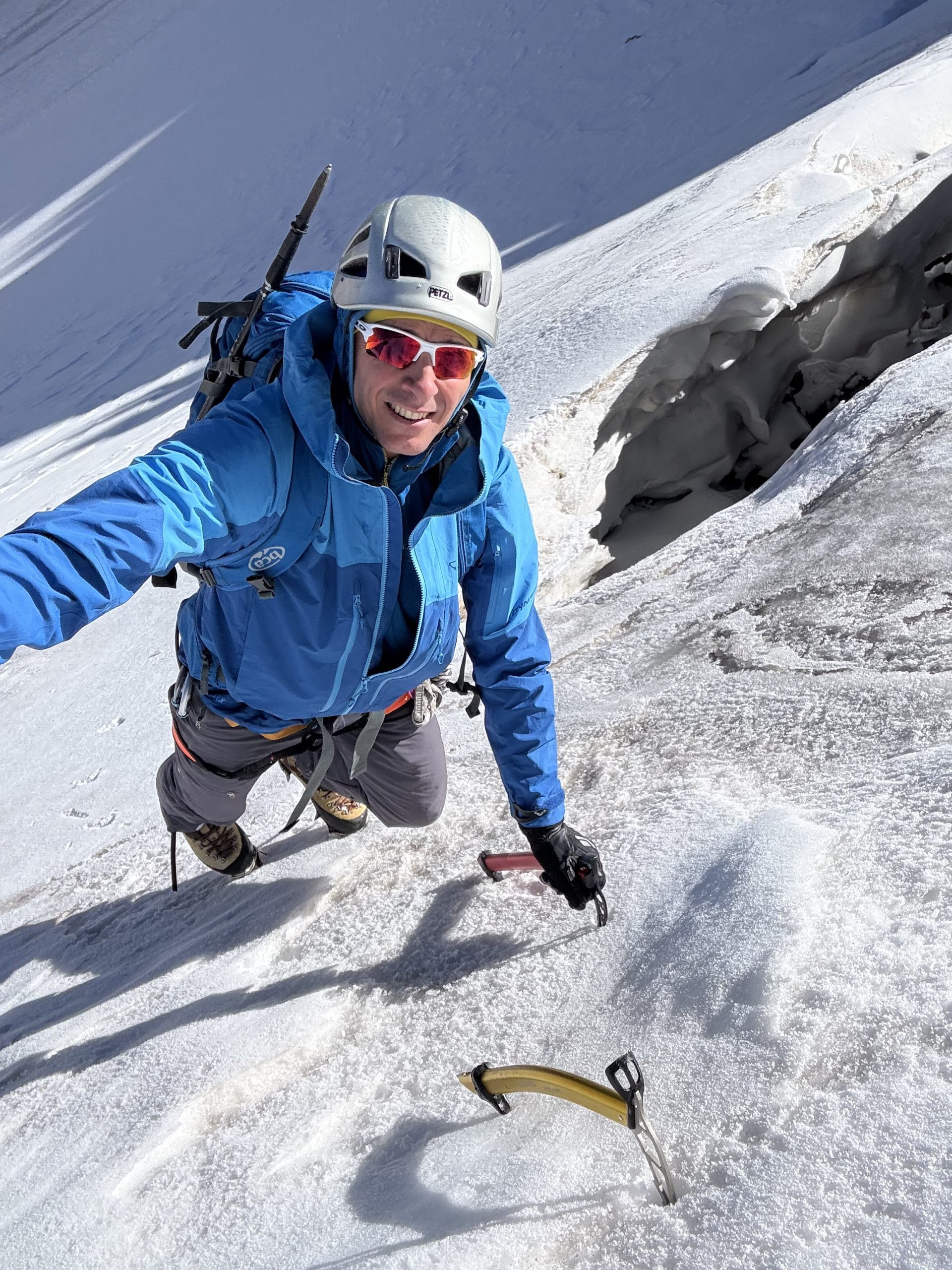
Primarily, the Corsa Alpine ice axe is made to climb snow. The downward curved pick digs into hardened snow and holds like a champ. When climbing the Tyndall Glacier in Rocky Mountain National Park, which had a final section of hard snow that was more than 50º and almost ice, the Corsa Alpine felt like a solid hand jam, a perfect finger lock, or a deeply sunken 3-inch cam in the upper third of Supercrack of the Desert in Indian Creek. I really felt like my other tool and both crampons could have blown out and the Corsa Alpine would have easily stuck and held my entire body weight. The curved shaft and the Trigger Fast Lock, the additional pinky rest accessory that can be purchased separately, made for a very pleasurable and secure-feeling experience. The curved shaft allows for a more aggressive swing while the pinky rest keeps the hand from slamming into the snow/ice again and again and provides incredibly more security in gripping the tool. The curved shaft also provides a handhold that gives the fingers space between the shaft and the snow when rapidly frontpointing up snow of 40º or more.
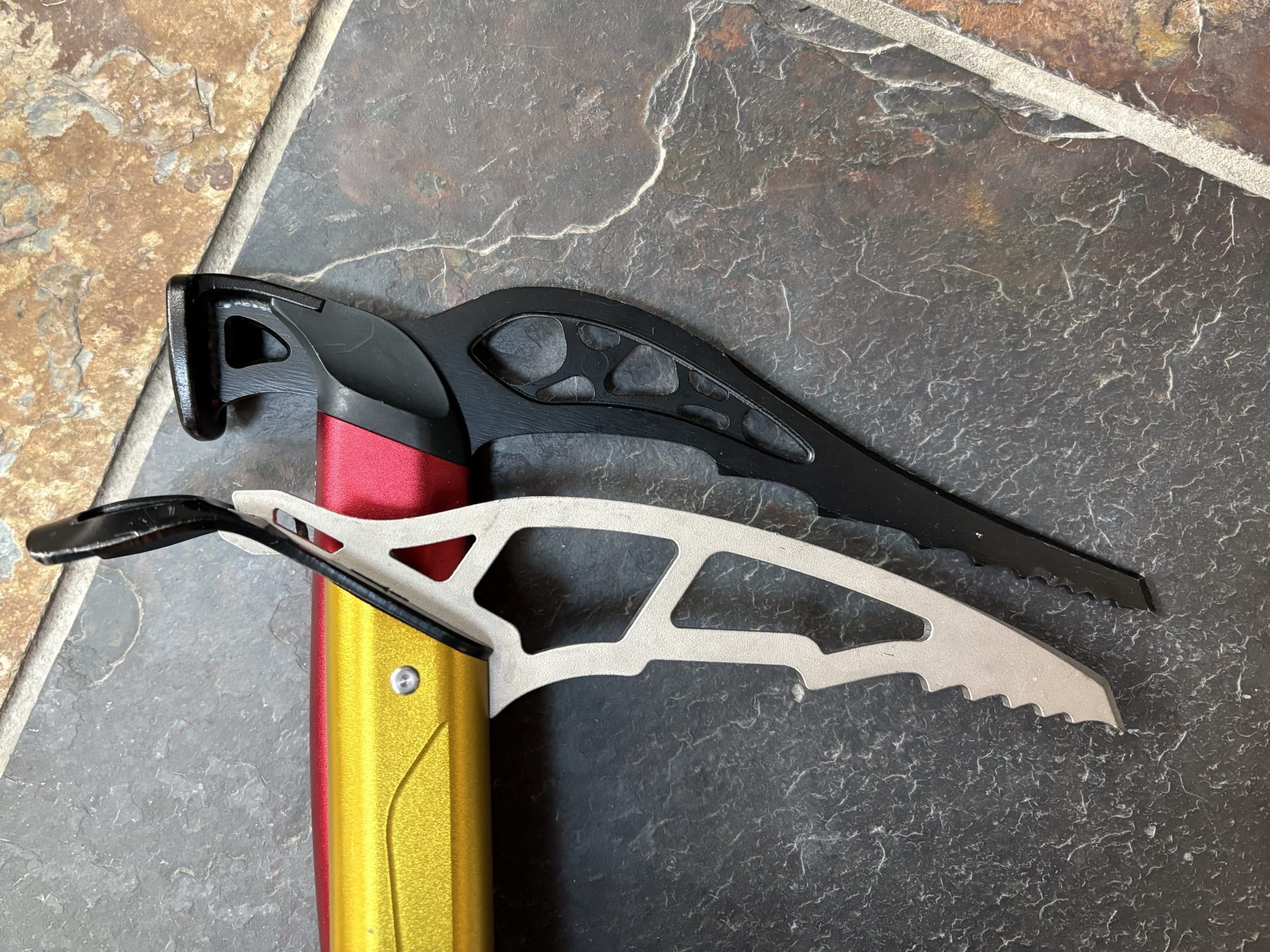
To push the Corsa Alpine Ice Axe a little, I used it again in Rocky Mountain National Park on a long finger of Alpine Ice II+ near Sky Pond. The ice was solid without a touch of snow on it—about as good as ice gets, hard but not too fragile. My left hand held the Corsa Alpine while my right held another similar sized axe but with a recurved pick made more for steep ice (similar to the pick on C.A.M.P.’s X-Light). The difference was substantial. The ice pick stuck immediately and felt quite secure, and no matter how many times I swung the Corsa Alpine’s pick, it never really grabbed—there was always a little shakiness as I pulled on it to swing the other axe. My take-away: keep the Corsa Alpine to snow and only use it on low angle ice if you feel really solid in your ice climbing skills and being on your crampons. If I encountered a short section of grade II Alpine or Waterfall Ice on a longer alpine snow route, I would personally feel fine to use the Corsa Alpine, but I have a moderate to high risk-tolerance and others might not feel so willing.
The Corsa Alpine is a Type 1 ice axe, meaning that it is not meant for intense climbing where the pick would be torqued in odd directions, or where the tool would be holding the entire body weight of the climber. Type 2 ice axes are your standard ice climbing, mixed climbing, and drytooling types of axes, such as C.A.M.P.’s X-Dream.
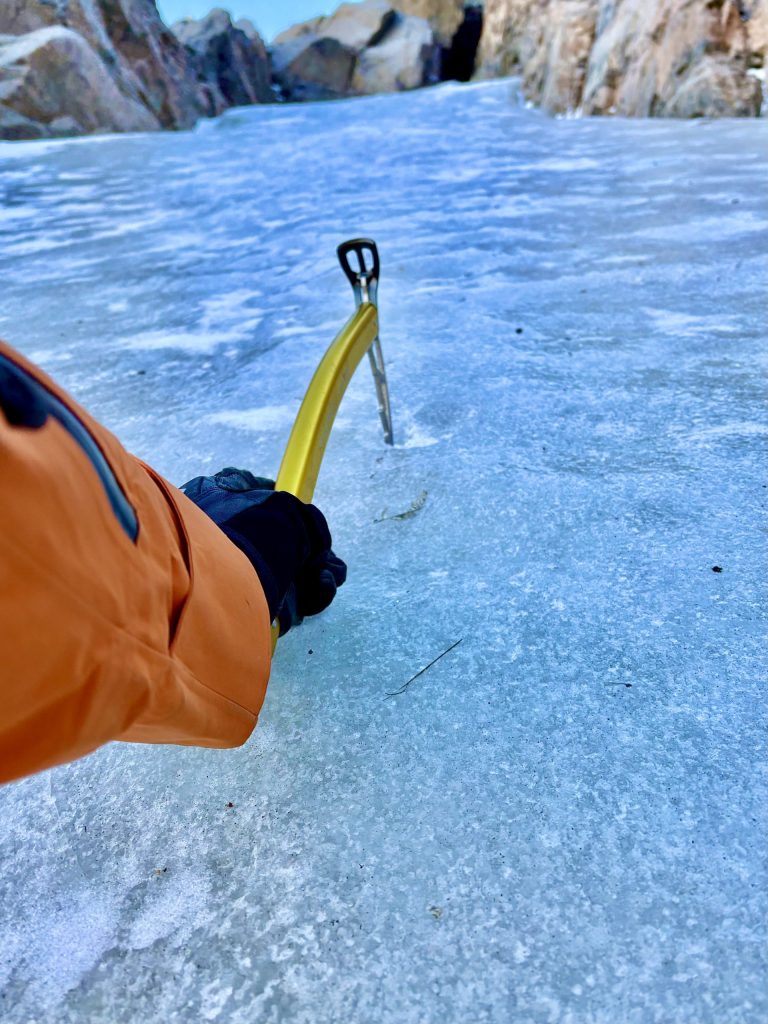
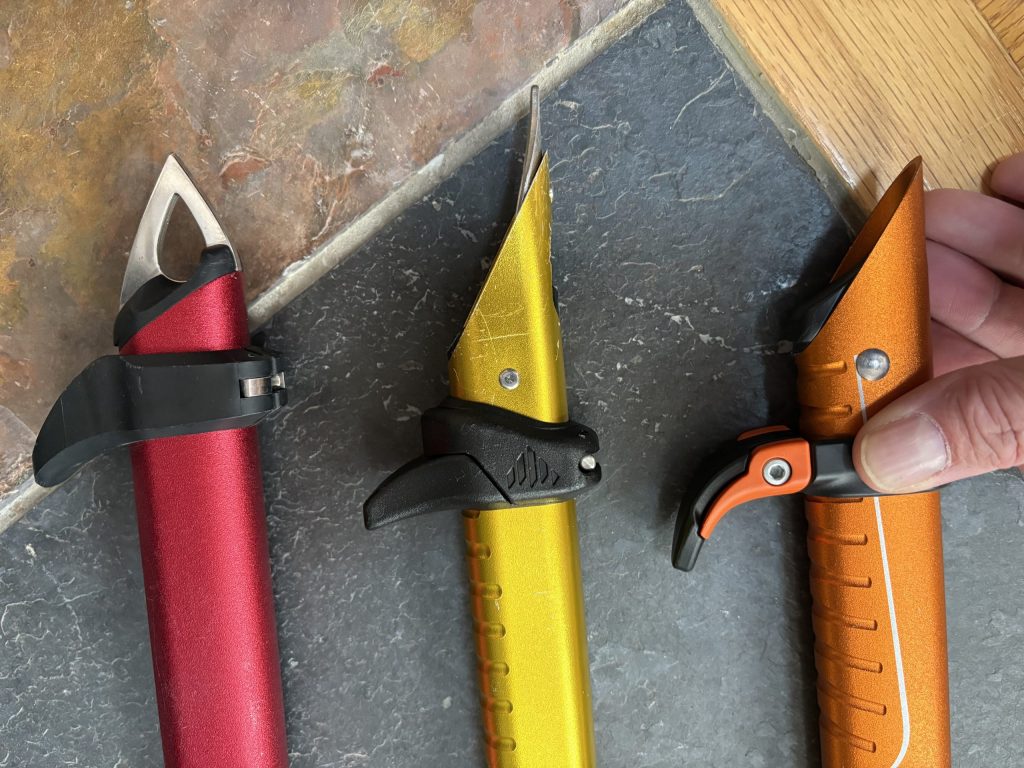
The Corsa Alpine is approved for general mountaineering and it can be used if self-arresting on snow is required. For your standard glacier climb, such as most routes on Mt. Rainier, Mt. Shasta, or Mt. Baker, where most of the climbing is walking upright, a climber may want to use the 65cm length. When making a shorter 45 or 55cm axe work in those environments, I like to have the axe in my uphill hand ready for a self-arrest, and then a retractable ski pole in my downhill hand for stability while walking. I found that the 45cm axe reached the snow when the slope angle was 28 degrees and higher. I personally like to have the Trigger Fast Lock (pinky rest) at the bottom of the short axe so that in case of self-arrest, I can drop the ski pole and grab the bottom of the shaft of the axe at the pinky rest so that my hand won’t slip off the bottom of the short, smooth-shafted axe. The Trigger Fast Lock is very easily moveable, so if the terrain steepens, it can be moved up higher on the shaft and the shaft can be used to plunge into softer snow for stability and safety.
Neither Ben nor I found any obvious negatives about the Corsa Alpine Ice Axe, but to balance the review, we can offer a few limitations or considerations to be aware of. The carbon steel spike on the bottom end of the shaft is quite different from most others out there; the small piece of shiny steel looks more like a crampon spike than the large shark’s tooth on most axes. This is great for poking into snow, but if, like Ben, you like to stow your tool inside your pack, beware of poking a hole through the bottom or top of your bag; consider making a little spike protector to cover it. It’s not that other tools won’t poke through as well, but it seems a little more likely with this tool.
Ben would like to see the Corsa Alpine be available in a hammer option, which would allow one to pound new pitons or reinforce old ones on mixed routes. In ski mountaineering, sometimes rappelling into a couloir requires leaving a piton or using pins that are already in place. Ones already in place in alpine environments are notorious for loosening over time with the freeze and thaw of the seasons, and it’s a good idea to knock them a few times before trusting your weight on them. On the flip side, the adze on an ice axe provides a nice platform to place a palm when using an ice axe in the dagger position, or chop a ledge in snow/ice.
The Trigger Fast Lock pinky rest is flatter than the pinky rest features on similar axes from other companies. I didn’t find this to be much of a problem in regard to impacting my climbing ability on steep snow, though I do like the secure feel of the more curved pinky rests.
There are two final details of interest. One, for those who like the security of a wrist leash for their mountaineering axe, the Corsa Leash is available to purchase separately. Second, the website says the 45cm axe weighs 250 grams. My scale at home, bought off Amazon, says 255—a few hairs of difference.
I am already looking forward to spring when I can lodge my skis on my back and stairmaster my way with crampons and an ice/snow tool or two up a few thousand feet of hard snow, sit around a little to wait for the sun to soften the snow, and then carve my way back to the valley. After that, I’ll be heading to the Alps for the summer to climb Mont Blanc via the Troi Monts, the Matterhorn to guide a few clients up the Hornli Ridge, and a plethora of other personal and guiding objectives in the Italian, Austrian, and Swiss Alps, and then finishing the summer off with Mt. Ararat in Türkiye. C.A.M.P.’s Corsa Alpine Ice Axe will be a perfect choice for all of these options. Can’t wait!
Pros: lightweight, small and stowable, stable in snow, adequately curved shaft for aggressive swings, pinky rest and leash accessories available
Cons: spike is pokey, pinky rest is flatter than other brands
Ben Markhart is an American IFMGA Mountain Guide based in Boulder, Colorado. He specializes in custom expeditions and training programs through his business Markhart Mountaineering. You can see more at www.benmarkhart.com and instagram at @benmarkhartguiding.
Mike Lewis is the editor and program manager of the Mountain Standards department at Alpinist. Mike is also an IFMGA/AMGA Mountain Guide, psychotherapist, and dedicated athlete living in Superior, Colorado. Find Mike on Instagram at @lunchboxjackson.