MSRP: $99.95 – $129.95
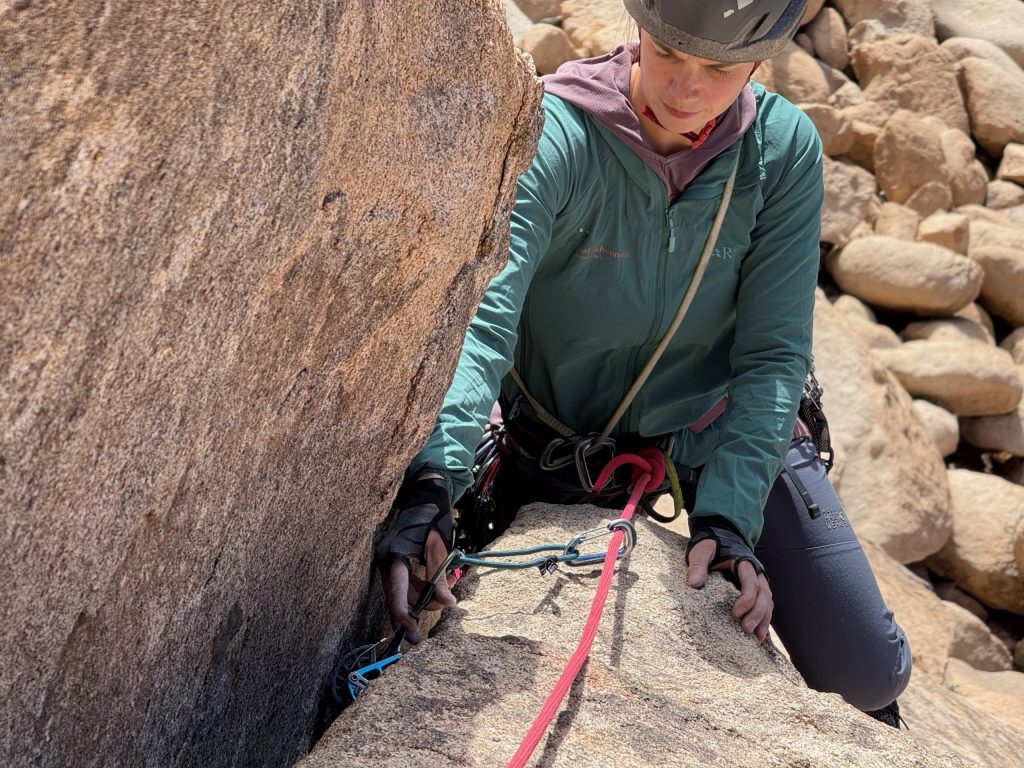
Nearing the end of the 150-foot fourth pitch of Dream of Wild Turkeys, I was running out of quickdraws. I knew that the thin crux comes at the very end of the pitch and is protected by three bolts, so I needed to ration my use of slings for extension. Luckily, I had a couple of the new Wild Country Friends left on my harness. I plugged a 0.5 Friend, extended the new Flow Cord sling, and continued up the sheer, varnished rock of the Black Velvet Wall toward the crux.
The Red Rock Canyon of Nevada and California’s Joshua Tree served as perfect testing grounds for the newly designed Wild Country Friends. I plugged these camming devices into cracks on routes up to thirteen pitches in length, used them to teach budding trad leaders how to place protection, and tested them extensively on both granite and sandstone. I climbed with several other guides whose racks included older models, which gave me a variety of perspectives on the design updates.
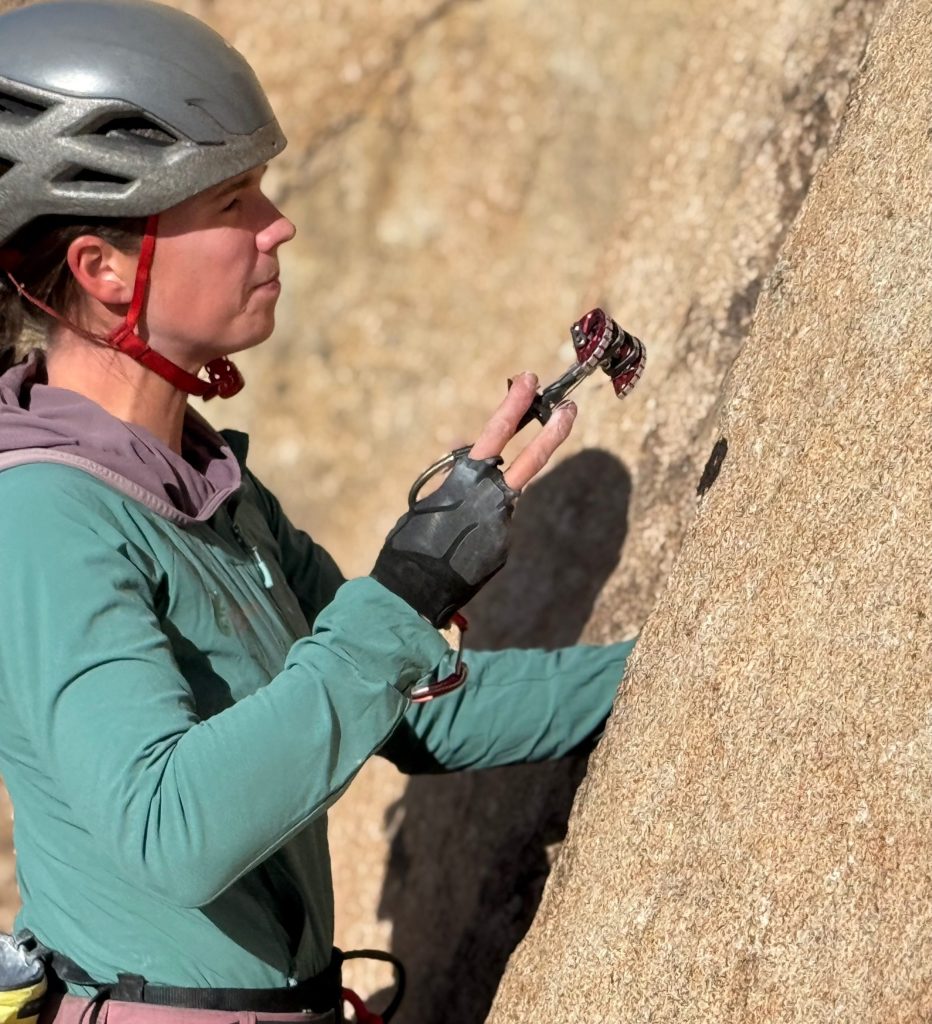
Wild Country Friends have long been a solid, all-around camming device. The ergonomic thumb loop and triggers make them easy to place with one hand, and the dual axle design increases the size range of each cam while improving stability. The color coding is intuitive, and the extendable sling is a unique feature that helps reduce the number of draws needed for a given pitch. I often find myself running out of alpine draws on the long pitches in Red Rock Canyon, so these extendable slings are a game changer! The Friends are durable, lightweight and easy-to-use cams that hold their own among the best options on the market.
The new Friends retain all of the key components that make them a reliable product while improving several features, most notably the sling material and design. The new Flow Cord extendable slings have a core-mantle construction, meaning that an external sheath protects the strong internal core. Both the core and sheath are made with UHMWPE (ultra-high-molecular-weight polyethylene), which is a polymer material known for its durability, toughness and high-wear resistance. The sheath also contains nylon, which allows for more obvious color coding than the previously attached Dyneema slings. An added wear indicator inside the new sheath alerts the user when it’s time to replace the slings.
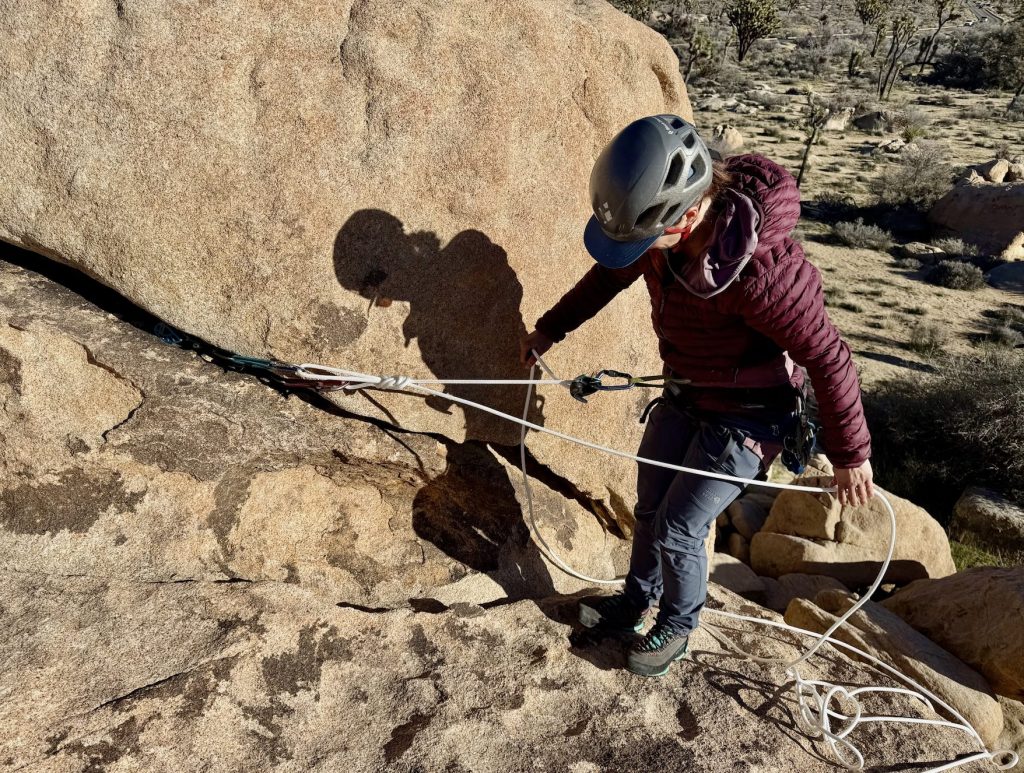
As a Joshua Tree local, I appreciate the added durability of the new slings. The coarse monzogranite found in the Mojave Desert tends to shred soft goods, and I’m always wary of including Dyneema in my anchors if they contact the rock in any way. While I would still avoid repeated rubbing of any slings on rock, the durable Flow Cord in the new Friendsinspires more confidence. After several months of guiding full-time in Joshua Tree and setting up dozens of top-rope anchors, I haven’t noticed any signs of wear on the slings. I did notice that the cam axles started getting a little sticky, but this is a common maintenance problem and typically solved easily with cam lube.
The other major improvement on the sling design is the low-profile, flexible bar tack; this is the first thing my climbing partners noticed when I showed them the new Friends. The previous model’s Dyneema slings were sewn with a 2.5inch-long bar tack. Multiple climbing partners reported that the longer, rigid bar tack commonly gets stuck behind the thumb loop during the process of extending it. You could avoid this problem by clipping the Dyneema sling on the same side as the bar tack, but it’s not always easy to keep this in mind when cruxing-out on lead.
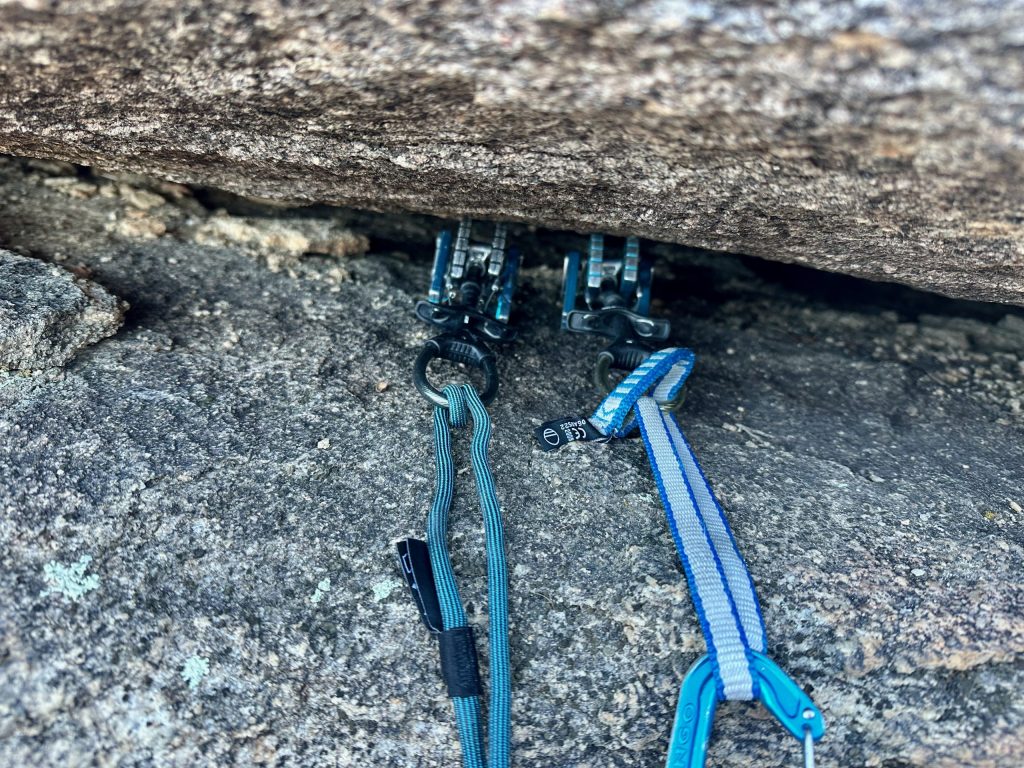
The new Flow Cord extendable slings have a more flexible, lower-profile bar tack. This design essentially solves the problem of the bar tack getting stuck; I never had to think about which side of the sling I was clipping. Now, the flexibility of the bar tack allows it to slide easily around the thumb loop, and its low-profile design prevents it from catching behind the loop. I climbed with a few AMGA Certified Rock Guides who said that this improvement makes them much more likely to add the new Friends to their racks.
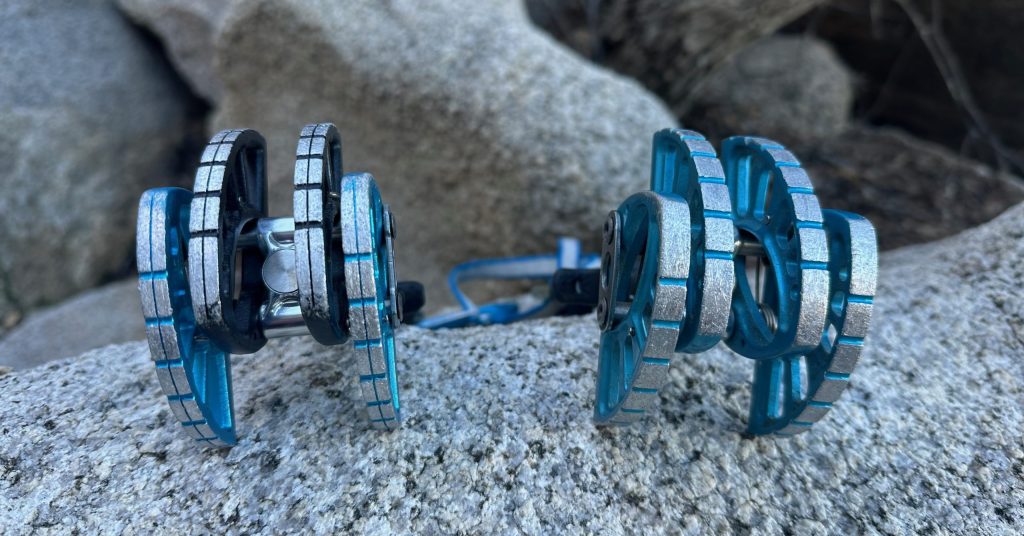
Wild Country also added traction to the lobes by upgrading the groove design. The lobes will now have grooves running lengthwise across the traditional horizontal grooves. To my surprise, Wild Country managed all of these improvements while also slightly reducing the weight; last season’s #3 Friend weighs 192g while the new #3 hits the scale at 175g, a 1/2ounce difference—which matters to those carrying large racks and paying attention to the little bits of weight that add up. The new Friends are just as strong as the old, with the new #3 Friend rated to 12kn with the sling doubled and 10kn with it extended.
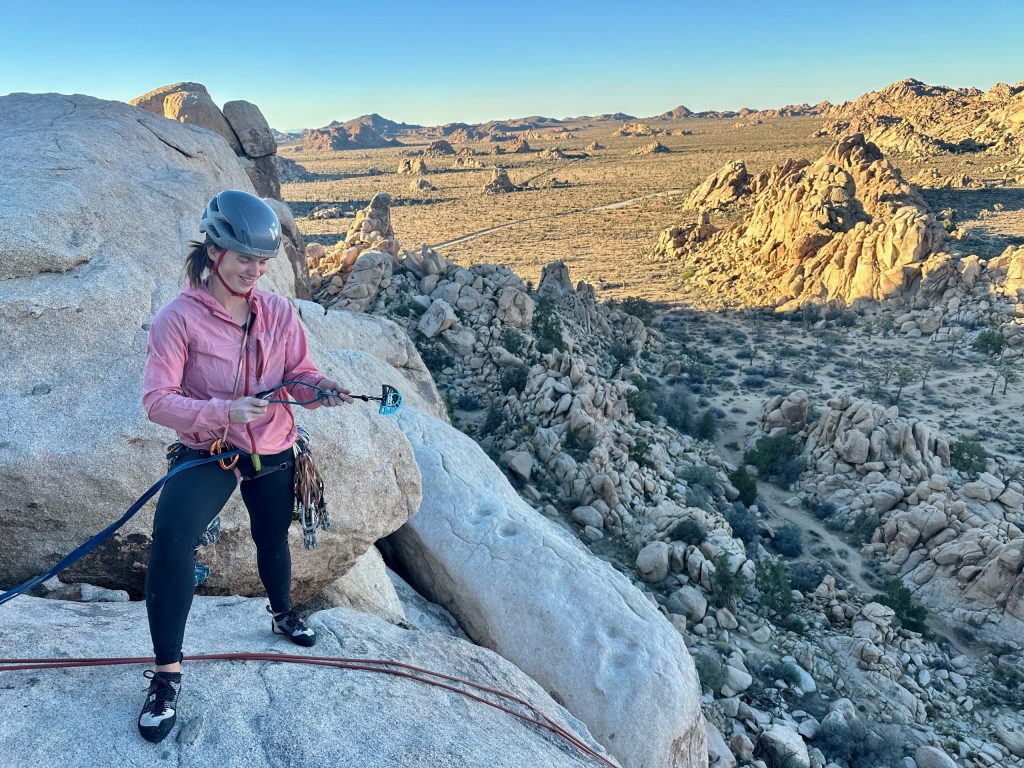
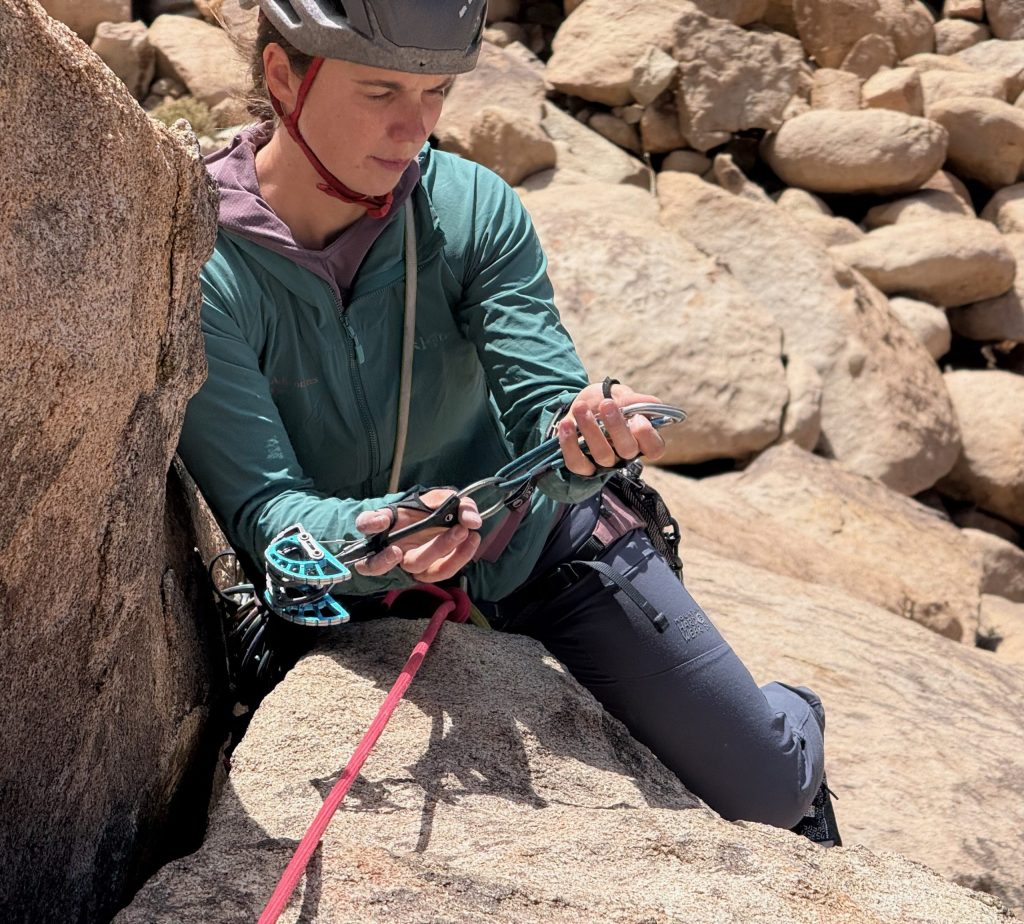
I discovered one slight downside to the extendable slings while following a couple of pitches up the Lost Horse Wall in Joshua Tree. I don’t like when gear hangs too low off my harness while I’m climbing, so my preference is that each time I clean an extended Friend (or any cam of any brand), I like to rerack the sling to its shorter length. I found it difficult to do this with one hand, and I had to search for stances that enabled me to take both hands off of the rock to rerack. If I were closer to my physical limit while following, this would be more difficult. On the flip side, the slings are easy to extend with one hand while leading—a key selling factor.
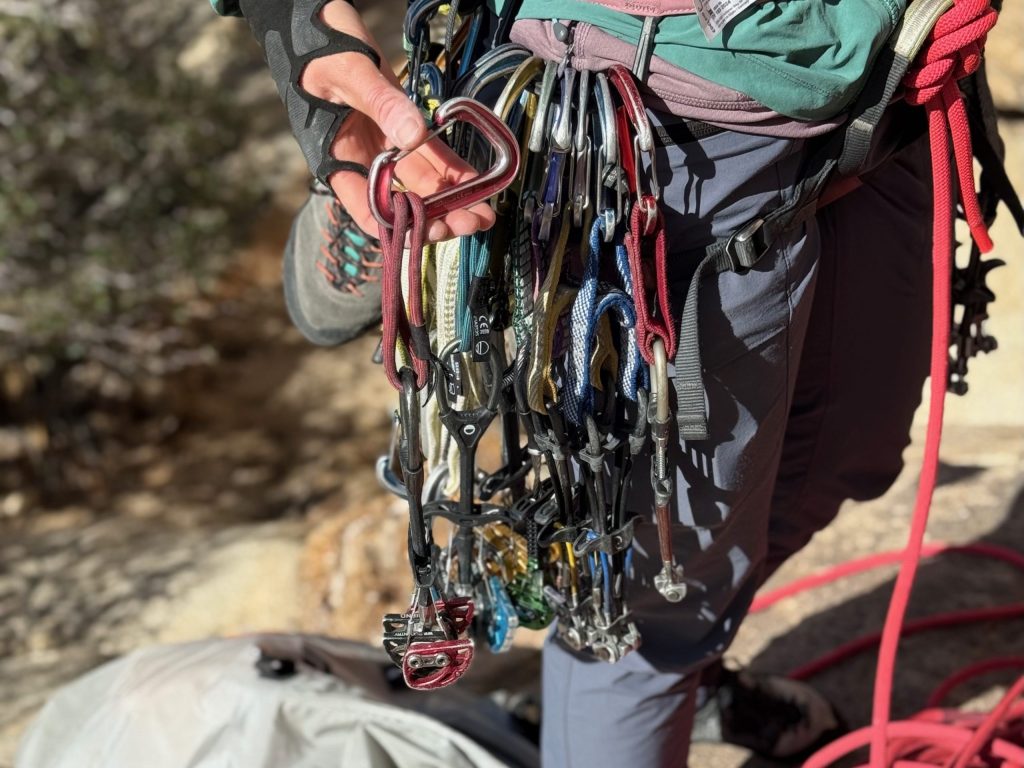
My rack is made up of camming devices from a variety of brands, and I often recommend this strategy to new leaders while I’m teaching trad courses. I’ve noticed that Friends are usually a hair bigger than equivalent sizes from other manufacturers; they might fit best when another brand’s device is slightly too small.
Avid crack climbers know that this slight variation in sizes can be beneficial for climbing splitters that vary slightly in width throughout the pitch. One such pitch at the Town Walls of Index, Washington continues to evade me; I keep failing to send the steep, wide-hands crack Rattletale, partly because of cam sizes. Right at the crux, when the crack starts to get steeper, it also widens slightly. One prominent brand’s #4 becomes a bit over-cammed and tight while their #3 is too small and loose. While pumping out on the steep jams, I always make the mistake of trying to force in the over-cammed #4 then yell, “Take!” to retrieve my nearly stuck cam. With its slightly larger range, the #2 Friend might be just what I need to redpoint this route—can’t wait to give it a try!
Compared to the uniformly parallel cracks found in Index or Indian Creek, the cracks in Joshua Tree and Red Rocks tend to be more irregular. Gear placements are often found in smaller pods within the main crack system, and horizontal cracks are common. While the standard Friends work well in a range of rock types, I also like to include cams with narrower lobe widths on my rack, especially while climbing in Joshua Tree. Wild Country’s Zero Friends are made with narrower lobes that fit well in irregular pods. They also have more flexible stems, which are ideal for horizontal cracks.
The Wild Country Friends have long been a go-to camming device for good reasons, and the new design only improves upon the old one. To me, the biggest improvements are the increased durability of the slings and the low-profile, flexible bar tack. With a #2 and #3 Friend on my harness during the next Index season, I’ll have to come up with another excuse for not sending my project. At least there’s always the humidity in Index to blame!
Pros: low profile; flexible bar tack makes sling extension smoother; slings made with durable, core-mantle construction; improved lobe design adds traction; slightly lighter than previous model
Cons: extendable slings are harder to rerack with one hand
Working year-round as a rock and alpine climbing guide, Katie Griffith puts her gear through the wringer. She spends much of the year in Joshua Tree, California, where the coarse monzogranite shreds basically everything, especially shoes, pants and ropes. During the summertime she heads up to the Cascades to further destroy any remaining gear on 6k approaches and in most weather conditions you can imagine. Katie is psyched to write for Mountain Standards and let readers know which products hold their own when the going gets rough. You can find more of her writing and guiding offerings at ktgriffith.com and follow along at @kt_griffith.