MSRP: Alpinisto 50 ($299.95); Alpinisto 25 ($199.95)
Over the winter and spring of 2025-26, I had the opportunity to try out two climbing packs made by Gregory: the updated 25 and 50L versions of the Alpinisto. Spanning a few decades, two iterations of Gregory’s 75L Denali expedition pack served as my carry-all workhorse on numerous Pacific Crest Outward Bound courses and South American personal and guiding expeditions; the Denalis gave me an idea of the generally high quality of Gregory’s packs, especially the comfort and stability of their carrying systems, their tendency toward useful bells and whistles, and the functional intention behind their designs.
The Alpinisto packs supported my anticipated expectations—well built, interesting and utilitarian design features, enjoyable to carry, and highly functional for alpine climbing. I tested these packs on a six-week ski trip to Canada, backcountry and side-country skiing in Colorado, and cragging, scrambling and general adventure days in Rocky Mountain National Park and throughout Colorado. Overall, I really like these packs, especially the 50L version. Some features are extraordinary and some I could do without, though others will love them. Both packs are versatile for a variety of adventures.
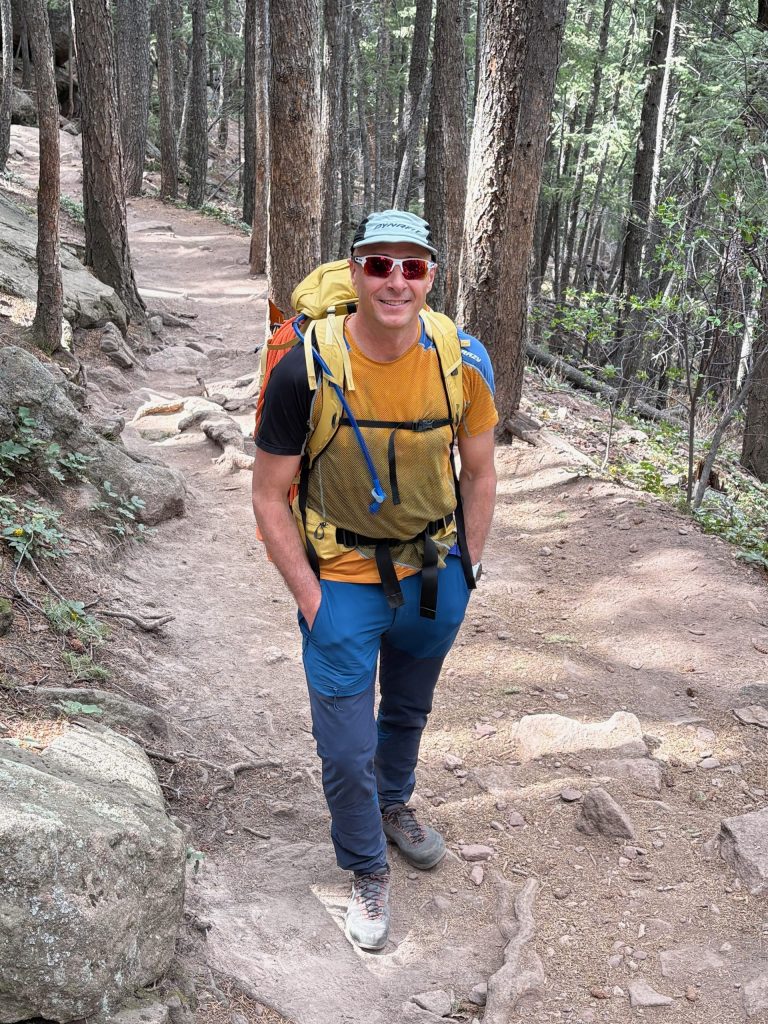
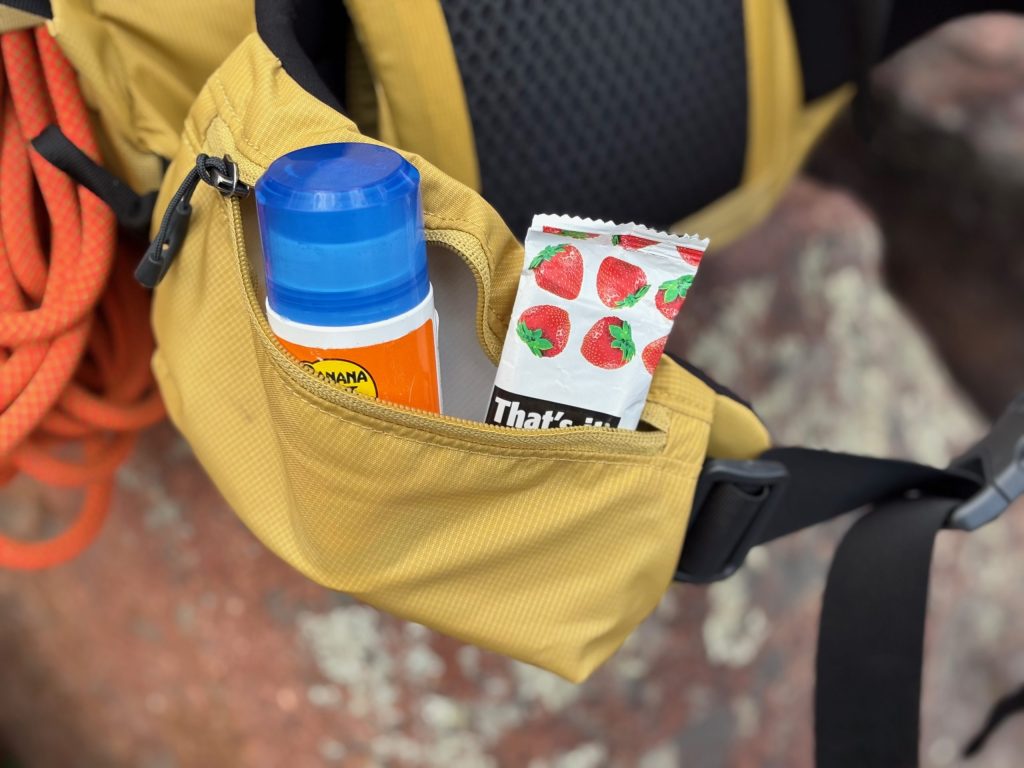
On a fitness training day in the Flatirons, I filled the Alpinisto 50 with 41 lbs. and covered ample mileage and elevation to get an initial feel of its ability to carry weight—no problem; the stable carrying system could have easily handled more, though I came close to maxing out the 50-liter interior and the external carrying capacity. Multiple adjusting features allowed me to move the weight around, from shoulders to hips, forward and back, and as already stated, my ongoing experience of Gregory packs carrying weight well was re-affirmed. Numerous external features allowed for adding ice tools and a rope in a variety of ways. A sizeable well-placed pocket on the hip made energy chews accessible, and my water tube fed smoothly from the internal water bladder compartment.
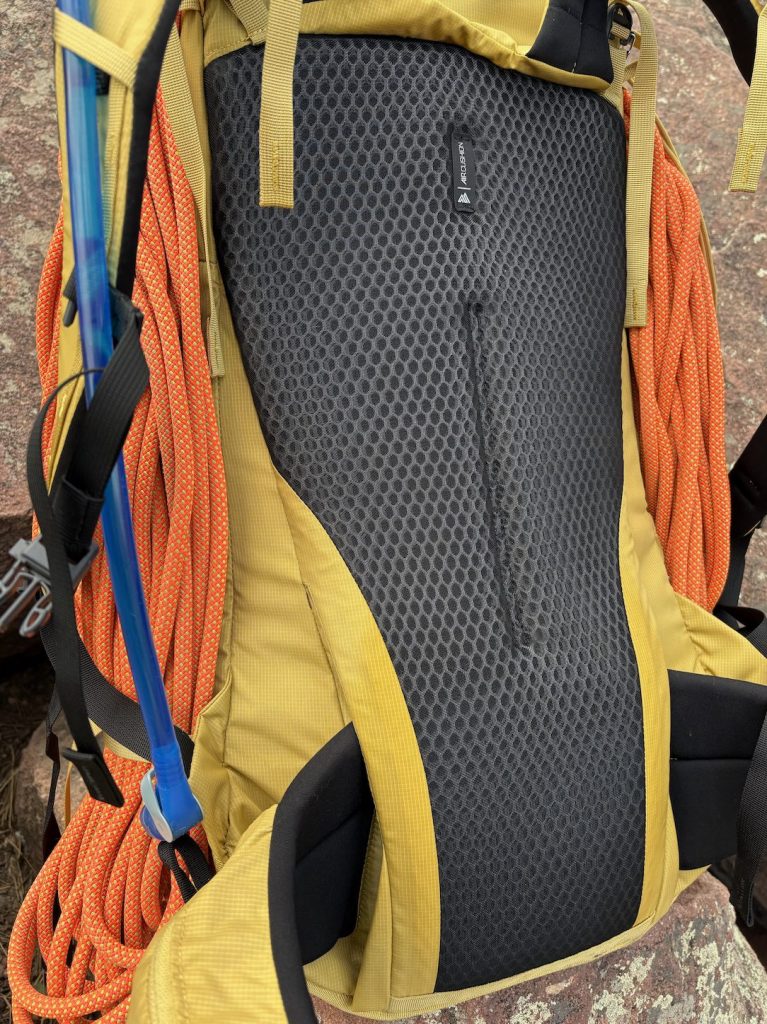
The AirCushion back panel is a selling point for me, yet could be a detraction for someone else. Large alpine climbing packs tend toward a thin back panel so the pack is closer to the spine and merges with the body, allowing the climber to move more fluidly and safely in third-class terrain and up; the thin panel is also lighter in weight, theoretically at least. The downsides to a thin back panel are that there is nowhere for sweat to escape and the carry is not as comfortable, though more modern versions of alpine packs are fairly comfy considering they lack cushion—it can be hit or miss depending on the pack. The Alpinisto’s AirCushion is very light, very airy, and I didn’t find the pack to feel too far from my body; and of course, it is quite soft and comfortable.
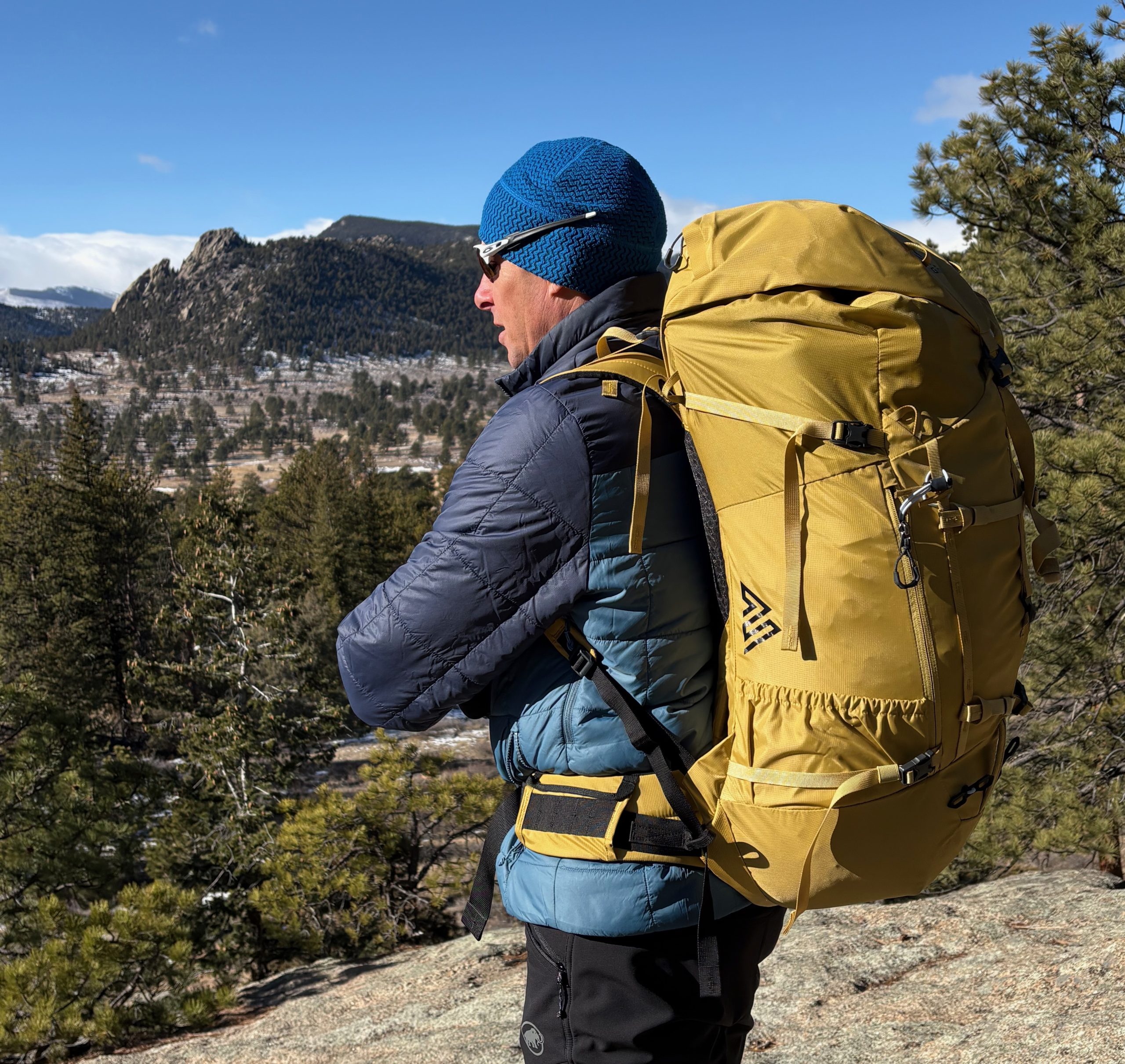
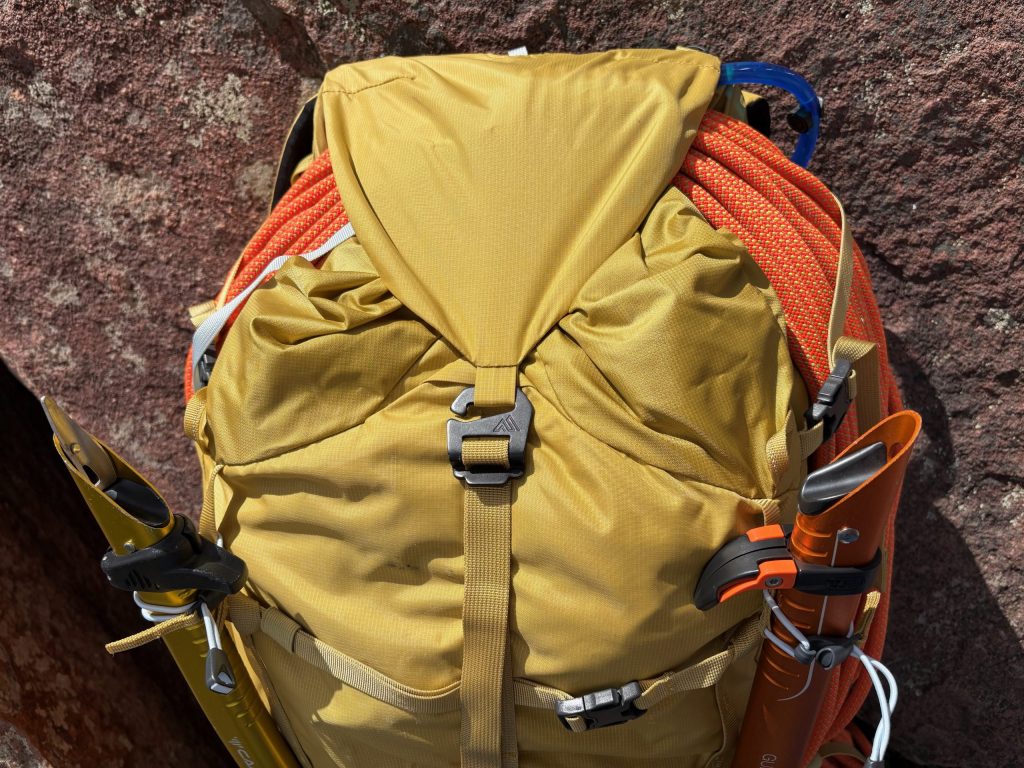
The primary selling feature of the Alpinisto 50 is its incredible versatility. The top of the pack has multiple options for closure and strapping various items. The traditional lid with both top zipper and a zipper underneath can easily be removed via burly small wire-gated carabiner-type clips on the back and a durable metal hook on the front. When removed, the top drawcord opening can still be covered and protected from rain and snow by a large flap. Either used over or under this flap, you’ll find a cinchable strap for ropes, a pad, a jacket, or anything else you want to tie down to the top.
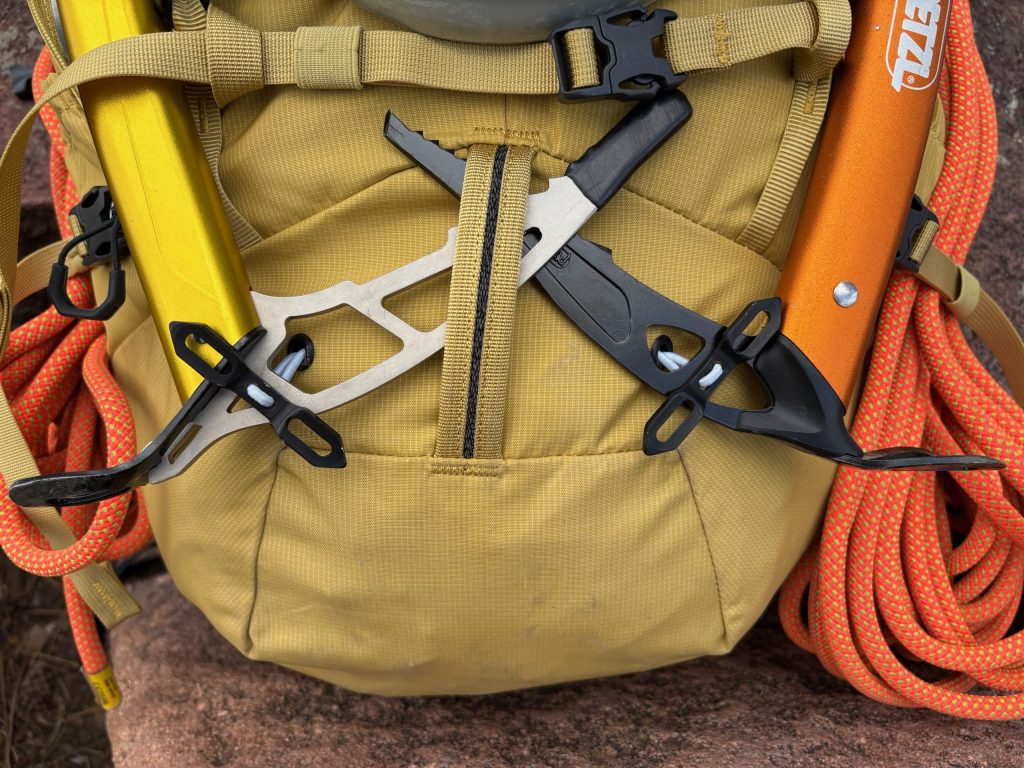
Pickets, wands, and trekking or collapsible ski poles can be stored in shove-it pockets on the sides. Ice tools and axes can be attached via various bungees, toggles and a stow-sleeve for the picks. A long side zipper allows for easy access to items stored more deeply. The hip belt can be removed and it comes with a gear loop and ice screw clipper attachments on one side. The sternum strap comes with an industry-standard emergency whistle. The zipper pull tabs are round and plastic, making them easy to grab and even fit a gloved finger through. Buckled cinching straps are found on the sides and front; the ones on the front can be moved around the pack to carry skis or anything else that needs to be strapped on the outside. The pack material is 100D 40% recycled nylon Ripstop with rain-resistant (not waterproof) C0 DWR designed without PFAS (per- and polyfluoroalkyl substances); the tougher bottom is 210D. A removable helmet bra hides in the pack (or in your car) when not being used and clips easily to a variety of optional loops on the front.
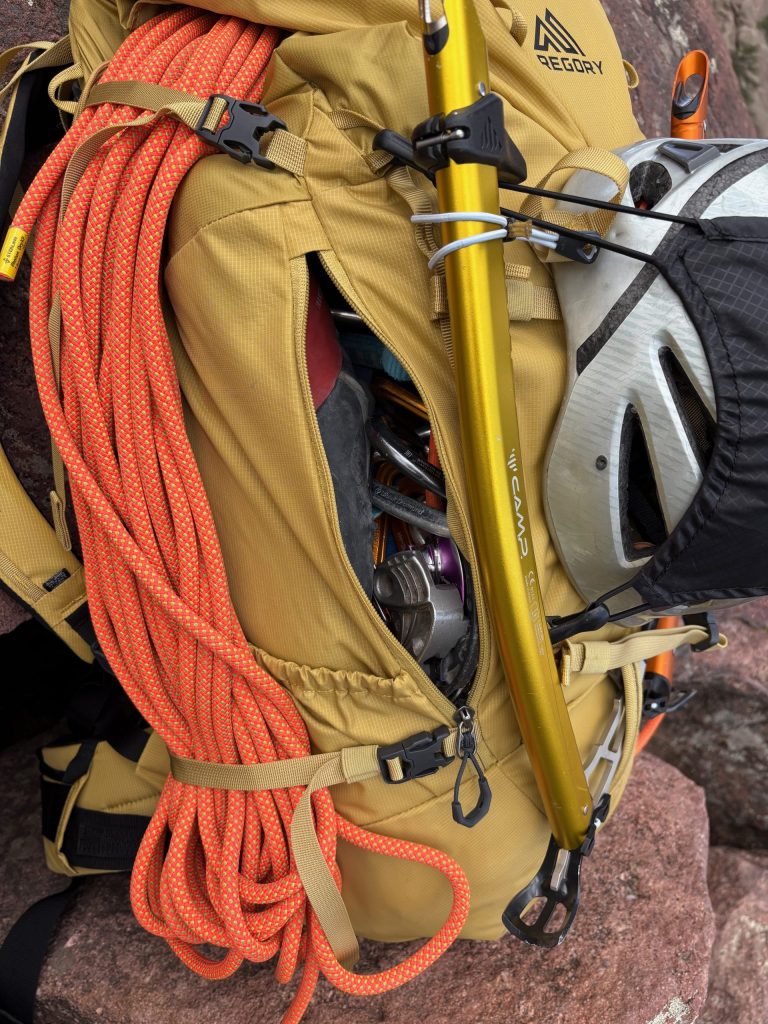
Only two aspects of the pack fell short in my opinion, and by no means are reasons not to get this pack. First, most packs with water bladder pockets have a small clip, loop or hook at the top to hold the bladder in place so it hangs and the water flows well. The Alpinisto 50 works well with the Gregory Hydro bladder, but not well with a CamelBak which fell off or required aggressive and annoying rigging of the small clip around small hooks using big fingers. Takeaway: get the Gregory bladder for this pack or spend a little more time altering the clip system to make it fit what you’ve got.
Second, the sizeable flap that covers the drawcord entry at the top of the pack (which is used as a lid-of-sorts when the actual lid is removed), is cumbersome when the lid is attached—there is a stuff-it pouch for this flap to be pushed into, but unfortunately, the flap shifts and falls out eventually; it would be nice if there was a small piece of Velcro to keep the pouch closed. Additionally, it would have been great to add a zipper to the flap and make it a mini-lid that could carry extra energy bars, a back-up battery for a phone, a map, or whatever; as is, the flap is multi-layered with a hollow inside that isn’t being used to its full potential. I personally really like an easily accessible pocket somewhere on the outside for the essential items I reach for many times throughout the day, and for my keys and such—the hip pocket can carry a few small things, but everything else will have to go in the gut of the pack (when the actual lid is removed); others may not care about such things.
One final suggestion I will make to the designers and manufacturers, which I won’t necessarily call a shortcoming because for some odd reason (to me) it is not a common thing to see among pack manufacturers: it would be nice if the removable hip belt and the removable lid could pair and become a wearable hip pack; some companies used to do this back in the 90s and many of us Outward Bound instructors and expedition guides LOVED IT. When doing long approaches to multi-pitch routes, on expeditions, and when backpacking into a camp to then scramble a Fourteener the next day, there are numerous situations when you have to carry a larger pack to get to a camp or climb but then having a smaller day/climbing pack is really nice or even necessary. Without this pairing option, one is left with options to either: 1) carry a second smaller pack inside the larger one; 2) carry the larger one as a day pack (yuck!); or 3) wear your harness and all or some of the gear on your harness for the entirety of the approach while carrying a smaller 18 to 25 liter climbing pack (also yuck!).
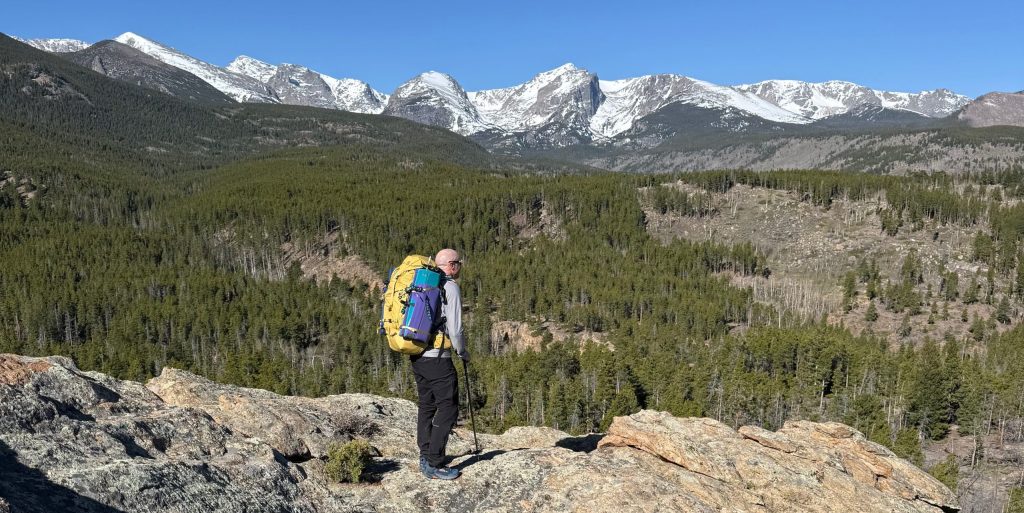
This and the previously mentioned two minor issues aside, the Alpinisto 50 is a strong contender for any alpinist looking for a 50L pack for cragging days, long approaches, expeditions, ice climbing, and overnight backcountry ski tours. Some will be turned off by some of the options (a.k.a. bells and whistles), while others will absolutely adore them; I generally don’t like too many of them, and I used to strip my Gregory Denali packs of all kinds of extras. But honestly, I really liked most of the extras on this pack; I will likely take it to the local gear repair shop and ask them to add a zipper to the flap.
Pros: extreme versatility; sturdy carrying system; sweat-reducing back panel
Cons: pouch for cover flap doesn’t hold flap well; cover flap could have a zipper to make it into a usable pouch
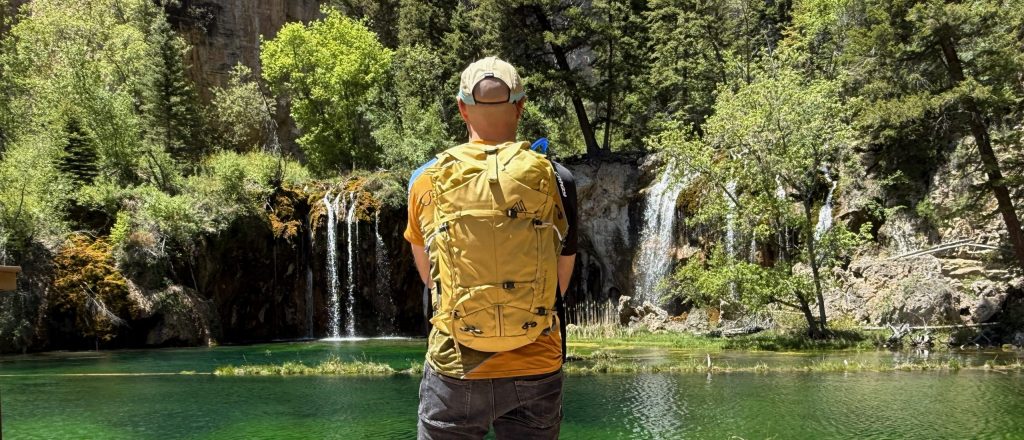
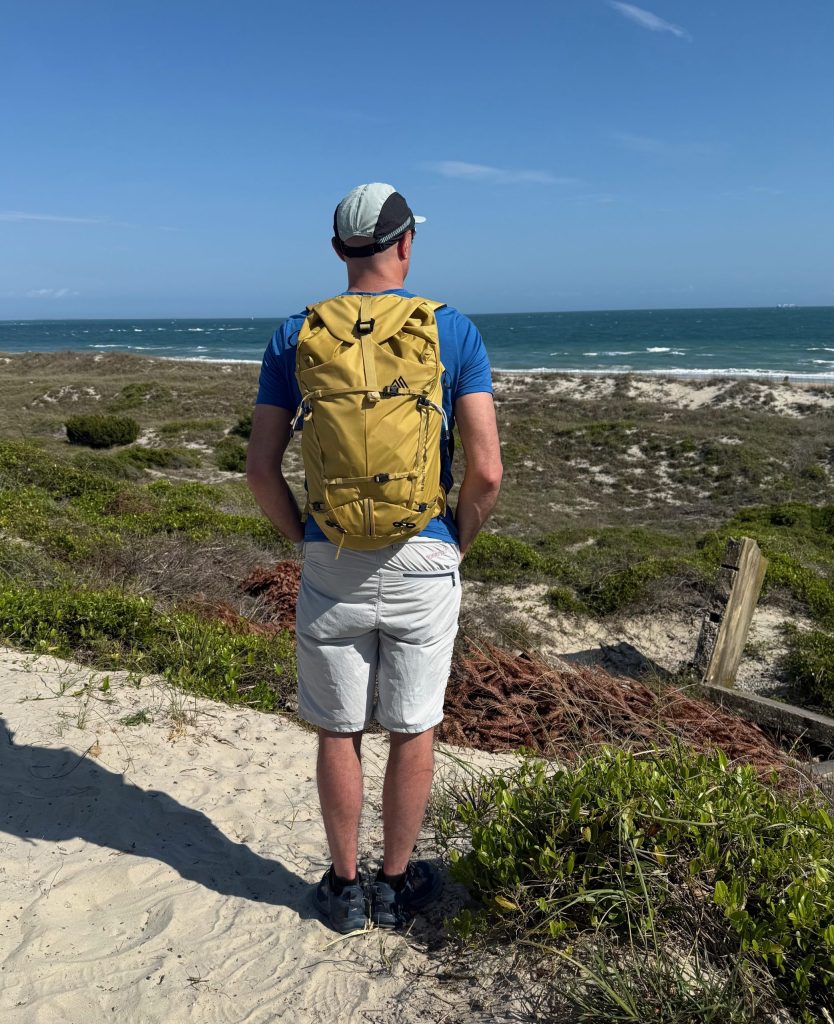
The Alpinisto 25 is also an excellent choice for this size range of pack, and has many of the same and similar features of the 50, and some differences. Honestly, the primary selling feature for me is the large, self-contained water bladder pocket, with its own zipper and extra padding—which makes for a perfect laptop storage zone when in town and hitting the coffee shops during rest days on road trips. I slid a removable, vertically insertable laptop protection case in there for extra padding. As with the Alpinisto 50L, the water bladder hanging clip is made for a Gregory bladder.
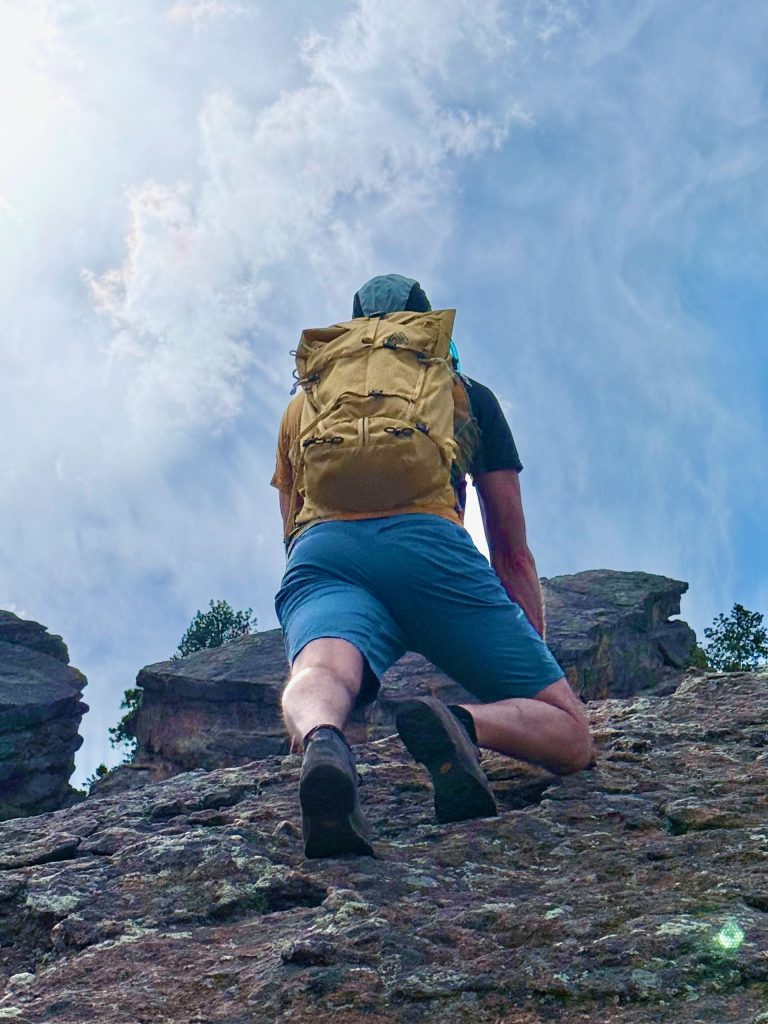
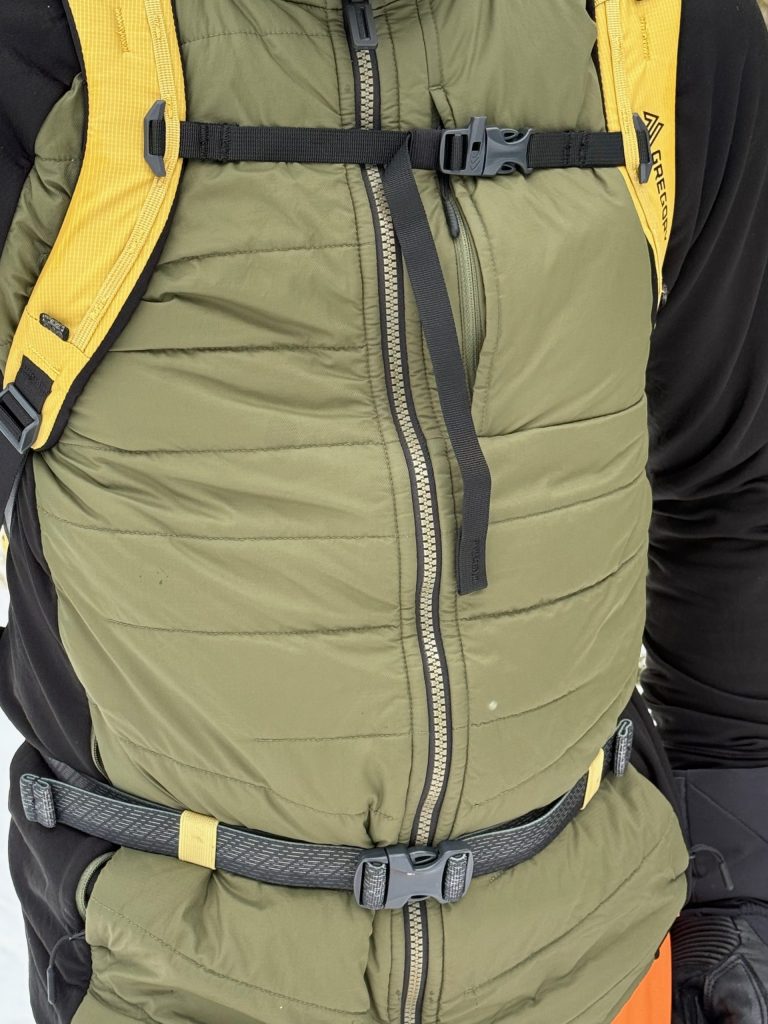
Another standout innovation is the elastic waistbelt. Rather than having to loosen the belt and retighten each time I put the pack on, I could keep the buckles in place and stretch the belt around my belly to clip. On the downside, the belt was harder to pull through the buckles, so I couldn’t get the belt quite as tight as I wanted at times.
Like the 50L version, the back panel is made with AirCushion and is stable and very comfortable. Having a sturdy back panel like this also means that it won’t roll up easily and stuff into a larger pack when using a larger pack for the approach to a multipitch climb. This pack is built to carry ice tools, a rope on the outside using a cinching rope strap across the top and side straps, and it comes with the same removable helmet bra as the 50L.
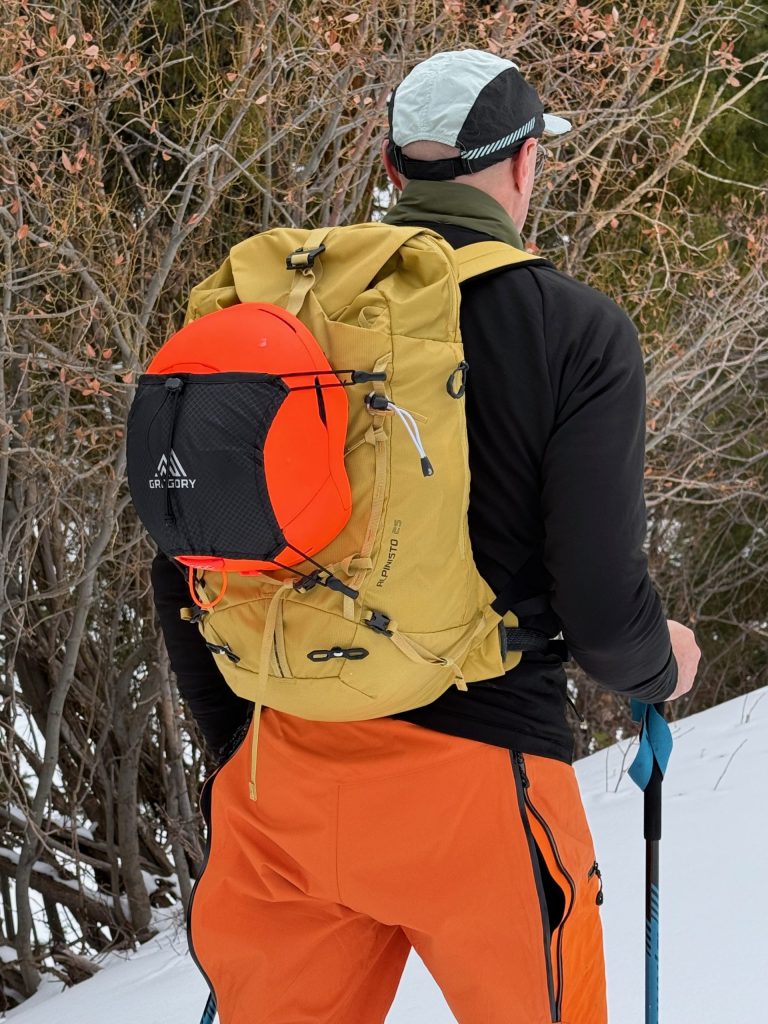
The Alpinisto 25L has two zipper accessible pockets for the essential small items, one on the front and one on the side; however, if the innards of the pack are filled to capacity, these two pockets become unfortunately obsolete, a downside in my opinion. This pack does not have a lid with a zipper pocket and rather, comes with a drawstring enclosed gut with the same cover flap mentioned above with the 50L; again, it would have been nice if the hollow flap had a zipper to make it into a functional pouch; suggestion: get a zipper installed or sew one yourself. This is not the lightest pack out there in this volume range, but it will likely carry weight the best and feel comfortable doing so.
Pros: stable carrying system; variety of straps for carrying external items; zippered large water bladder and laptop pocket
Cons: full pack limits usability of zippered pockets; cover flap could have a zippered pocket and be more useful
Mike Lewis is the editor and program manager of the Mountain Standards department at Alpinist. Mike is also an IFMGA/AMGA Mountain Guide, psychotherapist, and dedicated mountain athlete living in Superior, Colorado. Find Mike on Instagram at @lunchboxjackson.