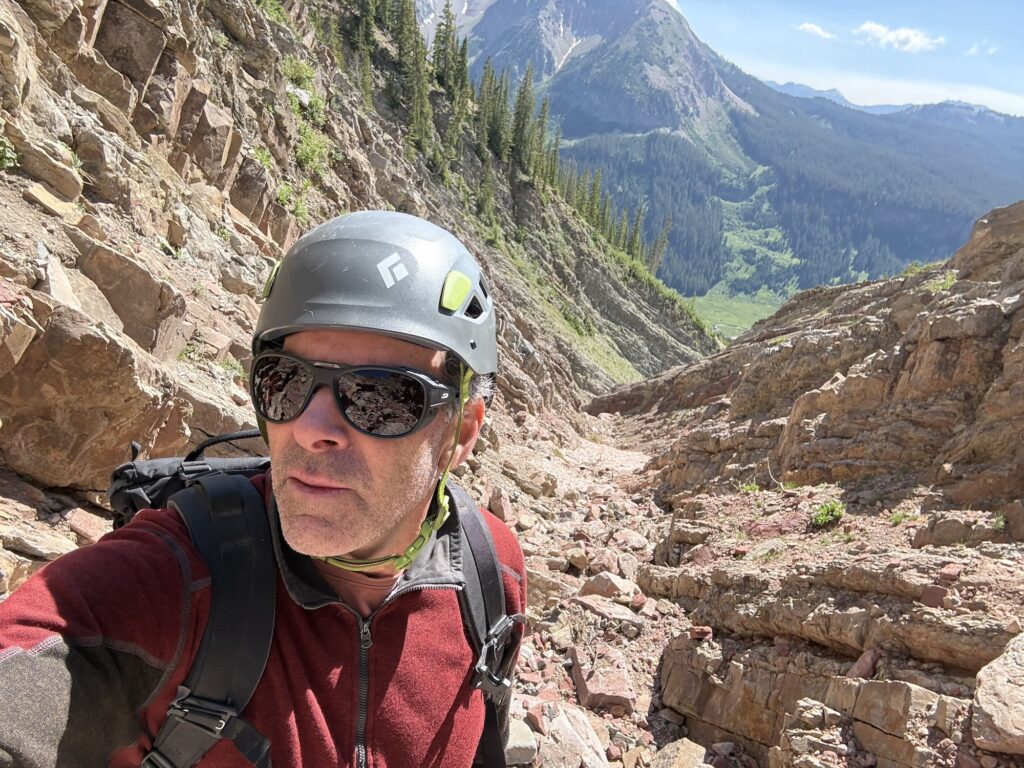
MSRP: $229.95 (as tested, with Reactiv lens)
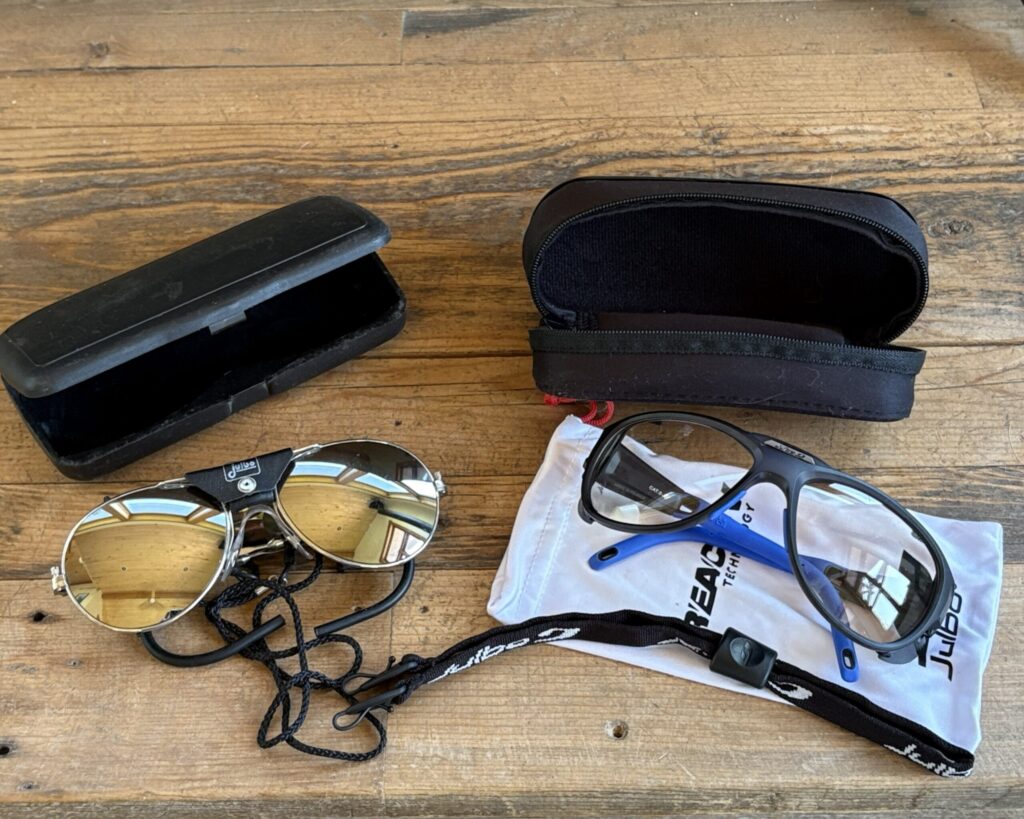
In 1991 I bought my first pair of Julbo glacier glasses before a trip trekking through northern Patagonia and Chile. Features included leather side shields, a metal frame, wraparound ear loops and a cord to keep them in place, and mirrored lenses dark enough for midday travel over snow and ice. They were exactly what the mountains demanded, and I still have them today. So when the new Explorer 2.0 showed up, essentially Julbo’s modernized take on that same glacier-glasses concept, I had a high bar in mind and a soft spot to match.
Julbo has been designing dedicated mountaineering eyewear since the 1950s, and the brand still sells its Heritage line today for anyone who wants the traditional look and feel. That continuity matters here: the Explorer 2.0 isn’t a reinvention so much as a refinement using modern material technologies, and after wearing them on a few adventures in high altitude alpine terrain, I think Julbo got the refinements right.
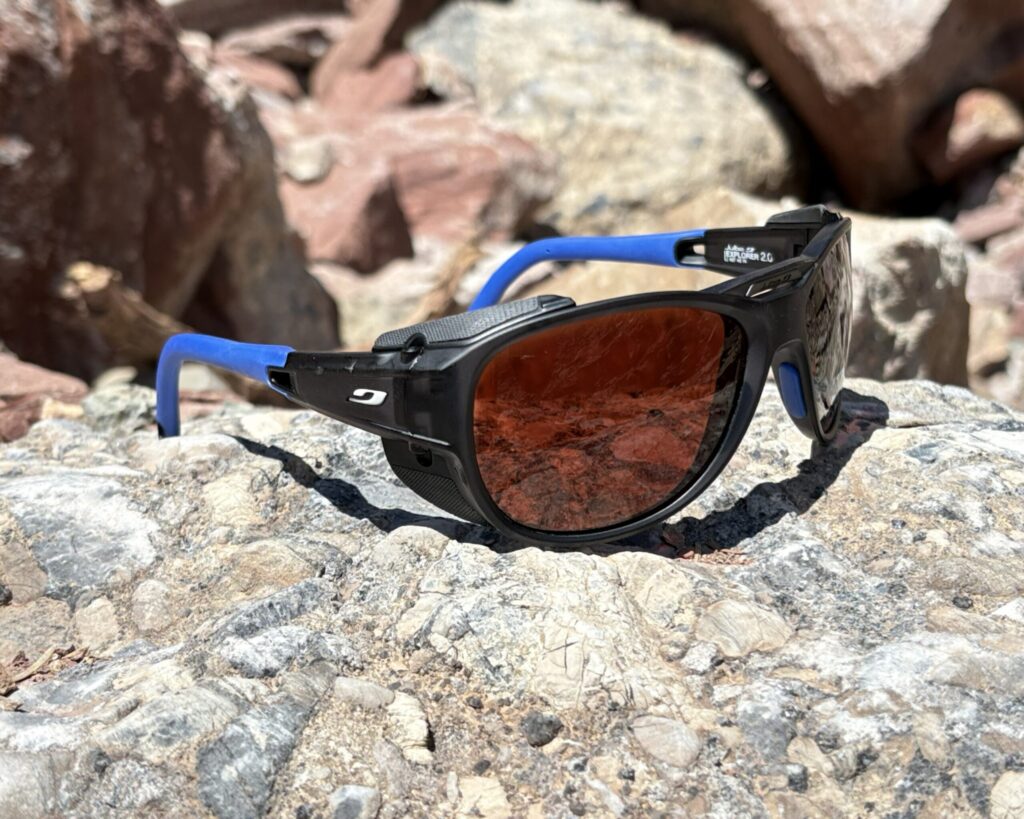
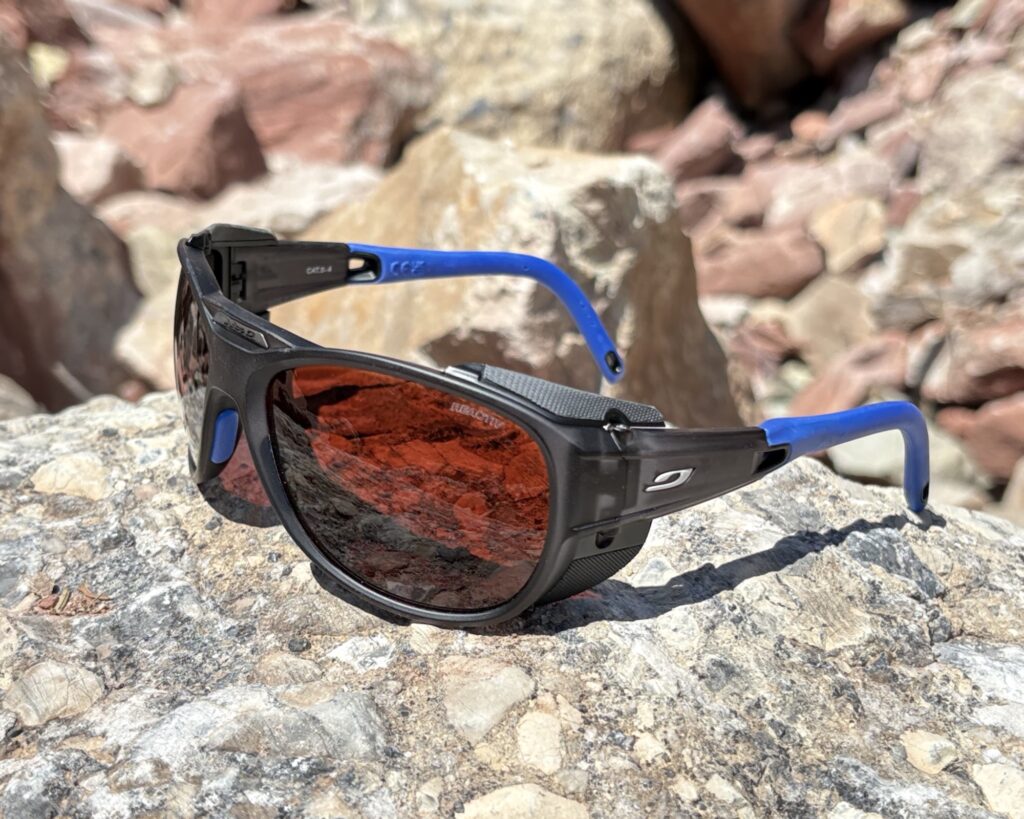
On paper, the Explorer 2.0 is loaded with features. The temples adjust 360 degrees at the tips so you can shape them to your ears and fit them under a helmet. The frame is built from Rilsan, a bio-sourced nylon that Julbo uses to cut down on fossil-based materials without giving up durability. Vents up front are positioned to keep air moving across the lens and reduce fogging, and the temples themselves are wrapped in a soft, grippy material that holds on to skin without pinching. A flexible, shock-absorbing nose bridge keeps the frame seated and aligned even when you’re sweating or scrambling. The lenses themselves are oversized and panoramic for a wider field of view, and both lens options, Reactiv photochromic and the fixed-tint Spectron, block 100% of UVA, UVB and UVC. Add the removable side shields and an adjustable retention cord, and it’s clear these glasses are built specifically to not let you down above tree line. Mostly, in practice, they didn’t.
In the box you’ll find the glasses, removable side shields, a retention strap, a soft case, and a cleaning cloth/storage bag. That’s a solid kit for alpine-specific sunglasses and it signals Julbo knows exactly who they’re building for.
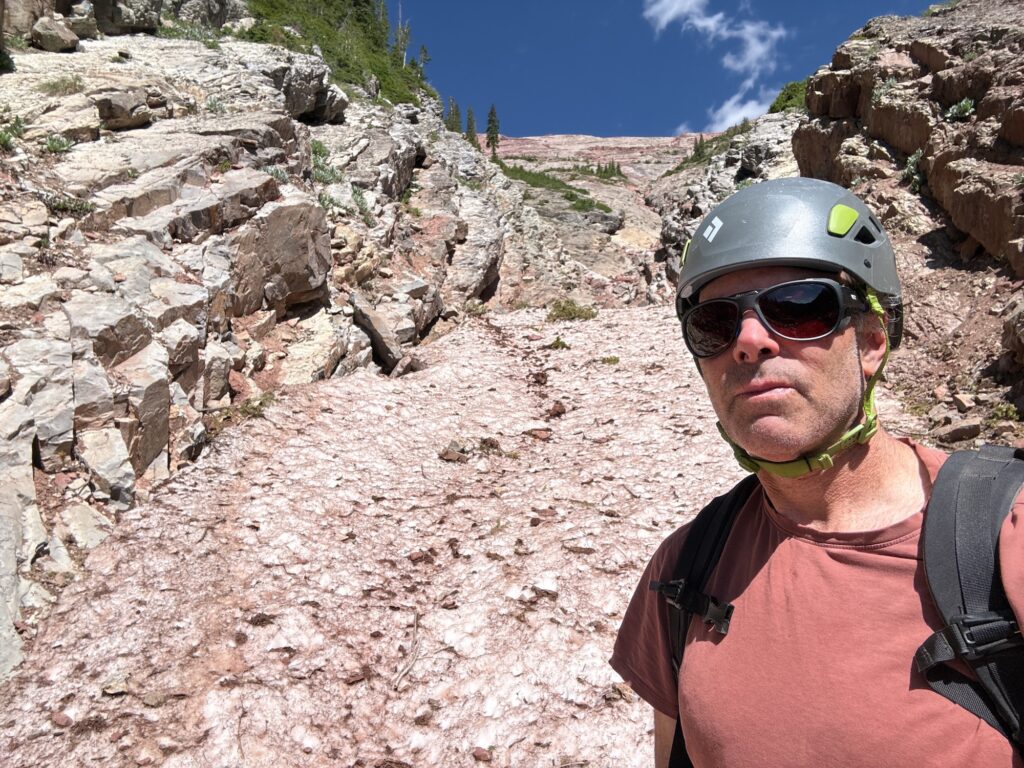
The build quality is excellent but the details are where the Explorer 2.0 actually earns its keep. I loved the wrap around ear pieces on my original glacier glasses and am glad to see that design improved here. At first, the straight temple arms interfered with the retention system on my climbing helmet, which caused the glasses to shift and lift off my nose mid-scramble. Bending the earpieces down and further around my ears solved it completely, and once dialed in, they stayed put.
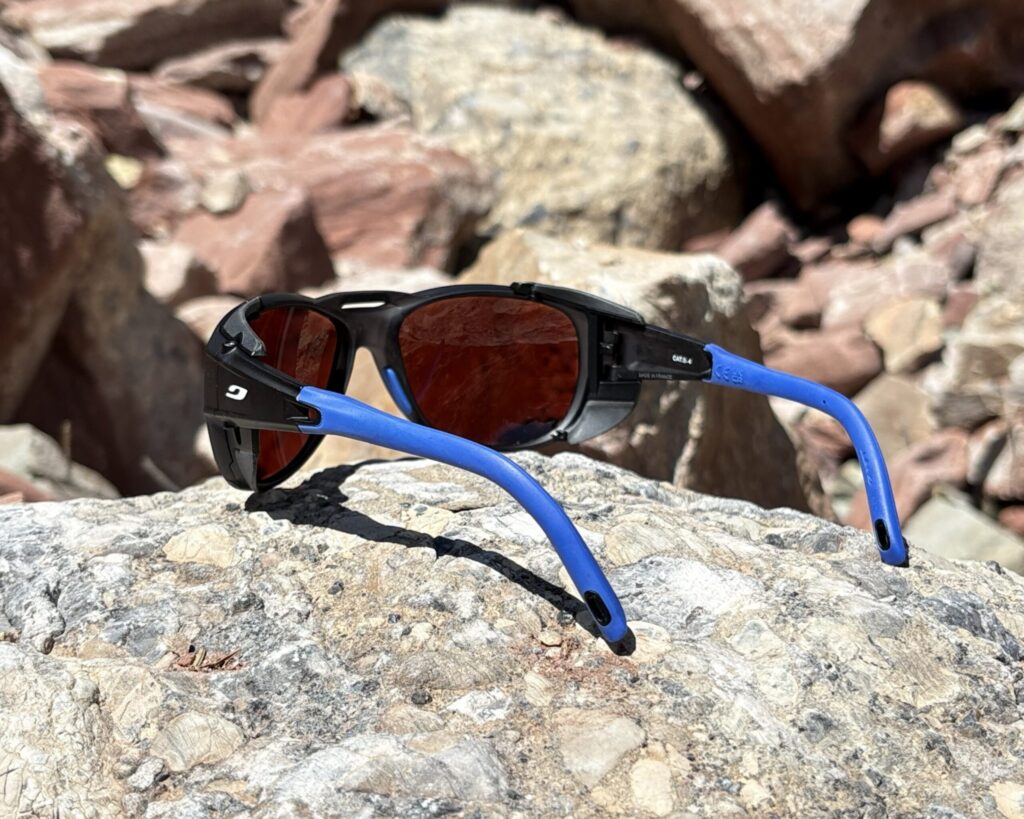
Fit and coverage are the other standout. The wide panoramic lens shape, even with the removable side shields clipped in, still left me with an excellent field of view: no tunnel vision, no awkward gaps letting glare sneak in around the edges. The side shields do exactly what they’re there for, cutting glare from below and the sides without making the glasses feel bulky or claustrophobic.
Now, the one place I’d ask Julbo to go back to the drawing board: the case. My 1991 pair came with a hardshell case, and that is almost certainly the reason they’re still alive thirty-five years later. The Explorer 2.0 ships with a soft case; Julbo sells a hardshell “Adventure” case separately for an extra $30. If you’re trekking or traveling with these (tossed into a duffel, a pack or checked luggage), a soft case just isn’t enough protection from getting sat on, stepped on or crushed under a pile of luggage. I’d rather Julbo skip the soft case and provide the appropriate protective case from the start.
Lens options are where the review gets interesting. The Explorer 2.0 is available with either the Reactiv photochromic lens or the fixed-tint Spectron. We tested the Reactiv. I’ve used Reactiv lenses in cycling and ski glasses before and generally love the technology. Lenses that automatically darken and lighten with conditions are a genuinely great feature. Julbo’s Reactiv technology has the adaptive tech embedded directly in the lens rather than applied as a surface coating, so it adapts faster and across a wider range of light than most competing lenses. But my experience with Reactiv technology comes with a caveat worth knowing before you buy.
In cold temperatures, the lenses behave differently than they do in warm conditions. They get noticeably darker and take longer to lighten back up as conditions change. On a glacier or snowfield in intense sun with low temperatures, expect the lenses to run very dark. The mechanism comes down to the photochromic molecules themselves: cold slows the rate at which they snap back to their clear state, so on a cold, sunny day the lenses can settle into a much deeper tint than they would on a warm day with identical UV exposure. The flip side is that on a hot day, the same lenses may only reach a medium tint, because heat keeps pushing the molecules back toward clear even under strong sun.
Where this actually became a problem for me was on overcast days with a high UV index but cold air: the lenses read the UV, not the visible light, and went dark anyway, even though it didn’t look that bright out. In those specific conditions, I found the lenses got darker than I wanted and were slow to lighten back up. It’s not a dealbreaker, but it’s a real consideration: if you’re regularly out in cold, flat-light, high-UV conditions (think alpine starts, shoulder-season glacier travel or overcast days above treeline), you may want to think hard about Reactiv versus Spectron, or at least know what you’re signing up for.
There’s really no comparable product purpose-built for alpine climbing the way the Explorer 2.0 is. The fit, the field of view, the helmet compatibility, the adjustability, the lens options and the heritage behind the design: it all adds up to our top recommendation for expedition-quality eyewear. Choose your lens carefully based on how and where you’ll actually use them: the Reactiv is phenomenal in most conditions, but cold, overcast, high-UV days are the one scenario where it can work against you. Either way, this is a genuinely worthy modern update to a design Julbo has been quietly perfecting since the 1950s, and the Explorer 2.0 earns the Alpinist Mountain Standards Award.
Pros: excellent build quality; purpose-built for alpine climbing; adjustable temple arms that mold to your ears; excellent field of view even with side shields on; fits well under a climbing helmet; reliable glare protection; strong lens options for different conditions;, deep brand heritage
Cons: included case is a soft pouch; not a hardshell (hard case sold separately for $30); Reactiv lens can get too dark and slow to clear on cold, overcast, high-UV days
Brian Riepe is the founder and publisher of Mountain Flyer magazine, Alpinist’s sister mountain bike publication. Brian was a climber and outdoor adventurer long before he discovered mountain bikes and has spent thousands of hours climbing, backpacking and trekking in both hemispheres.