

[These reviews originally appeared in Alpinist 94 (Summer 2026), which is available on newsstands and in our online store. Only a small fraction of our many long-form stories from the print edition are ever uploaded to Alpinist.com. Be sure to pick up the hard copies of Alpinist for all the goodness!–Ed.]

This summer, important stories came to us in several different formats. We watched Dean Potter tiptoe across dizzying highlines as his friends explored their complex relationships with the climber in HBO’s The Dark Wizard. We picked up video game controllers and attempted to reach the top of a the fictional peak Mt. Kami as digital snow swirled and stormed around us in Cairn. And we saw the climbing world through the hopeful eyes of teenagers in the pages of Crux.
The Dark Wizard
Sender Films
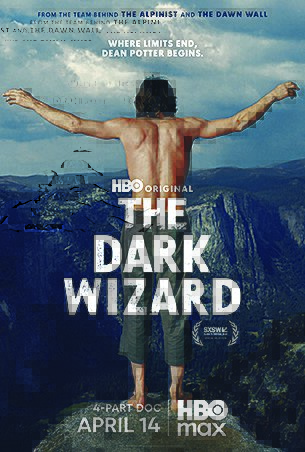
I was only thirteen years old when Dean Potter completed his controversial free solo of Delicate Arch, and I graduated from college in Boston two days after his death in Yosemite. Everything I know about Potter I’ve learned in the decade or so since he left this world. So, I viewed HBO’s The Dark Wizard with an open mind. What I found was the story of someone who seemed to have been on a lifelong journey to understand himself.
“Some people are blessed, and some people are cursed,” Timmy O’Neill says in the docuseries. “And Dean was both.” In trying to reconcile these aspects of himself, Potter crept closer to the edge while at the same time alienating himself from many of the people, like O’Neill, he’d once considered close friends.
Footage of Potter’s free soloing, BASE jumping and highlining, as well as interviews with Potter, appears throughout the series. But Potter kept many of his internal struggles private, sharing them on the pages of his journals. By including excerpts from these diaries, the filmmakers provide a glimpse into a lesserknown, and perhaps more sympathetic, side of Potter. Though, as Brad Lynch says in the series, Potter himself may have been “fucking mortified” to know his personal writing was being read.
By the end of the four episodes, we’ve gotten to know these different sides of Potter—the darkness, the competitiveness, the softness. With Potter as the subject, the series explores the vast complexities of humans, and what it means to try to understand the darkness carried by so many.
—Abbey Collins
Crux
Gabriel Tallent
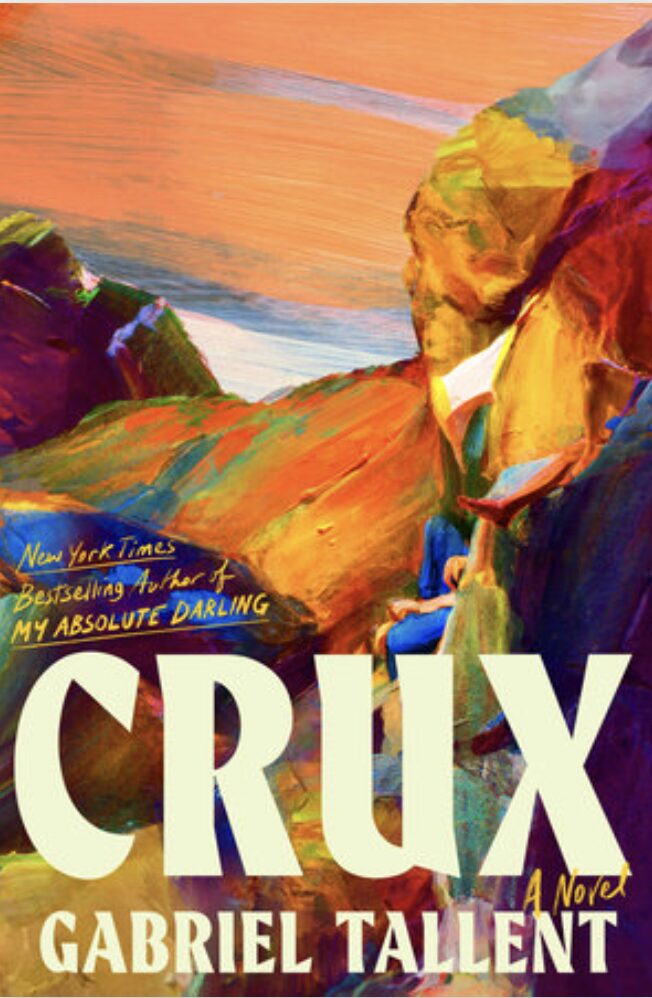
Like Gabriel Tallent’s 2017 bestseller My Absolute Darling, his sophomore novel, Crux, is also a bildungsroman. As best friends Dan and Tamma (short for Tamarisk, a highly invasive shrub found across the American West) approach high school graduation with very different prospects, they flirt with risking it all for the dirtbag life.
When Tamma finds decades-old trad gear in a dumpster, she and Dan make the leap from highball bouldering to roped crack and slab climbing in nearby Joshua Tree National Park. At first, they don’t think they’re risking much with their core-shot rope and salvaged hexes. What are their lives, really? Abandoned by penniless families and a society that couldn’t care less about their desert-trailer, part-time-retail, medical-bankruptcy existences, Tamma and Dan are tested by climbing in ways they yearn for but never could have expected.
Crux balances gorgeous language with heart-racing depictions of climbing alongside acerbic cultural insight. One of my favorite passages explores the word exposure: There’s one side of it, “to be cast out upon a prospect of stone, amazed, as if for the first time, by the world’s grandeur, its inhuman vastness and towering depth.” In another sense, “That childhood feeling of safety, that you were loved, that everything was going to be okay, that there would be someone to catch you if you fell—that feeling was gone.… That too is exposure.”
Encountering these countercultural, underdog protagonists as American hegemony teeters into totalitarianism is invigorating. It behooves any reader to spend time with two kids outside the mainstream, finger-locking and high stepping their way into the brutal world.
—Katherine Indermaur
Cairn
The Game Bakers

The video game Cairn presents the story of a professional climber with very realistic flaws. The familiar trope of the courageous adventurer braving the unknown is undercut by the image of an emotionally stunted individual using the mountains to distract themselves from the existential terror of a normal life with ordinary responsibilities.
You play as Aava, who seeks to nab the first ascent of the fictional Mt. Kami. With no one to accompany her except for her robot belayer, she sets off from a climbing gym at the mountain’s base. As you stave off hunger and thirst by scavenging supplies from dead climbers and the ruins of an Indigenous civilization, the line between Aava and the other lost souls of Kami begins to blur. Climbing for Aava is no longer an escape; instead, she is lost in it. She’s like an addict, and the act is a compulsion, one she no longer has control over. The video game medium highlights this as the player makes decisions for Aava. You control what route she takes, when she eats and when she rests (or doesn’t).
Impressively, the game developers designed a system of movement that mimics the feeling of climbing. Players control a single limb at a time, and must listen to Aava’s breathing, watch for shaky legs and pay attention to tactile feedback from the controller to assess her fatigue. Most importantly, the climbing in this game is genuinely fun. So much fun that the relatively common glitches—swapping from horizontal to vertical movement and the occasional dislocated-appearing limb can easily be ignored or forgiven.
—Mike Parri