MSRP: $159 (Big Wall Pullover Hoody), $149 (Wall Breeze Stretch Jacket)
La Sportiva’s Big Wall Pullover Hoody offers Italian-style fashion vibes with warm, snuggly fabrics. Perfect as a stand-alone on cool days or combined as a midlayer in colder conditions, this hoody may be the perfect solution to all of you who loathe the feel of a zipper rubbing on your neck and chin all day.
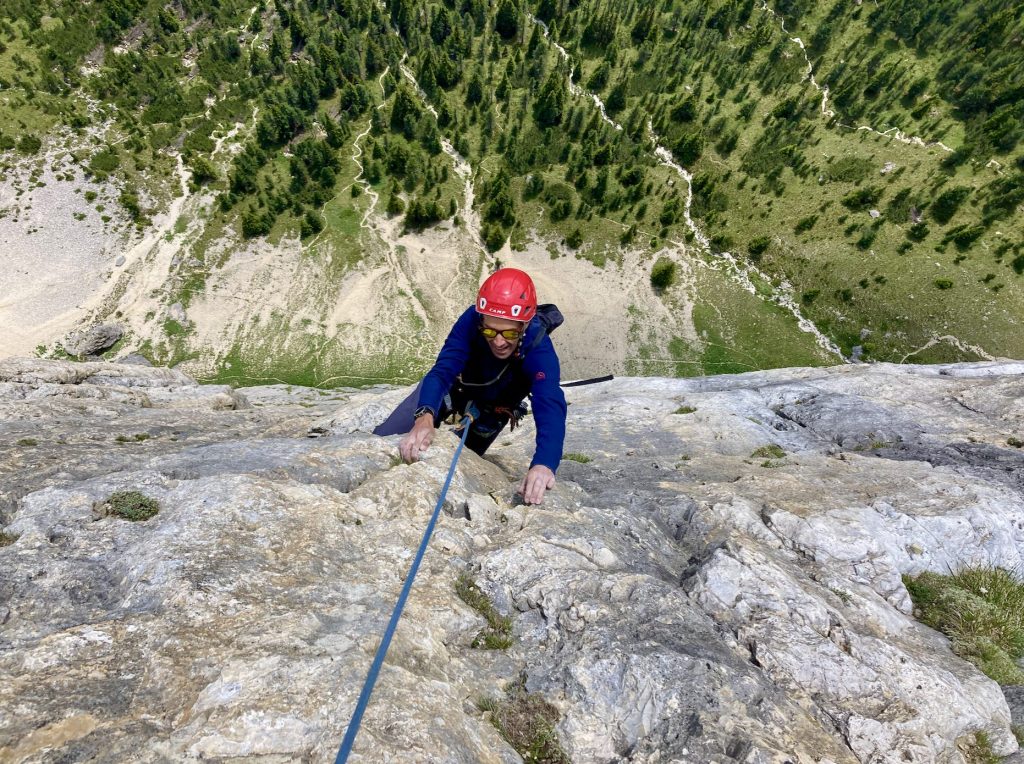
When I sit down to write about gear items I have tested in field, I like to wear the garment or have the piece of kit sitting there in front of me. This morning is an overcast and chilly autumn day in Colorado, so it’s nice to be wrapped up in a cozy, soft fleece. I am transported back to the feelings and memories that this jacket has been a part of during my many adventures over the last handful of months: laughter and friendship on a bright morning; optimism and excitement thick in the air on the first day in Red Rocks; freedom while climbing with a good friend and fellow guide in the Dolomites; fear and concentration on an unprotected traverse high on the Diamond of Longs Peak, and possibly my most rewarding adventure of all, seated in the eighth row watching my daughter perform on stage in a school play.
My first impression of this hoody was the sense of safety it evoked, like a warm hug, due to its composition of two types of fleece. First, TechStretch Aero Fabric is plush and snuggly and claims to offer more warmth and breathability than conventional fleece at half the weight. This fabric covers most of the core, back, arms, and the ear areas of the hood. In a little home stretchiness test, this material had about 50% stretch, meaning when I took one inch of fabric, I could stretch it to about 1.5 inches. Second, Body-mapped Polartec is a grid-type fleece that offers increased breathability and stretch. It runs up the flanks under the armpit and down the inside of the arms and over the crown of the head. This scored 100% stretch on the test, resulting in a nice, slim-fitting garment that adapts to meet the demands of climbing movement. These fabrics are coated with Polygiene, a treatment that prevents odors and inhibits the growth of bacteria. I didn’t notice any stink after a two-week trip in the Dolomites and never got any funny looks in restaurants, at least not for that reason, so it seems like it helps. Regarding this idea of reduced bacteria build-up, it would be neat and much more determinable to compare various used fabrics under a microscope to see what is really happening, but that’s beyond the scope of my testing capabilities.
On fast and light alpine climbs, weight and packability is an important factor. The Big Wall Pullover Hoody weighs 9.1 ounces and was easy to compress into a bullet pack. For comparison, another big-branded, popular and comparable hoody weighs in at 10.2 ounces.
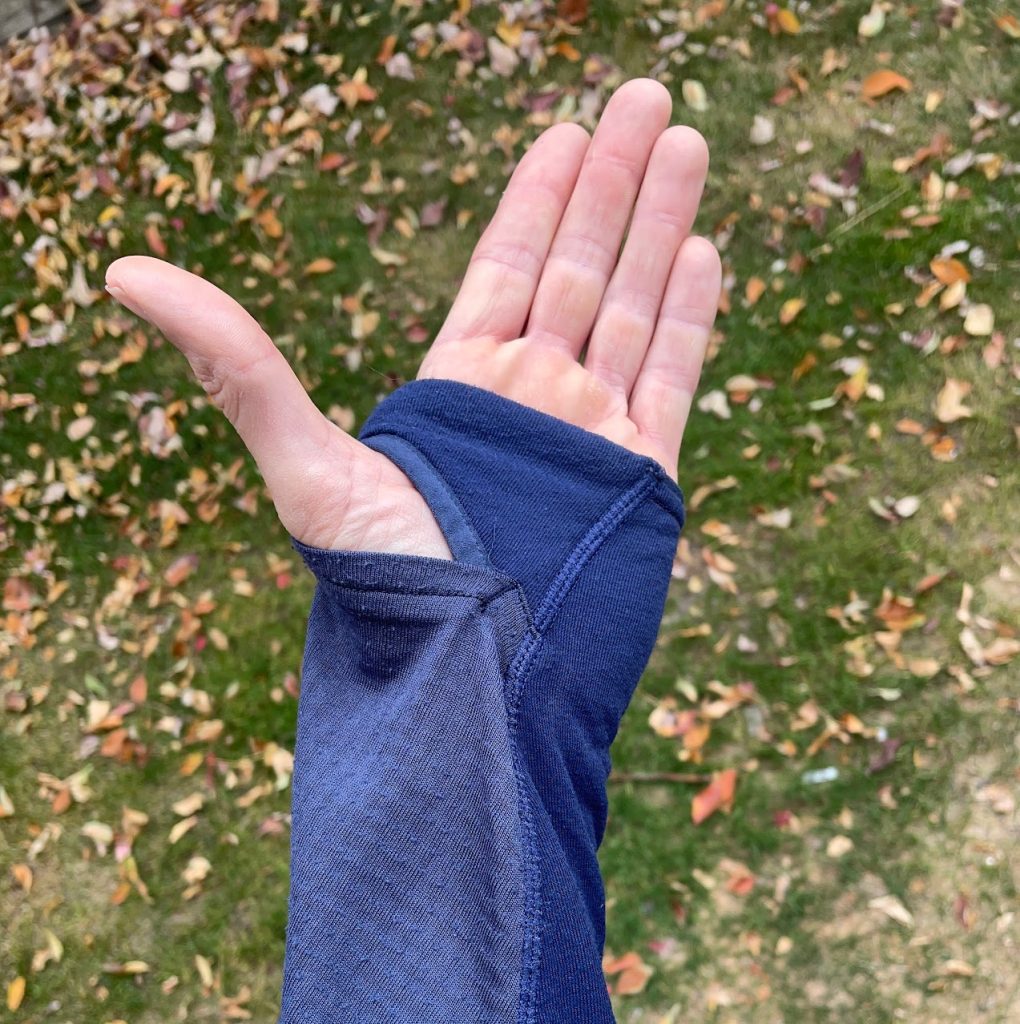
How and where these fabrics are used brings me to some of my first takeaways from the jacket. Stretchier fabric panels over the crown of the hood provided a snug and comfortable fit when worn without or under a helmet; equally, it stretched enough to go over a helmet, creating good protection from the elements. The arms on the jacket were long enough for my neutral ape index, and the cuffs have a nice thumb loop which keeps the sleeves in place when reaching overhead and the back of the palms warmer when the air becomes chilled. The stretchy fabric on the arms extends down to the thumb loop, while the circumference of the cuff is made of the less stretchy fabric; this actually created a slight issue—I don’t really have Popeye forearms compared to many climbers, and yet I still found the cuffs hard to pull up to or past my elbows, which comes into play when you’re looking to cool off a little on the long approach to a climb or uphill skin, or you’re at the doc getting a blood draw. Athletes with bigger forearms would certainly feel constricted.
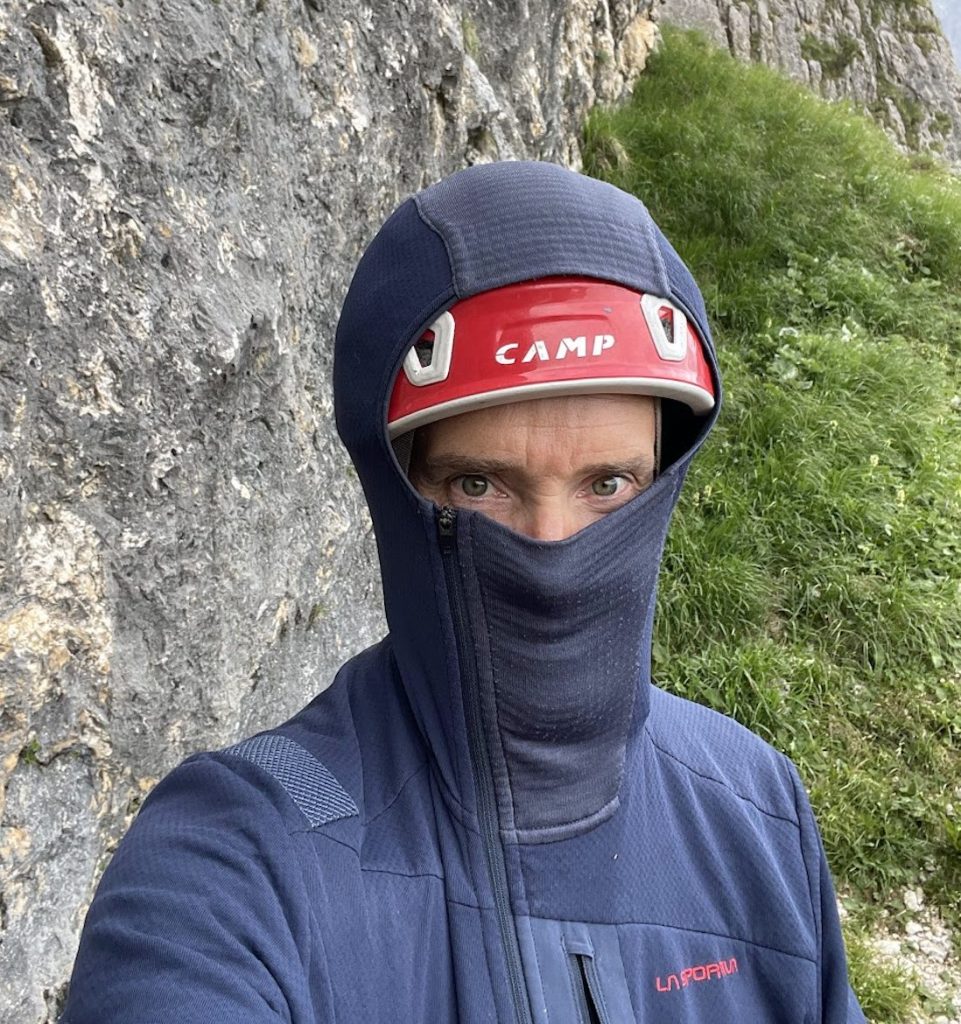
I felt a mix of curiosity and confusion when I first tried on the fleece and encountered the zipper on the chin-side of the hood. The asymmetrical half-zipper tracks diagonally from your heart to your right ear. This feature is likely to be a polarizing love-or-hate feature. The design allows the zipper to extend higher on the garment, leaving soft fabric rather than an abrasive zipper under and over your chin, which feels really nice. This also means the cut is similar to a balaclava when zipped and may feel a little claustrophobic to some people. Although I never wore this jacket on a cold ice climbing day, I think it would offer good protection from an icy spindrift shower and keep the chin, lips, and even nose warm. Getting attacked by swarms of mosquitoes seems as close to a test as I got in summer, and the hood defended me well from their bites. When the fleece is unzipped, you have a large collar that flaps in the wind, which made me feel like I was wearing a 1970s-style prom shirt with a long, pointy collar, or some flamboyant Oscars dress.
With all of that said, the Big Wall Pullover Hoody would be an ideal choice for lengths of time spent in cold temps, when the need to be fashionably presentable is of less concern: ice climbing, cold days of backcountry skiing, expeditions of most types, and sending hard routes on El Cap in winter conditions. Even so, and because I’m seasoned enough to know to bring my town-savvy layers to slide into before meeting friends in town for dinner after a long day in the mountains, this fleece has remained one of my staples, especially when I know I’ll likely keep the zipper up all day. I am excited to pack it for this winter’s ski trip to Japan, where I feel the functionality of the hood and zipper will really shine.
Pros: Stretchable hood that fits over or under a helmet, cross-zipper avoids having zipper on chin, packable and light, warm, slim cut, chest pocket has ample room for a phone
Cons: Wrist cuffs too tight, no wind protection, odd hanging collar when unzipped
The La Sportiva website describes the Wall Breeze Stretch Jacket as providing “all-day wind protection,” while later identifies it as a “weather-resistant…softshell jacket.” So which category does it fall into—a wind jacket or a softshell? There are so many different shells you may take into the mountains: hardshells, softshells, windshells, pistachio shells (leave no trace and be sure to carry these shells home with you), and artillery shells (hopefully just used if you are an avalanche control worker). For this review, I’ll explain the differences in the first three of these shell types so we can clearly understand the basic expectations one should have for this particular jacket.
Hardshell jackets are the burliest and most weather-resistant shells. Theoretically, these coats are entirely waterproof, thanks to a plastic membrane that keeps rain out but allows body vapor (sweat) to escape. When doing intense cardio work in the rain while wearing a hardshell, you are likely to get wet from the inside out. In the Pacific Northwest, where dealing with rain that goes on for weeks, this is the shell for you! Softshell jackets address the breathability issue by pairing a fast-wicking face fabric with a moisture-resistant outer shell. Durable Water Resistant (DWR) coatings allow moisture to bead and not absorb into the fabric. This combination usually works for a short shower but fails in a continuous downpour. When planning to pound out a giant day of vertical in the skin track with dry snowflakes more likely than raindrops, one would most often reach for a softshell. Windshells, or windbreakers, do precisely what the name suggests—they keep the wind out while allowing some breathability. You should expect minimal water resistance from these lightest shells, which are generally perfect for fast and light high-cardio outings.
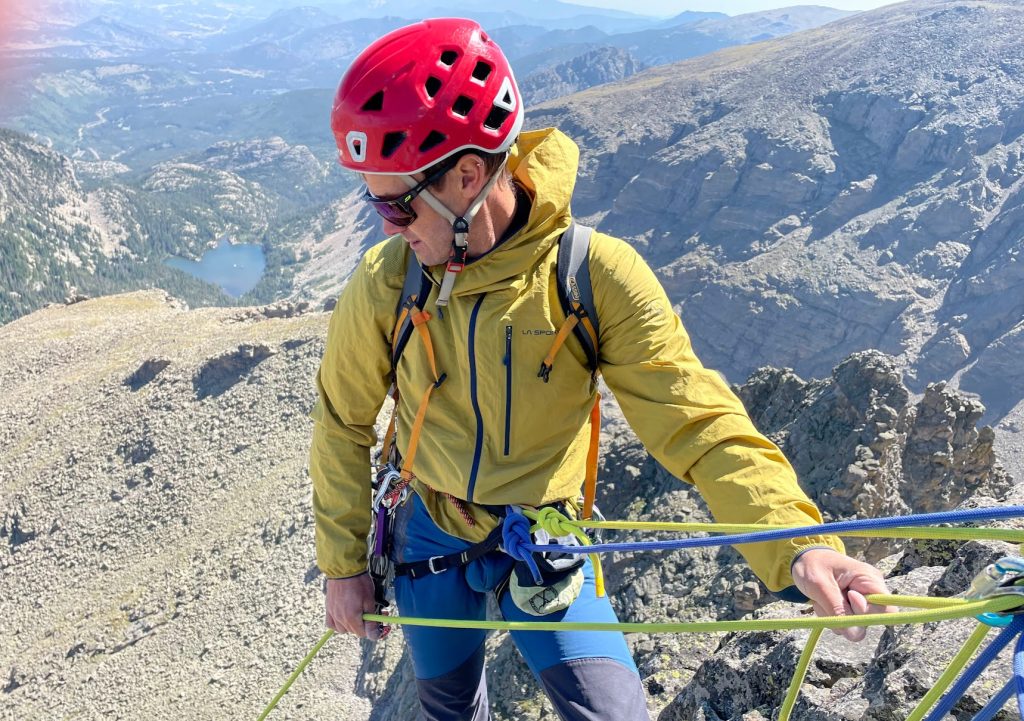
The Wall Breeze Stretch Jacket’s fabric is Pertex Equilibrium, a recycled polyester with a DWR coating. Alas, on my first day wearing the jacket in the rain, on the extreme terrain of Cortina d’Ampezzo, Italy’s high street of outdoor boutiques, the fabric failed to repel water and quickly became wet. On a family vacation, wearing the jacket running in the driving Oregon rain, I quickly resembled a wet dog. Still, I stayed cozy thanks to the jacket’s continued ability to cut out the wind. As a result of these initial tests, I would certainly consider this jacket a windshell, not a softshell. The jacket has a couple of PowerMesh panels over the shoulders for fit and breathability. On a warm morning hiking to climb in Eldorado Canyon, I decided to test the breathability of the jacket. My wife quickly peeled off her windshell, but I pushed on to see if I could really wet it out from the inside. Apart from the usual under-pack back sweat, the jacket breathed remarkably well.
Not going to lie, I have a bit of a hood fetish—I love a good hood. The hood on the Wall Breeze Stretch Jacket was excellent. It fits comfortably over my large-size climbing helmet while also featuring a nice, simple drawstring that I can easily cinch with one hand when wearing it without a helmet.
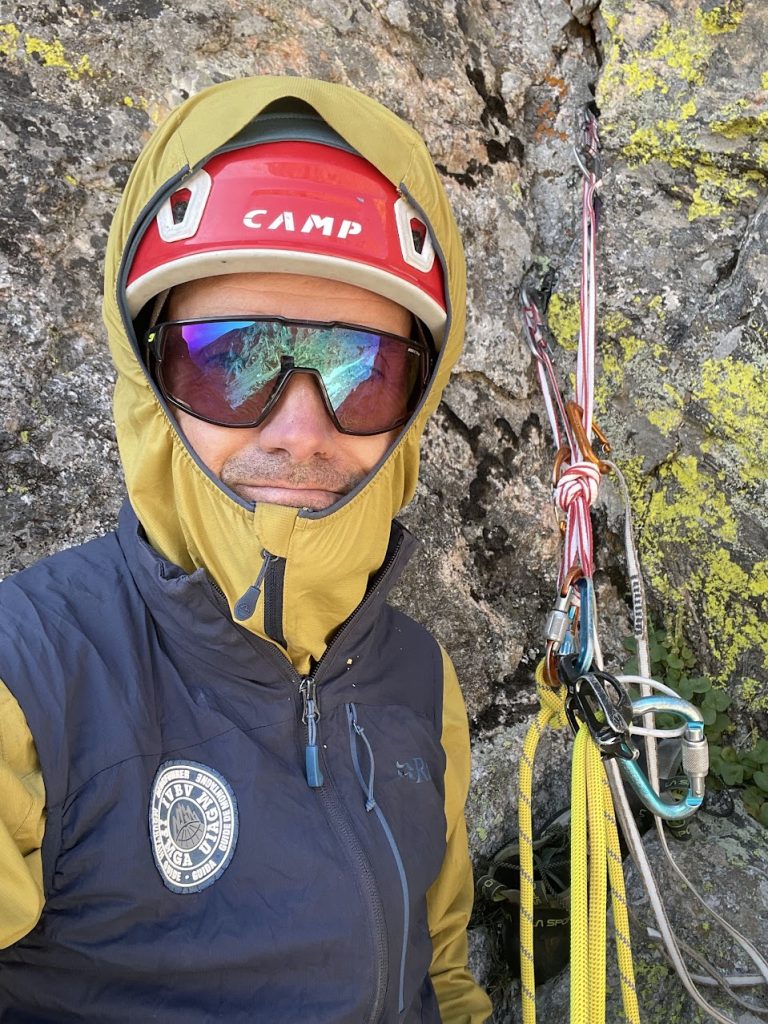
Being 5’10” and under 150lbs, I am one of those skinny guides who floats on top of breakable crust snow when my clients are punching through. I felt like the medium was a generous cut for me, and I would size down for my build next time; with that said, those who standardly fit in a medium in most jackets will like the medium in this one. There is a small chest pocket that comfortably fits a phone and an energy bar. This same pocket acts as a stow pocket to make it more compact and stuffable; unfortunately it has no clip tab, so you will either need to add one to the zipper in order to clip to a harness, or keep it in a climbing pack when not wearing it.
As I start to look toward Sendtember and Rocktober, when the days begin to cool off and the first chilly bite of winter begins to creep in, this jacket will certainly make its way into my pack for breezy days. During winter, if you see me at the local ski area doing my morning uphill sessions, I could likely be rocking the La Sportiva Wall Breeze Jacket for those high-energy, high-sweat workouts.
Pros: Soft and comfy fabric with good wind resistance and excellent breathability, the spacious hood fits well over a climbing helmet and cinches snugly over a beanie or buzz cut, lightweight
Cons: Stuff pocket lacks a clip loop, little to no water resistance