

[These reviews originally appeared in Alpinist 93 (Spring 2026), which is now available on newsstands and in our online store. Only a small fraction of our many long-form stories from the print edition are ever uploaded to Alpinist.com. Be sure to pick up the hard copies of Alpinist for all the goodness!–Ed.]

So far this year, we’ve gotten a glimpse into the mind of Reinhold Messner, let Jeremy Collins’ words and sketches transport us around the world and adventured with the Explorer’s Club. Perhaps you’ll be inspired to pick up a copy of Against the Wind, Eventually a Sequoia or Letters from the Edge while we’re busy at work on Alpinist 94. Happy reading!
Eventually a Sequoia
Jeremy Collins
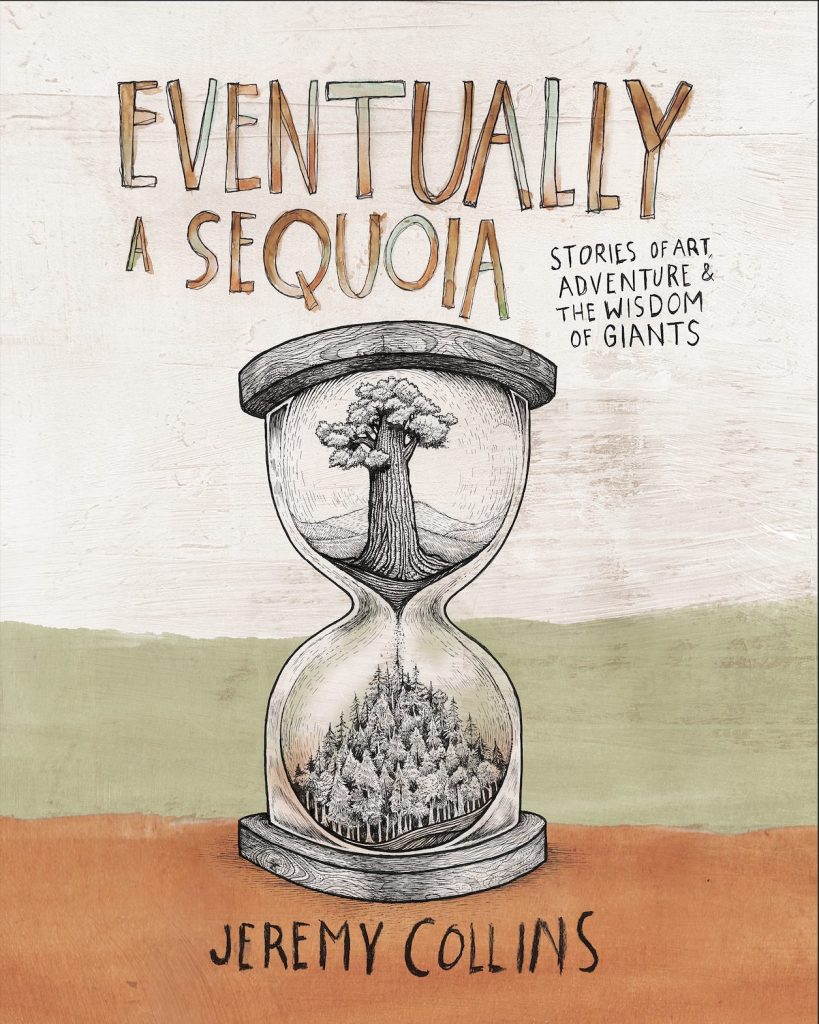
Jeremy Collins’ artwork has appeared in nearly every single issue of Alpinist since 2002, and in many other places over the decades.
In his latest book he reassesses the passions, influences and choices that led him to where he is now, considering what he has to offer as an artist. He writes: “In an increasingly tumultuous world, I had been questioning what the drawings in my sketchbooks could do to help amplify the causes I found moving, from human suffering to environmental threats. I mean, they were just lines on paper.”
Looking beyond his passion for climbing, with an eye toward what he might be able to convey with the power of his pencils, Collins directs his attention to the intersections of nature and humanity, where there are conflicts and struggles to survive, and where the seeds of ancient sequoias still sprout from ashes. His work helps us glimpse through the eyes of Indigenous communities living in the rainforest; the people coping with natural disasters in Nepal; those fighting for the future of the Arctic Refuge; and the family of ranchers who have stewarded the land for generations in what has become an international climbing destination, Indian Creek. He also explores his own feelings of helplessness as one person who draws for a living.
“I’ve had more opportunities to travel with inspiring folks and document their stories in an ever-growing stack of sketchbooks,” Collins writes. With this book, he disseminates their knowledge and the hope that comes with expanded awareness. It’s likely you’ll be inspired to pick up your own pencil after reading.
—Derek Franz
Letters from the Edge: Stories of Curiosity, Bravery, and Discovery
The Explorers Club and Jeff Wilser

In 1923, a young Iñupiaq woman named Ada Blackjack found herself alone in the middle of the Arctic Ocean. She’d taken an especially odd job accompanying an expedition organized by a former president of The Explorers Club, Vilhjalmur Stefansson, to Wrangel Island. Blackjack was promised fifty dollars per month. Everyone has a different reason for leaving the familiarity of home to venture into the unknown, and Blackjack’s motivation was simple: to earn money to support herself and her son. By the time a ship arrived to collect the expedition members almost two years in, Blackjack was the sole survivor. Her diary provides insight into what happened on Wrangel Island.
In Letters from the Edge, Jeff Wilser tells Blackjack’s story, as well as those of many others who’ve found their way to the edge—and what they communicated back to folks at home. These stories are all tied to The Explorers Club, but their range is vast. Andrés Ruzo searches for a boiling river in the Peruvian Amazon. Klaus Thymann studies the impact of climate change on the Rwenzori Mountains while using voice memos to tend to a developing love inter- est. Paul Neil confronts hard realities on the summits of Chomolungma (Everest) and Lhotse. Richie Kohler dives into the depths of the ocean.
Letters from the Edge isn’t a climbing book. But it is a collection of stores that, in my opinion, embody the spirit of climbing, exploring the people drawn to extremes and the forces that carry them there.
—Abbey Collins
Against the Wind: Reflections on a Self-Determined Life
Reinhold Messner
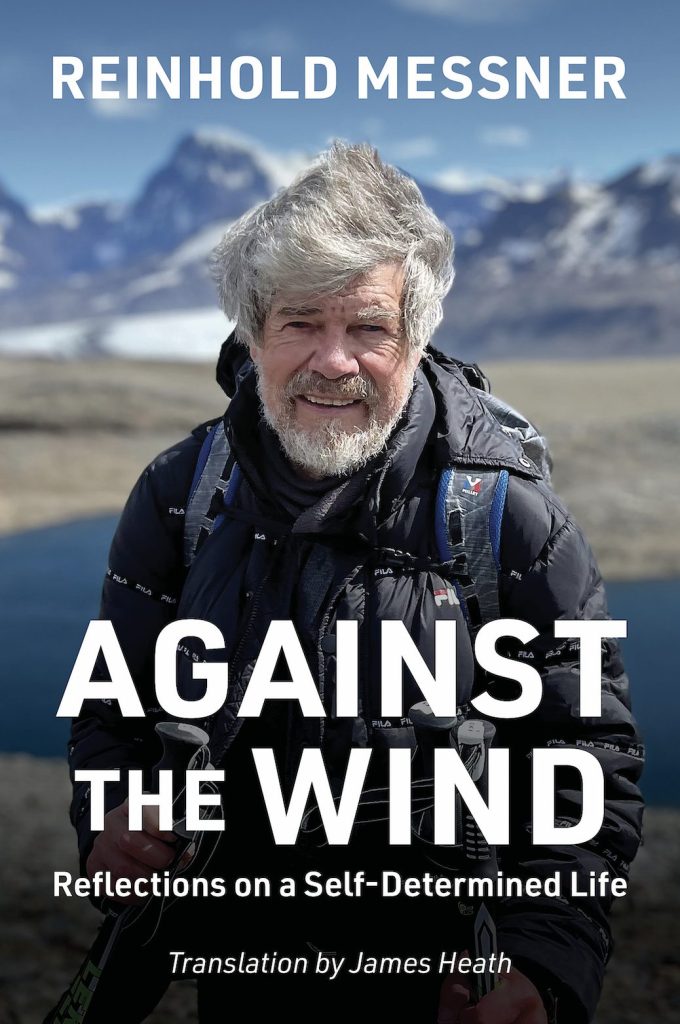
Reinhold Messner never shies from the spotlight. Among his many accomplishments, Messner was part of the first team to summit Everest without supplemental oxygen, and he was the first person to climb all fourteen 8000-meter peaks. He’s authored dozens of books, written hundreds of articles and given countless interviews, expounding on alpinism, his homeland’s fraught history with the Nazis, and perceived (and sometimes real) slights from climbing partners and the media.
Here, he reflects on the celebrity proffered by this life and the decades of difficulties he faced. Though this memoir marches linearly from childhood to old age, chapters flit through the arc of his life like memories, leaving moments or topics midstride, only to pick them up later. Most salient are not the summits he’s graced, though there is plenty of adventure, but the moments in between: the renovation of his home, Juval Castle; his fights with members of the media and government officials; and his lifelong quest to clear his name in his brother Günther’s 1970 death on Nanga Parbat.
Perhaps age has made the eighty-one-year-old cognizant of his legacy, but much of Against the Wind is a counterpoint to his critics, a rebuttal that allows Messner to craft the final message. It reads, at times, like the frustrated deliberations of a man who feels maligned for living by his own code. By the end, however, when the scores are settled and he and his third wife, Diane, are hiking in the Dolomites, he evinces the catharsis of the last laugh, writing, “I only ever learned to take off in a headwind—and in my dreams.”
—Tom Hallberg