

[These reviews originally appeared in Alpinist 89 (Spring 2025), Alpinist 90 (Summer 2025), Alpinist 91 (Autumn 2025), and Alpinist 92 (Winter 2025-26), all of which are now available in our online store; Issue 92 is also currently available on newsstands. Only a small fraction of our many long-form stories from the print edition are ever uploaded to Alpinist.com. Be sure to pick up the hard copies of Alpinist for all the goodness!–Ed.]
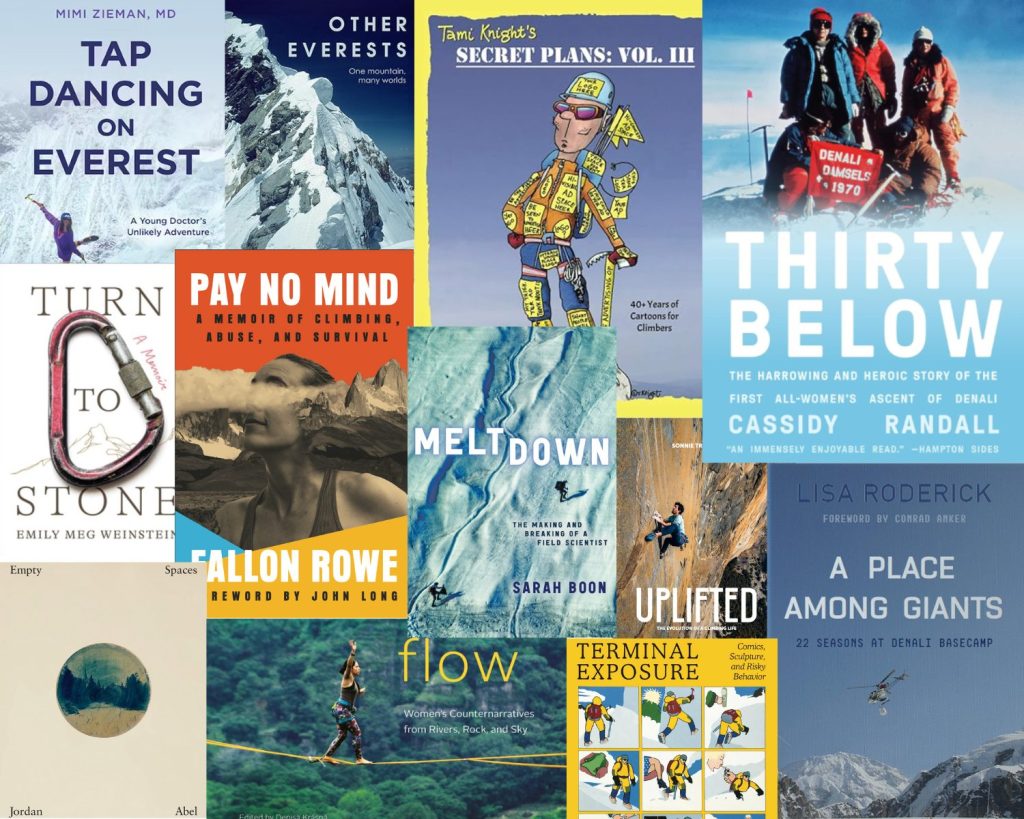
This year, Sonnie Trotter brought us back to 2006, Sḵwx̱wú7mesh (Squamish), as his fingers flexed against steep granite on the first free ascent of Cobra Crack. We stood next to Mimi Zieman in a whiteout as she waited for her teammates on Chomolungma (Everest) in 1988. Lisa Roderick gave us an intimate look at Denali’s Kahiltna Basecamp. These stories represent a small piece of everything Alpinist editors and contributors read in 2025; may they bring you as much inspiration, curiosity and humor as they did us.
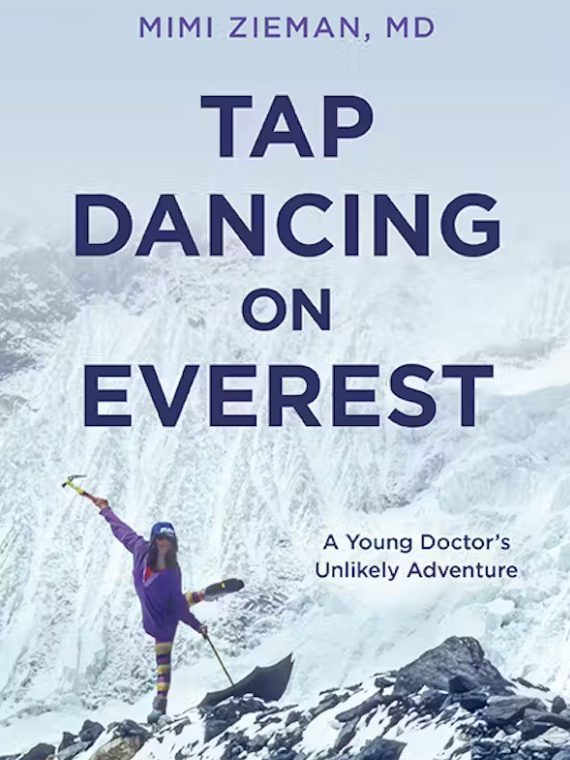
Tap Dancing on Everest: A Young Doctor’s Unlikely Adventure
Mimi Zieman
May 1988: For days, Mimi Zieman stared into a void of whirling snow. Somewhere behind the mists, her teammates Robert Anderson, Stephen Venables and Ed Webster were staggering down Chomolungma (Everest) after the first ascent of the remote Neverest Buttress. The whiteout concealed any signal lights, and they’d brought no radios. Waiting in Advance Base Camp, she’d prepared herself to treat any illnesses or injuries. But she had no way of knowing if they were still alive—she had only the sense of the bond that tied her to them like an invisible rope.
Here and elsewhere, Zieman’s memoir, Tap Dancing on Everest, highlights intense moments that take place offstage in many earlier climbing books—exploring the edges of a genre, a mountain, a mind. As a Holocaust survivor’s daughter, Zieman maps out the geographies of loss she traveled to reach this high, stormy place, where she is reminded, ceaselessly, of the fragility of human life. As a woman, she traces her own paths to acceptance and solidarity in a largely male mountaineering world. And as a medical officer, when the climbers finally stagger out of the clouds, she demonstrates her own heroism, tending to their severe frostbite far from any hospital.
In Alpinist 27, Ed Webster wrote that the “ethos” of how you approach Chomolungma “will determine, in large part, the mountain you find.” Appearing less than two years after his death, Tap Dancing on Everest is also a poignant remembrance of shared ideals. Lyrical and compassionate, vulnerable and gritty, Zieman brings us to a realm where alpine light still illuminates hidden chasms of the spirit— and where what matters most is “the intimacy of physically caring for one another.”
—Katie Ives
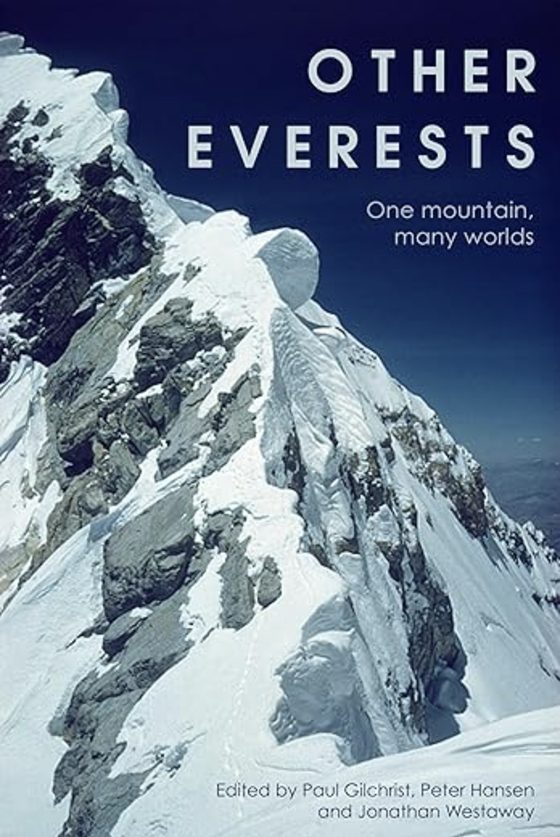
Other Everests: One Mountain, Many Worlds
Edited by Paul Gilchrist, Peter H. Hansen and Jonathan Westaway
If you have complained that books about mountaineering on Chomolungma, or Mt. Everest, have grown somewhat repetitive, well, you’re not alone. Man-against-mountain narratives and historical retrospectives fill the shelves but have grown stale. Other Everests takes a different approach.
While it’s become more common for Everest stories to discuss topics like ethnicity and gender, Other Everests goes further. It covers many issues, including climate change, industrialization, visitors to the region and nationalism.
I was particularly intrigued by how the collection covers the topic of gender, notably in Agnieszka Irena Kaczmarek’s piece about how Polish climber Wanda Rutkiewicz stood out among other female climbers of the 1970s and 1980s. Kaczmarek writes that it went beyond her drive to climb; Rutkiewicz adopted a more masculine identity when she climbed in the Himalaya to match the climbing culture there.
In another chapter, Anna Saroldi reevaluates the identity and role of Sandy Irvine in the 1924 British Mt. Everest expedition. I now have a whole new perspective on Irvine: he was not passive to other characters, like George Mallory, but was an active participant in the story, equally as driven to reach the summit. Irvine’s story is another that “fell through the cracks,” as Saroldi notes, in the writing of Everest history, which mostly focused on individual heroes.
Overall, the editors could have moderated the academic language to meet the general mountaineering-genre audience. We are readers and embrace a wide vocabulary, but some introductions and conclusions in Other Everests needed to be read and reread to clearly under- stand the authors’ fine and nuanced points.
—Andrew Szalay
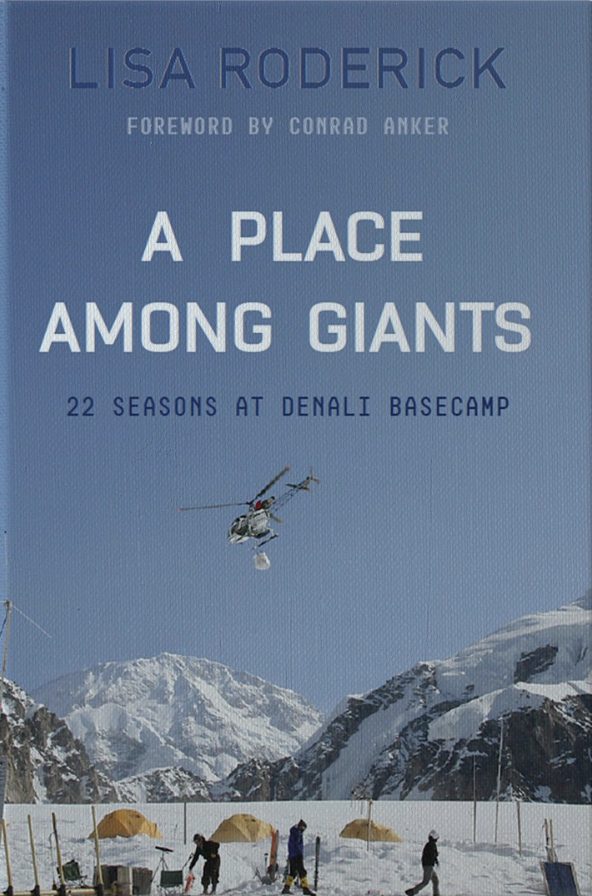
A Place Among Giants: 22 Seasons at Denali Basecamp
Lisa Roderick
Lisa Roderick’s early life growing up in Connecticut was marked by strict household rules, unthinkable tragedy and a strong desire to protect her loved ones. As she grew older, and with encouragement from her older brother, Paul, Roderick left the East Coast and moved to Colorado, where she discovered a love of mountains. Then she found the magic of Alaska.
Paul had moved to Alaska in the early 1990s. He landed a job at Talkeetna Air Taxi (TAT), flying climbers and tourists into the Alaska Range. A visit to Talkeetna in 1992 prompted Roderick to move her own life to the far north, where she eventually worked with Paul after he purchased TAT. One thing led to another, as opportunities often do in Alaska, and Roderick became the manager of Denali base camp in her early thirties.
At her post on the Kahiltna Glacier, Roderick helped pilots navigate hard-to-predict weather, assisted in rescues and interacted with some of the world’s top climbers as they set off for historic ascents. She watched the glacier change with the warming climate and navigated new and less predictable crevasse danger. Through all of it, Roderick found community in the many people working together on Denali—including her own husband, climber and Denali ranger Mark Westman.
Roderick’s story provides gripping insight into the operations on Denali, a new point of view on famous mountaineering feats and tragedies, and a colorful telling of a life lived outside the norm. She also offers thoughtful meditations on what it means to step away from the thing that has long defined you.
—Abbey Collins
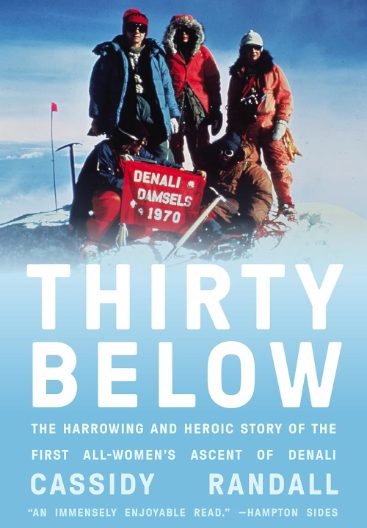
Thirty Below: The Harrowing and Heroic Story of the First All-Women’s Ascent of Denali
Cassidy Randall
By 1970, two women had climbed to the summit of 20,310-foot Denali. But despite women’s achievements across mountaineering, the belief that they couldn’t make it to the top without male guides persisted. Then Alaskan Grace Hoeman wrote to a young Californian, Arlene Blum, with a proposal for an all-women’s expedition to Denali. Over fifty years later, Cassidy Randall’s page-turning account brims with astonishing detail from journals, archives and numerous interviews of the oft-forgotten story of six women who dared to climb to the top of the continent.
The “Denali Damsels” included Hoeman, 48; Blum, 24; Margaret Clark, 34; Faye Kerr, 37; Dana Isherwood, 33; and Margaret Young (aka M.Y.), 37. In the book’s first half, Randall moves through the women’s upbringings and early climbs—what led them to the mountains, around the globe and, ultimately, to Denali and each other. Weaving their backstories together reveals how often the women and their peers were barred entry to spaces thought to belong only to men. They were excluded from mountain huts and mountaineering clubs. They could join base camps, but only as cooks. They could climb with an expedition, but only if they would “sleep with” all the men. The book’s second half follows their journey up the peak and a daring rescue on the descent.
With Thirty Below, Randall has put together all I hope to encounter in a mountaineering narrative—where climbers aren’t conquerors but complex, striving individuals moving through a storied and richly rendered landscape. It’s a riveting, unputdownable book with prose as bright and chilling as the mountain air from which these stories arise.
—Paula LaRochelle
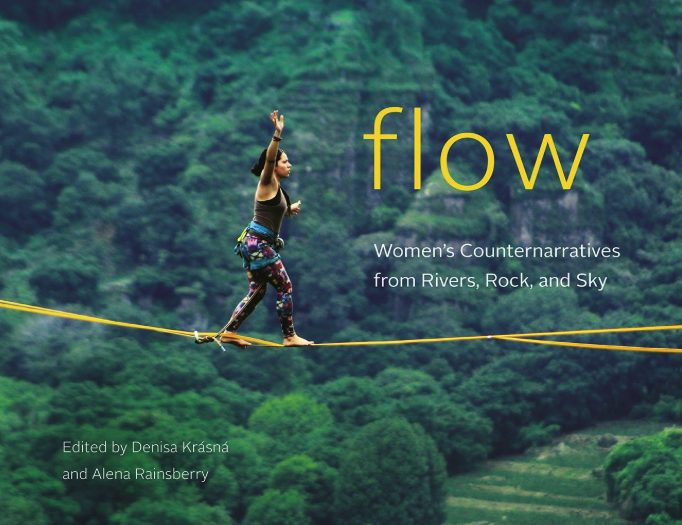
Flow: Women’s Counternarratives from Rivers, Rock, and Sky
Edited by Denisa Krásná and Alena Rainsberry
Beneath old formulaic tales of men’s dominion over mountains, rivers and air, there have always been more varied stories by people of all genders. Flow derives power from the interweaving of such counternarratives. As these alternative tales break through cracks in old barriers, they unleash floods of experiences long hidden or suppressed, reflecting not only the perspectives of visionary individuals, but those of past, present and future communities.
Among the storytellers, American guide Janel Lynn Rieger, daughter of a migrant Mexican farmworker, senses dreams of her Indigenous ancestors like memories of warm desert light dazzling across Kulshan’s glacial ice. Walking a highline between Castleton Tower and the Rectory, Czech athlete Anna Hanuš Kuchařová feels herself merge with ruddy cliffs, snowy peaks and shifting winds until she enters “a space where no one claims anything, yet, or maybe precisely because of that, there is an inexhaustible amount of energy, love, and peace.”
There’s a particular strength and creativity that arises from the margins: an ability to see beyond assumptions that can transform all outdoor writing. The psychologist Mihaly Csikszentmihalyi defined flow as a state of being when someone becomes so absorbed in a pursuit that the borders between themselves and their surroundings fade. For the women of Flow, this experience leads them to view themselves as part of nature and to commit to its stewardship. At a time when the Trump administration has been rapidly deleting references to both women and the environment from government websites, it becomes even more urgent to share these counternarratives—and to tell our own.
—Katie Ives
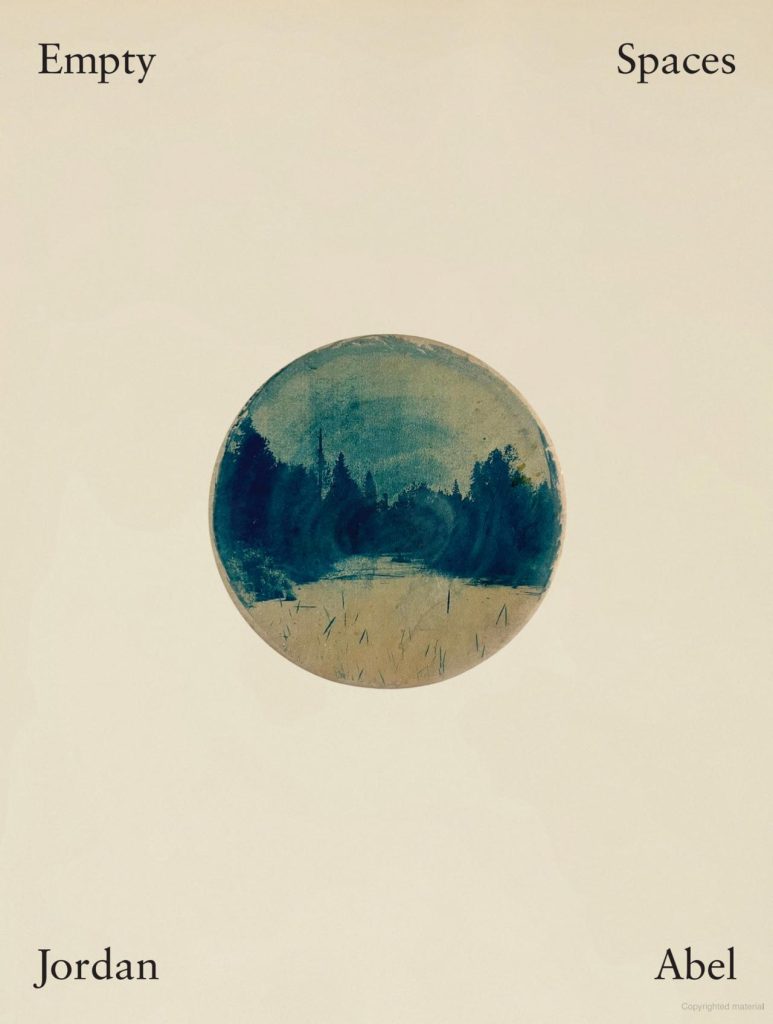
Empty Spaces
Jordan Abel
Empty Spaces presents a decentered perspective of humanity, one in which we are merely another organism. Similar to how some Buddhist monks are known to meditate while sitting beside a corpse, this work reads like a guided meditation that envisions a beginning and end of life as we know it. But each end heralds new beginnings, as Abel writes: “Some light lasts forever. Some flames flicker out”; “Tomorrow is a circle.”
The prose poem reads like a ceaseless, slowly evolving song. Phrases and images are often repeated in rhythmic patterns. Little by little, changes emerge—easy to miss at first, then everything has changed and the cycle repeats, different but the same.
We watch early humans emerge from the overgrown thickets and struggle for survival amid the unforgiving wilderness. They are always at odds with nature and each other. By the end, humans themselves constitute the overgrown forest, and it is other parts of nature that struggle to exist within it. And though daily life becomes more comfortable for humans with the advancement of civilization, with some people never leaving their carpeted apartments— “each body is softer than the last”—the same threats and miseries persist, and in some ways are even worse. First we see forests on fire; then we see cities on fire. The world burns and smoke becomes so thick that stars can hardly be seen in the sky. But where there is death, there is also a promise of new life.
We humans are not so special as to be granted an exception from the natural cycles; it is this perspective that helps alpinists stay alive when facing the raw dangers of the wild, and it is a view that may help humanity live in greater harmony with the environment we depend upon.
—Derek Franz
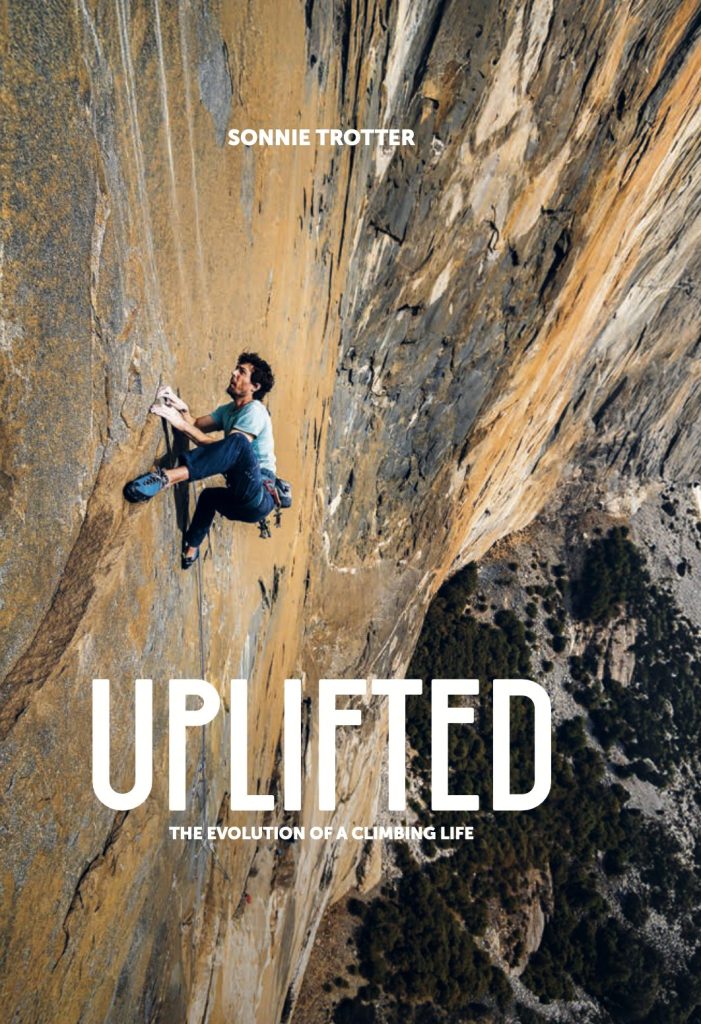
Uplifted: The Evolution of a Climbing Life
Sonnie Trotter
Sonnie Trotter’s first book is the story of a climbing lifer. The homegrown Canadian springboarded to fame in 2006 when he completed the first free ascent of Cobra Crack (5.14b) in Squamish, British Columbia. It was one of the hardest trad climbs in the world at the time, and he would go on to establish himself as one of the most influential and well-rounded rock climbers of his generation. During that time, he has remained relatively soft-spoken, initially shying away from social media and only publishing occasional articles prior to this book. “Because of my relative shyness and longing for peace and quiet, I have always been conflicted about the presence of media in climbing,” he writes.
Trotter’s memoir unveils the mystique of a pro climber’s lifestyle, including the financial realities of living off of a line of credit. He speaks of the seasonal work in Squamish that brought him and his partner to meet in the namesake chapter, “Lydia.” Now as a father who wants to get parenting right, Trotter opens up about raising his kids amid climbing environments, like Yosemite and Bishop, and not losing the ability to spend time on the wall.
All in all, this is a collection of stories about love: the love of climbing, where it can take you and who you’ll meet. If you’re a dreamer, you’ll resonate with it. If you’re a climber, you’ll learn from it. If you’re both, it hits close to home. It makes me ready to move into a van and head west.
—Max Miller

Secret Plans: Vol. III
Tami Knight
I’m convinced that everything you need to know about climbing can be learned from a Tami Knight cartoon. Or at least, almost everything.
Evidence: Secret Plans: Vol. III, in which Knight shares more than four decades of drawings, as well as the story of how she began publishing them many years ago.
Knight’s cartoons first started appearing in the newsletter for the Vancouver section of the Alpine Club of Canada. Then, in the early 1980s, the Canadian Alpine Journal picked them up. Several books and a decade later, Knight secured a contract to draw cartoons for Climbing magazine. Eventually, in 2002, she went to Salt Lake City for the launch of Alpinist wearing, as she writes in Secret Plans, “a bright purple ski suit with red clown wig and on stilts that made me eight feet tall.”
Through the escapades of her beloved rat characters (and the occasional human), Knight’s Secret Plans tackles winter camping necessities, including “not one but two bottles of single malt scotch.” She lets us in on the secret to safe glacier travel: “How do you cross a massive yawning crevasse? Don’t even give it a second thought! Return to pub & drink beer.” And she graciously explains how to tie “useless climber’z knots” like “the unwhipped flip double-gleek head turret overhanded under-knot.”
But the most important thing I’ve learned from Tami Knight cartoons? Everything doesn’t always have to be so serious.
—Abbey Collins
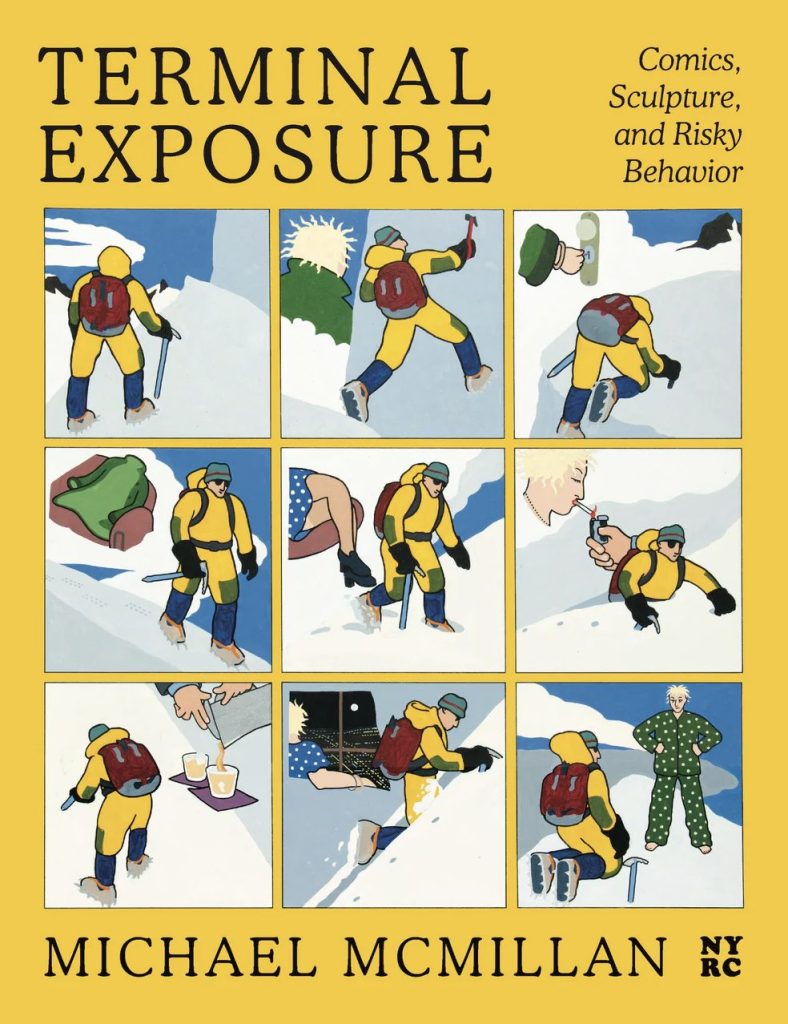
Terminal Exposure: Comics, Sculpture, and Risky Behavior
Michael McMillan
Artist, draftsman and designer Michael McMillan has been publishing cartoons since the 1970s. His decades of drawings are the basis of Terminal Exposure. While much of his portfolio is focused on topics unrelated to climbing, the illustrations that do enter the vertical realm provide a humorous glimpse into his fifty years in the mountains.
McMillan’s foray into climbing in California is depicted in an autobiographical comic strip. The artwork shows a young man learning how to climb at the same time as he’s beginning to understand sexuality and the human body. “His impractical passion was difficult to explain,” the strip reads as the main character attempts to find climbing partners. “It was beyond the considerations of small town America. And indeed surpassed his own worst nightmares.”
Elsewhere in the collection, McMillan shares bits of his climbing journals and accompanying sketches, taking the reader into a Mt. Shasta snowstorm and to the Sierra Nevada’s Sawtooth Ridge, among other places.
A series of “Loose Bolt Comics” illustrate funny and imaginative scenarios. In one, two people climb in “goo suits” that adhere to surfaces, doubting how anyone could have climbed anything before their invention.
There were several things that didn’t quite land for me in Terminal Exposure: a woman pleasuring herself with an ice-cream-cone? I’m sorry, I don’t get it! But when it came to the climbing stories, I appreciated McMillan’s humorous take and artistic talent.
—Abbey Collins
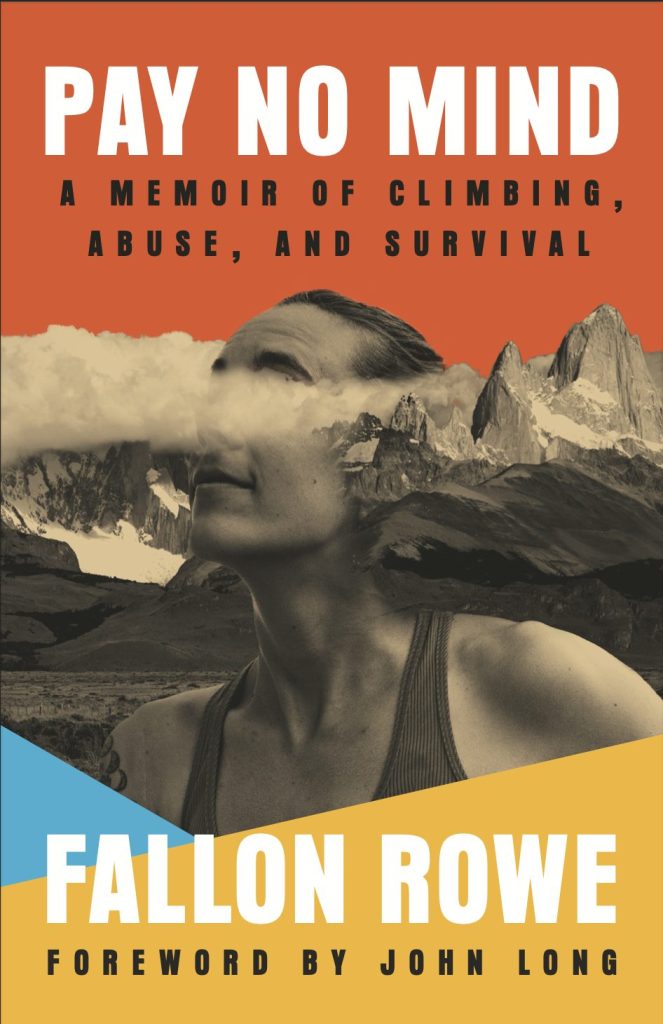
Pay No Mind
Fallon Rowe
In 2023, I happened to meet Fallon Rowe at City of Rocks. In her mid-twenties, I found her to be smart, generous and joyful, an over-stoker for life. Eventually she shared the synopsis of a crazy ex-boyfriend who died by suicide in a police chase; I realized I’d met the guy, whom she refers to in the book as “Dan.”
About ten years ago, I was in the parking lot for Castleton Tower when a couple of BASE jumpers came gliding in. I chatted with them as they packed their parachutes and drank beer. One was a dark, brooding fellow. He perked up when I said I was an editor for Alpinist and I gave him my email before they left in separate cars. One of them forgot their BASE rig that was placed neatly on a rock. A while later Dan returned, disheveled, irritated. Over the years he pitched a few stories to the magazine and it became clear that he was very troubled. Once or twice, he messaged that the cops were after him and alluded to conspiracies against him. The last I heard from him was a cryptic message saying goodbye.
I can’t say I truly knew Dan, but what I witnessed certainly fits with Rowe’s story.
This book is a cautionary tale. A bright, wide-eyed teenager with a rebellious streak finds herself stuck in Argentina with an addled drug abuser who is prone to violence and delusions of grandeur. More than that, it’s a sadly classic American story: a toxic cycle of abuse that ends in violence, enabled by the emotional isolation that too many of us silently endure.
—Derek Franz
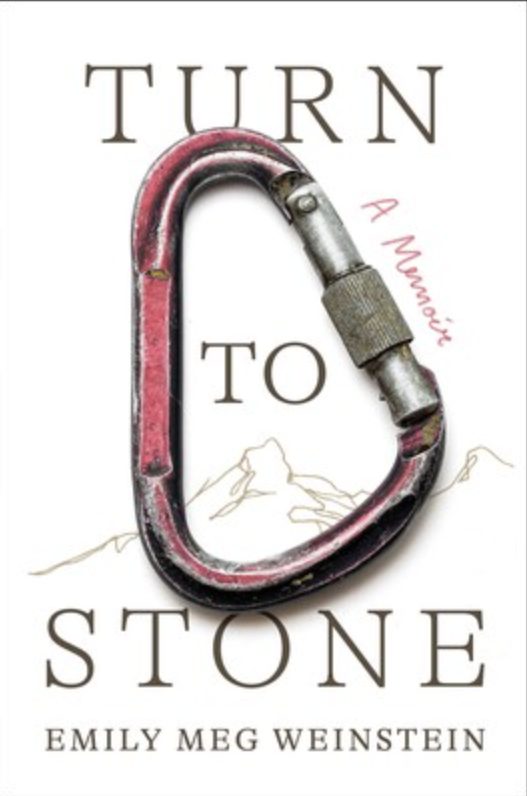
Turn to Stone
Emily Meg Weinstein
I love an epic tale of survival in the mountains—a shiver bivy at 7,000 feet, a celebratory summit after completing a cutting-edge climb or a hard retreat from a trip that didn’t go as planned. But, for me, there is something equally compelling in a story that is just plain relatable, and Emily Meg Weinstein’s Turn to Stone is exactly that.
In her late twenties, after joining her younger brother on a rafting trip in Oregon and learning to rock climb in California, Weinstein left New York City for the West Coast. She made enough money through a tutoring job to cover rent and, at age thirty, to purchase a white Subaru Outback with 100,000 miles on it. In climbing, and the people she met while doing it, she found an escape from so many of the things that tormented her earlier in life. In Joshua Tree, she realized “there was something bigger, emptier and quieter than all of that, and it was this,” writes Weinstein.
Still, there is one thing that did not go away with Weinstein’s transition to life as a climber, and that was her desire for love. “Throwing myself at the rocks made me no less hungry for love, but it gave me a desire that could actually be satisfied,” she writes. By my reading, Turn to Stone is less about the climbing itself and more about what it does to a person, the ways in which it changes us and the things we can’t seem to run away from.
—Abbey Collins
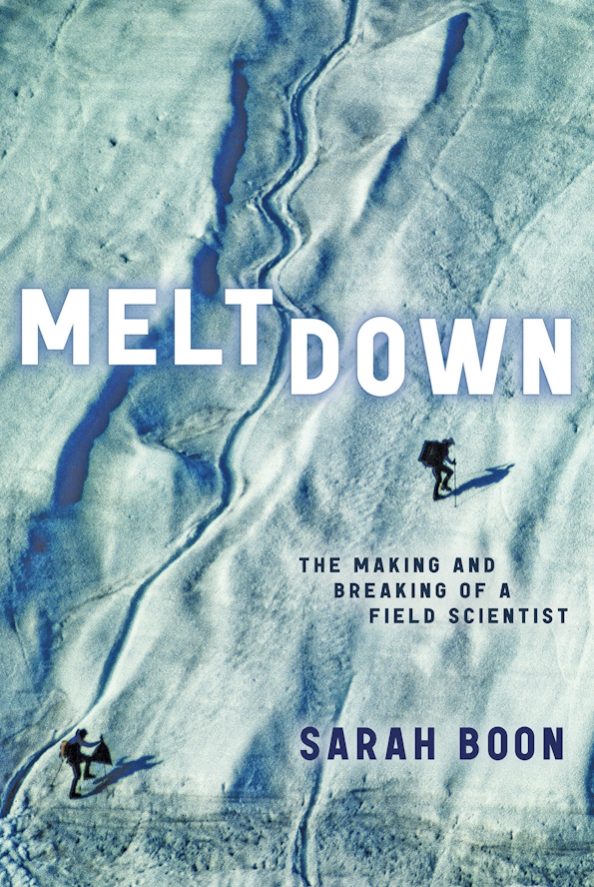
Meltdown: The Making and Breaking of a Field Scientist
Sarah Boon
When she was young, Sarah Boon wanted to stay in the outdoors and the mountains all the time. She wasn’t a professional climber or park ranger; rather, she stumbled into scientific fieldwork and found a path that brought her season after season to remote and icy places studying glaciers. She also had close calls with grizzlies, arranged rescues for her partners and avoided the enclosed lab space as much as possible. Unfortunately, real life caught up to her, not through bills and new responsibilities, but through self-doubt and adversity.
Boon’s memoir covers her life from when she was a young girl up to more recently, when she concluded her career as an academic and field researcher. For her, data collection, aca- demic politics and her own mental health—she was diagnosed with bipolar disorder at age thirty-seven—proved to be hurdles, even as the backdrop of her story was the outdoors we seek.
The book vacillates between memoir, lengthy explanations of glacial science and the challenges of obtaining a PhD, and I found that the combination of these elements interrupted the pace. Much of the memoir flowed well, but the science and PhD threads were unnecessarily in-depth for me.
I enjoy memoirs like this, on the fringe of things I enjoy—glaciers, in this case—because I am often introduced to new knowledge by getting to know someone somewhat intimately. In some cases, I learn that I am not alone in my struggle to live well, live better and overcome obstacles. In these regards, Boon opens the mind and comforts struggling souls.
—Andrew Szalay